By Robin Stoloff
Breast cancer has touched many of our friends and families, including mine. My aunt, cousin, and several close friends have all had breast cancer. Thankfully, each was diagnosed early, received treatment, and is now a survivor. Watching someone you love face breast cancer changes your perspective. I have never missed my annual mammogram, but their experiences made screening more than a box to check. It is a commitment I would never postpone, for myself or for those who love me.
Breast cancer is still far too common, but there is also some genuinely encouraging news. We are getting better at finding it, understanding it, and treating it. About one in eight women will be diagnosed with invasive breast cancer during her lifetime, according to the American Cancer Society. Early detection remains one of our most powerful tools, because breast cancer is generally easier to treat when it is found in its earliest stages.
One of the biggest advances in screening has been 3D mammography, also called tomosynthesis. Instead of one flat image, it captures many thin slices of breast tissue, giving radiologists a clearer picture, especially for women with dense breast tissue, where cancers can hide behind overlapping layers on a traditional mammogram. Studies have shown that 3D mammography finds more invasive cancers while also reducing the number of women called back for a false alarm.
Artificial intelligence is increasingly part of that picture too, working alongside radiologists. AI software can scan through the many images a 3D mammogram produces and flag areas that may need a closer look, which helps radiologists catch things they might otherwise miss and manage heavy caseloads more efficiently. Research presented this year found that using AI alongside radiologists increased the cancer detection rate, including more invasive cancers found without an increase in false alarms. Every result is still reviewed and read by a radiologist. AI is a second set of eyes, not the final word.
Family history goes beyond simply asking whether your mother had breast cancer. It helps to look at breast and ovarian cancers on both your mother’s and your father’s sides of the family, the ages relatives were diagnosed, and whether several family members have had related cancers.
Inherited changes in genes such as BRCA1 and BRCA2 can substantially increase breast cancer risk, and researchers now know there are a number of other inherited genes that can play a role as well. Genetic testing and counseling have become increasingly sophisticated and can help some families better understand their individual risk. If you have a strong family history, it is worth asking your doctor whether you should have a formal risk assessment or meet with a genetic counselor.
Mammograms are still the primary screening tool for breast cancer, and regular screening can help detect tumors before they can be felt. The American Cancer Society recommends that women ages 45 to 54 at average risk get a mammogram every year. Women ages 40 to 44 have the option to begin annual screening, and women 55 and older may switch to every two years or choose to continue annual screening.
Women at higher risk may need a different plan. For me, family history has always been part of the conversation. Having breast cancer in your family does not mean you will develop it, but it can affect your risk and may change the way your healthcare provider recommends screening you.
Depending on family history, genetic mutations, and overall lifetime risk, some women may be advised to have both a mammogram and a breast MRI every year. That is exactly what my healthcare provider recommended for me, and after my first breast MRI, I was relieved to hear good news.
Knowing your own risk matters, because the right screening schedule for your friend or neighbor is not necessarily the right schedule for you. One of the biggest changes in breast cancer care is that doctors are increasingly able to treat the specific biology of an individual tumor. Breast cancer is not one single disease. Different tumors behave differently, and treatment is increasingly built around those differences rather than a single standard approach for everyone.
Take HER2-positive breast cancer, a type that was once considered especially aggressive and difficult to treat. Today, medications designed specifically to target the HER2 protein have dramatically changed the outlook for many patients. Some newer treatments, called antibody-drug conjugates, essentially pair a HER2-targeting antibody with a cancer-killing drug, helping deliver treatment more directly to the cancer cells while limiting exposure to healthy tissue.
Even more recently, some of these treatments have been shown to help patients whose tumors have much lower levels of HER2. These are people who would not have been considered candidates for HER2-targeted treatment just a few years ago.
There has also been real progress for other types of breast cancer, including treatments that help the body’s own immune system fight certain hard-to-treat tumors. Research continues, from artificial intelligence that may help predict which early breast abnormalities are most likely to progress, to new drugs designed around the specific traits of a patient’s tumor.
Turn awareness into action
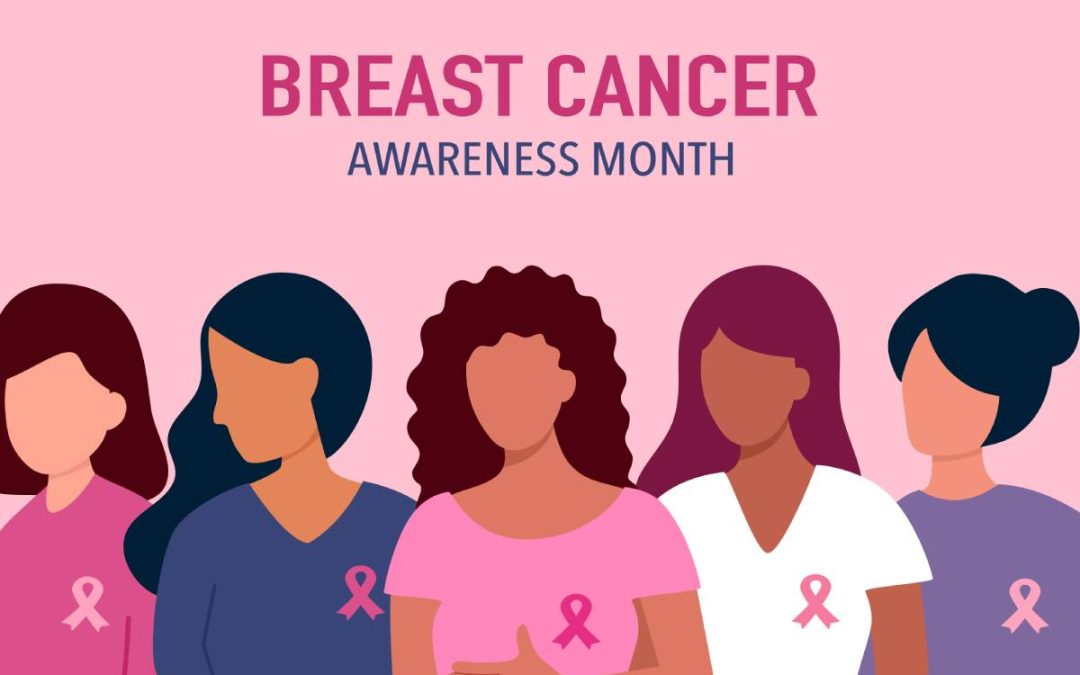
Breast Cancer Awareness Month is a wonderful reminder to support survivors, honor those we have lost, and celebrate how far treatment has come. The pink ribbon means the most when it prompts us to do something.
Schedule the mammogram you have been postponing. Find out your family history. Talk with your healthcare provider about your personal risk and ask whether genetic counseling makes sense for you. If you notice a new lump, skin change, nipple change, or anything else unusual in your breast, do not wait for your next screening appointment to have it checked.
I am extremely grateful that my aunt, my cousin, and my friends all survived breast cancer. Their experiences are a constant reminder to me that knowledge and early detection matter.
This October, wear the pink, support the walks, the fundraisers, and the survivors, and most importantly, take care of yourself and encourage the women you love to do the same.
Robin Stoloff is an award-winning health reporter in South Jersey. A former TV reporter, she now hosts Living Well with Robin Stoloff, Sunday mornings at 10 am on Lite 96.9 WFPG. “Empowering you to live a healthier life” is not just her tagline, it is her mission. Follow her on Facebook, Instagram and YouTube at “Living Well with Robin Stoloff.”