
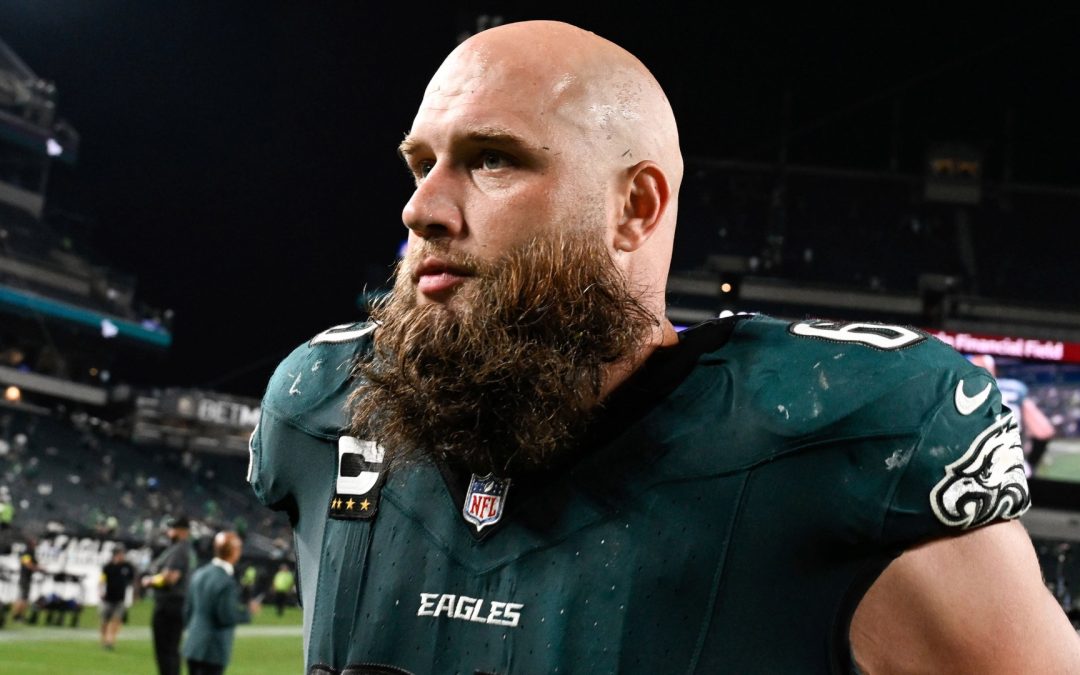
Eagles legend retires to focus on his mental health
Last Saturday was World Mental Health Day, an opportunity to consider a question: If you broke your leg, you would seek medical help. Why should seeking help for your brain be any different? You would not consider a cast a character flaw. Yet people experiencing depression, anxiety or overwhelming emotional distress often worry that asking for help will make them look weak.
For Eagles fans across South Jersey, that question became especially relevant when legendary right tackle Lane Johnson announced his retirement Oct. 6, with the season barely underway. He chose to put his mental health and family priorities first.
“Right now, it is critical that I focus on my mental health,” Johnson said in his announcement. A player celebrated for his strength and ability to protect quarterbacks was acknowledging his own need for care. As Eagles fans, we will miss watching him anchor the offensive line, but respecting Johnson means respecting the person beneath the helmet. His well-being matters beyond what he can contribute on Sundays.
This conversation did not begin with his retirement. In 2021, Johnson missed three games while addressing anxiety and depression. He later spoke about struggles he had concealed from friends and family, helping challenge the silence surrounding mental health in football. His latest decision reinforces that earlier message. Speaking openly once does not mean a struggle disappears. Mental health can require continuing attention and difficult choices, even for someone accustomed to performing at the highest level.
Football celebrates endurance and playing through pain. Johnson’s example broadens our understanding of toughness. Sometimes strength means asking for help. Sometimes it means recognizing that our health deserves more attention than our job.
Other sports stars have helped bring these conversations into the open, including Olympic gymnastics champion Simone Biles, Grand Slam tennis champion Coco Gauff and former Pittsburgh Steelers quarterback and longtime Fox NFL broadcaster Terry Bradshaw.
At the Tokyo Olympics in 2021, Biles withdrew from several events while experiencing the “twisties,” a frightening loss of awareness of her position in the air. For a gymnast, that can create serious danger. Stepping back required judgment and courage. Her return to Olympic success in Paris in 2024, after openly discussing therapy, demonstrated the value of support.
Gauff’s experience speaks especially to young people. In a 2020 personal account, she described struggling with expectations, pressure and her relationship with tennis before her breakthrough. Her father clarified that she had not been clinically diagnosed with depression, but her openness reminds us that we do not need an official diagnosis to seek help. A talented young person can appear successful while feeling overwhelmed.
Bradshaw, a Hall of Fame quarterback and four-time Super Bowl champion, has spoken publicly about depression and treatment. His familiar television humor reminds us that someone can make others laugh while struggling privately.
Those struggles exist throughout our community. Students may feel pressure in academics, sports and social media, while adults juggle work, finances, family responsibilities and health concerns. At any age, a busy schedule or outward success can hide distress. Making time to ask how someone is doing, and listening to the answer, creates room for an honest conversation.
A first step can be talking with a primary care provider or licensed mental health professional. Treatment may include therapy, medication or both, depending on individual needs. Friends and relatives can listen without judgment and offer practical help with finding care or attending appointments.
Take Action
Help is available, and no one should have to face these struggles alone. Anyone experiencing emotional distress or a suicidal crisis can call or text 988 to reach the Suicide & Crisis Lifeline.
Locally, the Mental Health Association in Atlantic County provides support, education and resources for individuals and families. It also offers suicide prevention training called QPR, which stands for Question, Persuade and Refer. The 90-minute global program teaches participants to recognize warning signs, ask directly about suicidal thoughts, encourage someone to seek help and connect them with support.
I took the QPR course and learned a great deal about approaching someone who may be struggling and how to start a conversation that could save their life. As CPR prepares us to respond to a physical emergency, QPR prepares us to recognize and respond to a possible suicidal crisis. With online and in-person training options available, it is something I encourage everyone to consider. Call 609-652-3800 or visit mhaac.info for information.
Johnson and his fellow athletes have helped open the door to more honest conversations about mental health. We can keep it open by listening with compassion and responding to vulnerability with respect. Healing a mental health condition may look different from healing a bone, but both deserve care. You would seek medical help for a broken leg, so give your brain the same consideration. Like Lane Johnson, recognizing your struggle and asking for help may be your strongest move yet.
Robin is a former television reporter for NBC News 40. She currently hosts a podcast and radio program called Living Well with Robin Stoloff. It airs Sundays at 10 AM on Lite 96.9. You can email Robin at livingwellwithrobin@gmail.com