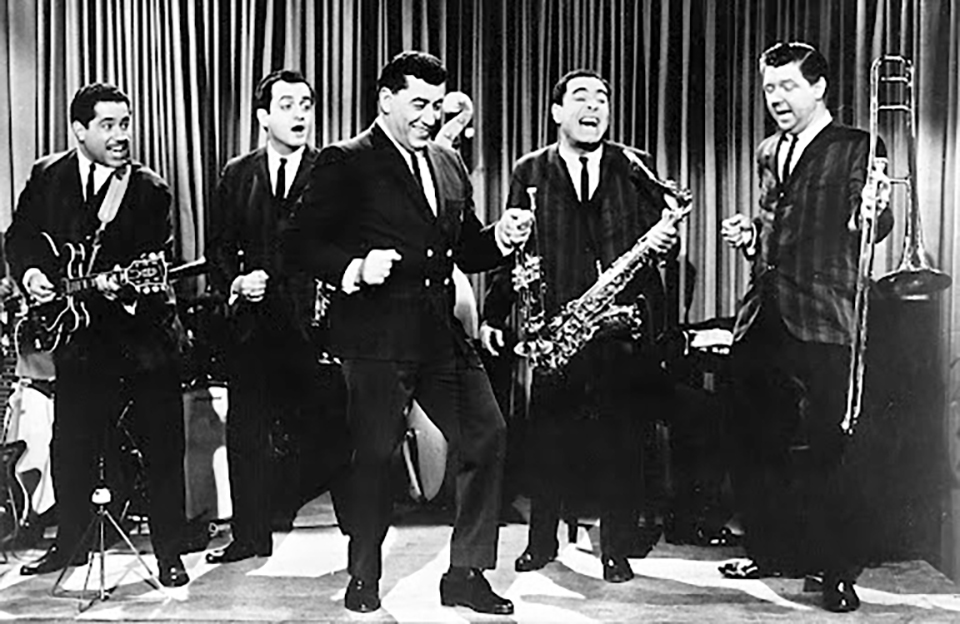
Had he lived, the ground-breaking trumpeter/vocalist/bandleader Louis Prima might have been one of the most popular and highest paid attractions ever booked by an Atlantic City hotel/casino.
Though he died on Aug. 24, 1978 at the age of 67, just about three months to the day after Resorts International opened as the city’s first casino, Prima had a long and rich history in this region. He was the only performer ever to perform at the Steel Pier and the 500 Club. He was beloved here, and though we’ve not yet seen an entertainment “residency” in Atlantic City ala Celine Dion and others in Las Vegas, Prima would have, quite possibly, been the first.
There were three, distinct musical periods that comprised Prima’s musical career, and each of them was successful. New Orleans born and bred, Prima began as leader and trumpeter of a Dixieland-oriented small band, first in New Orleans, and in the mid-1930s, on New York City’s famed 52nd Street. He made such a splash with that group, which featured the leader’s swinging trumpet and infectious, jive-focused vocals, that his group made it into three, “B” movies by the end of the decade.
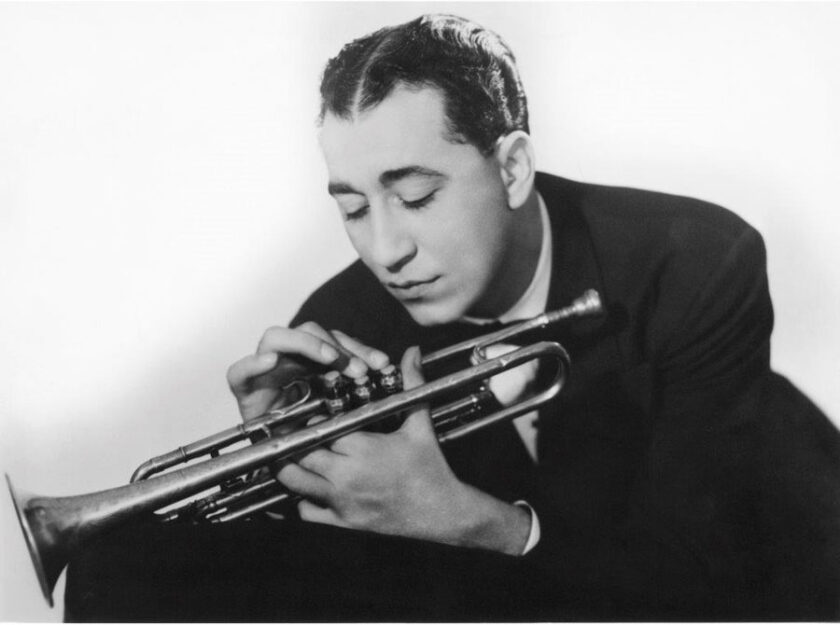
Seeing that big swing bands were the trend by the late 1930s — though he received nearly a quarter million dollars for a seven week stand at Casa Mañana in New York City with his small group — Prima formed his first large ensemble. His focus on Italian novelties such as “Felicia No Capicia” and “Please No Squeeza Da Banana,” helped make the band one of the top-grossing musical units on the circuit.
He made his first appearance around 1943 at the Steel Pier with that band. In August of 1945, he was again playing in the Pier’s Marine Ballroom when the news came over the radio that World War II was over. To celebrate, Prima played “When the Saints Go Marching In,” and marched the band off the pier and right into the ocean.
In 1947, he met his future wife — wife number four — and eventual singing partner, Keely Smith, who came to the Pier to hear Prima. She auditioned for the band a year later, married Prima in 1953 and stayed with him personally and professionally until their 1961 divorce.
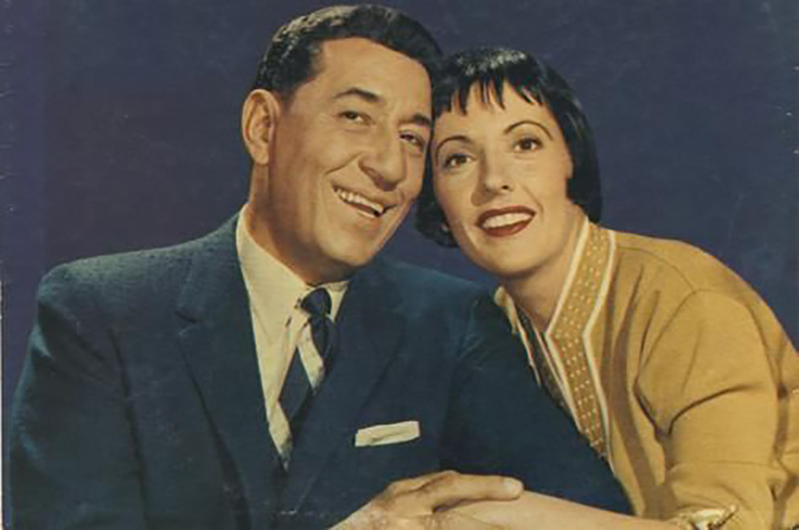
By the late 1940s he was struggling, along with many of the other big name bandleaders. Still, his popularity in Atlantic City was substantial. Struggle or no struggle, the Pier’s George Hamid booked Louis and Keely in the summer of 1951 with a big band that Prima probably put together expressly for the engagement. He was a gigantic hit, though that proved to be his last appearance at the Steel Pier.
The next few years were difficult for Louis and Keely. Big bands were out of vogue, his patented, Italian novelties were beginning to be viewed as passé, and his spendthrift ways –gambling and alimony to ex-wives had drained him dry — caught up with him. He could have lived well off the royalties for a song he composed — “Sing, Sing, Sing,” which became the swing era’s anthem — but as his widow, Gia Maione told me, he sold the rights to the song sometime in the 1940s for a couple of hundred dollars.
Hard up for work and cash by 1954, Prima approached Bill Miller, entertainment director of Las Vegas’ Sahara Hotel/Casino, and asked about the possibility of work. Year later, Keely admitted that they really needed a break then, saying, “We were working some of the most God-awful places imaginable.” Though Prima had previously headlined at the Sahara, times had changed, and Miller put them in the Sahara’s lounge somewhere around Christmas of 1954. Prima formed a small group just for that job. “It was good enough to get us extended and the musicians were good, but it wasn’t really swinging yet,” Keely remembered.
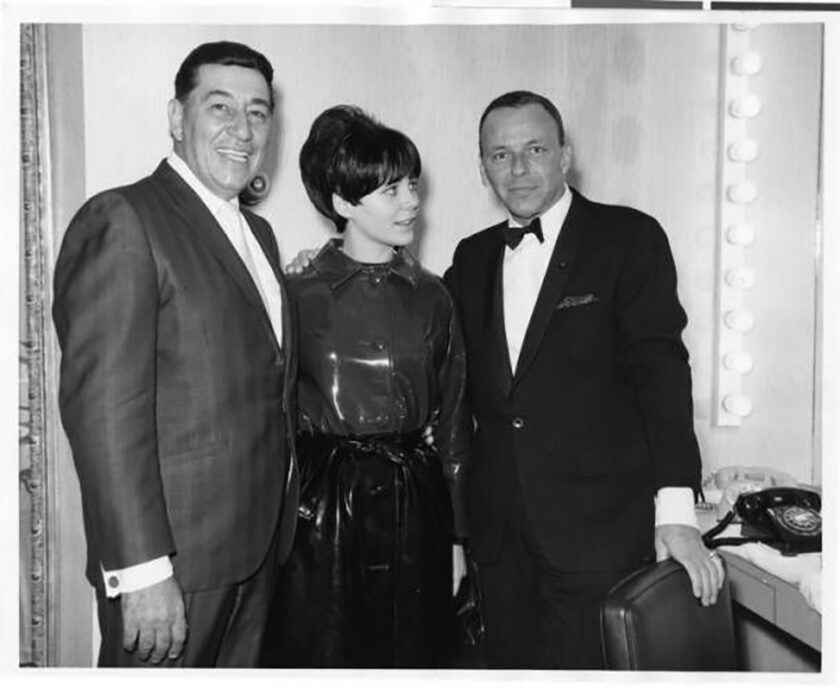
That’s where Sam Butera entered the picture. The New Orleans-based tenor saxophonist, who was tearing it up with his house-rocking combination of jazz and rhythm and blues at various New Orleans nightspots, came to the attention of Prima’s brother, Leon. Both Louis and Leon thought that Butera would be just the musical “shot in the arm” that Louis needed to make some kind of mark in Las Vegas.
Prima summoned Butera to Vegas, supposedly around Christmas Day, and made him all kinds of promises in order to induce him to come to Vegas. Not only did he come to Vegas, but Butera musically revamped virtually every song Louis and Keely were performing in their act.
With a driving shuffle rhythm that wouldn’t quit, an on-stage stone-faced role for Smith, and an irresistible combination of rhythm and blues, jazz, and swinging Italian jive; the new combination took off and shortly became not only the hottest attraction in Las Vegas and a group that virtually defined what a lounge act was, but the ensemble became among the hottest acts in the country. Billed as “Louis Prima and Keely Smith with Sam Butera and the Witnesses,” the group appeared on television, in movies, sold millions of records, and appeared at the nation’s top nightspots.
One of their regular stops was Atlantic City’s 500 Club. Those who were around at the time said that Prima was the only act to rival Sinatra at the 500 Club in terms of attendance.
Sadly, it didn’t last. Though Prima continued with vocalist Gia Maione after he split with Keely Smith in 1961 — Gia became wife number five in 1963 — it just wasn’t the same. In 1975, Prima had brain surgery and then lapsed into a coma for three awful years. He passed in 1978.
Butera continued the Prima musical legacy, and became, for almost 20 years, one of the most popular lounge attractions in Atlantic City. Keely Smith did well as a solo act through the years, and visited this region frequently, performing in both lounges and in the main rooms.
The music of Louis Prima was successfully revived by rocker David Lee Roth, who recorded the Prima hit “Just a Gigolo/I Ain’t Got Nobody” in 1985. And trumpeter/vocalist Louis Prima, Jr. appeared in Atlantic City several times, including a 2007 stint at Resorts and a show at the Steel Pier. While he was entertaining and energetic enough, he simply wasn’t Louis Prima. No one was.
Bruce Klauber is the author of four books, an award-winning music journalist, concert and record producer and publicist, producer of the Warner Brothers and Hudson Music “Jazz Legends” film series, and performs both as a drummer and vocalist.