By Bruce Klauber
A confession: I could never understand what the sport of Roller Derby is about, beyond roller skating men and women who skate quickly on an oval track and try to knock each other down. Obviously, there’s more to it than that, given its tremendous popularity through the years nationally and in the Atlantic City area. Though the Roller Derby record books maintain that the sport reached its peak in our region in the 1970s, history shows that the sport was still quite popular, here and elsewhere, before and after.
Leo Seltzer was a Chicagoan who held various jobs in the 1920s, including that of motion picture distributor, and dance marathon, walkathon and bicycle race promoter. Observing 24-hour roller skating races and marathons, called “roller derby” in advertisements, and believing there might be a market for such a thing, Seltzer trademarked the name in July of 1935. A month later, he brought his new concept, which also included women skaters, to the Chicago Coliseum. More than 20,000 people packed the venue to enjoy what Seltzer called the “Transcontinental Roller Derby,” which was actually not more than a marathon race and endurance test.
Popularity spread, but it didn’t last. What Roller Derby needed was rules, and in the late 1930s, Seltzer teamed up with none other than sportswriter Damon Runyan to come up with the concept of having five men and five women on a team—men and women skate for alternative periods—who play against each other for eight, 15-minute periods, which was later reduced to 10 minutes. Scoring occurs when two offensive players, called jammers, make points by passing opposing players while two blockers try to stop them. That, of course, is the very simplified version.
Seltzer’s teams toured with some success, but Roller Derby really hit the nation’s consciousness when, like professional wrestling, it hit the television airwaves in 1948 on New York television. By the following year, the derby was being broadcast nationally and was regularly selling out Madison Square Garden via the formation of the National Roller Derby League, spearheaded by Seltzer’s son, Jerry.
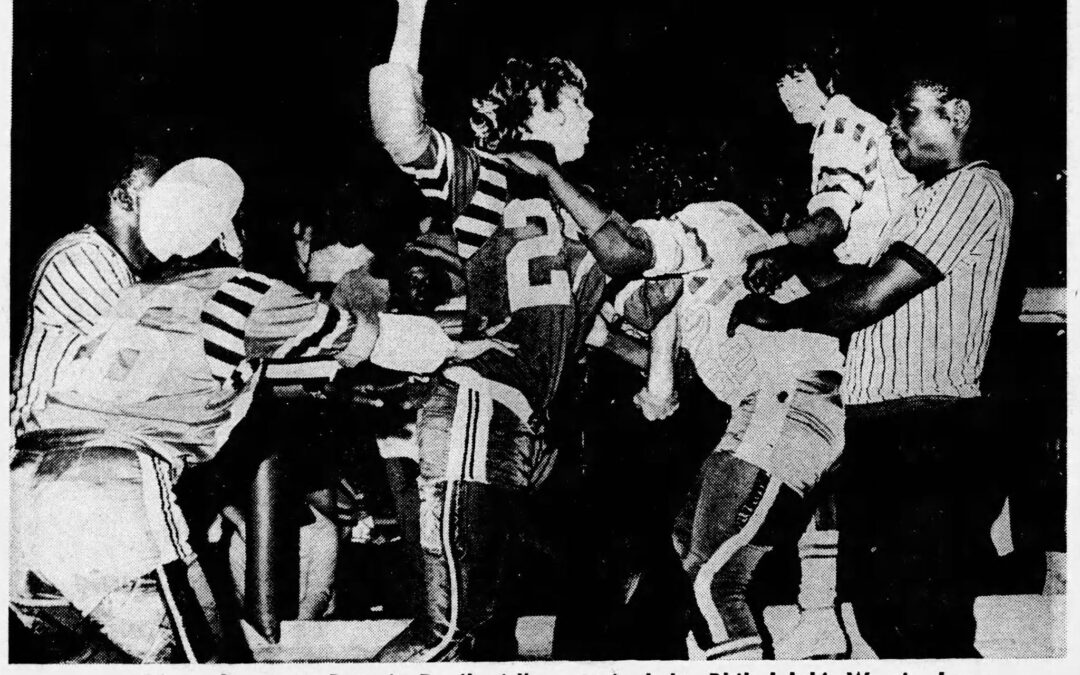
The derby had a good deal in common with pro wrestling, with scripted story lines, manufactured rivalries and plenty of fighting. It worked for a while, but overall interest declined by the early 1950s as, apparently, pro wrestling was quite enough for early, blood thirsty audiences.
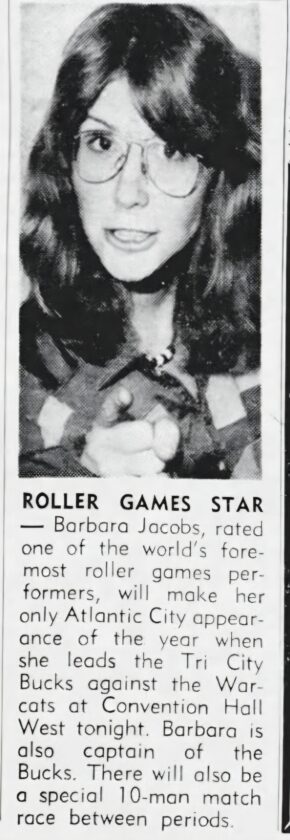
Television or no television, the popularity of the sport as an in-person attraction was consistent. For whatever reason, Roller Derby proved to be quite the attraction in Atlantic City, beginning in the 1970s. A series of matches in the early 1970s at what was then called Convention Hall drew large crowds. While Atlantic City never had a “dedicated,’ pro team, a favorite teams in this area were the Philadelphia Warriors and Detroit Devils.
The sport was so popular in the Atlantic City region, that almost 50 years after those famed matches at Convention Hall, some enterprising fans formed a “Who’s Who in Roller Derby” Facebook group, which focuses on the fondly-remembered matches here.
Like anything else in show business—and make no mistake about it, although Roller Derby is sport, it is also, like pro wrestling, showbiz—popularity is cyclical. As a result of the popularity of the “Rollergirls” reality television show broadcast in 2006, five women in the Toms River area formed “Jersey Shore Roller Derby.” Three years later, the league had 60 skaters in its ranks, and it became a member of the Women’s Flat Track Derby Association.
Shore Points Roller Derby & Juniors was founded in 2007, and its schedule was filled with matches from the likes of the Boardwalk Brawlers through 2015. In that year, Shore Points merged with the Atlantic Coast Rollergirls, but it wasn’t enough, and both ceased operations in 2015. Other organizations and leagues were also popular for a time, including New Jersey Roller Derby, but it didn’t last.
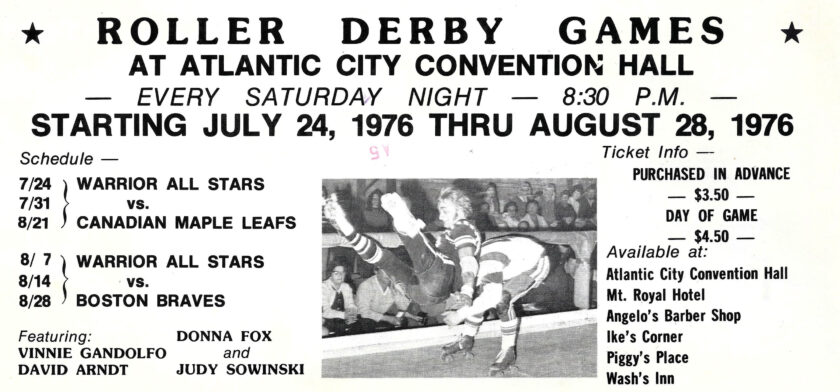
Roller Derby still goes on today, albeit not at the national level it once was, mostly with teams emanating from smaller cities like Pottstown. The exception is an organization called Philly Roller Derby, a member of Women’s Flat Track Derby Association and formed 20 years ago. Philly Roller Derby has a full schedule, playing teams in Boston, Pottstown, South Plainfield, NJ, and Springfield, PA. It would not be surprising to see a match or two come to Atlantic City one of these days soon.
In some ways, Roller Derby was way ahead of its time. Hazel Roop was 97 years of age when she was inducted into the National Roller Derby Hall of Fame in November of 2010. She was fond of recalling just how the sport broke new ground.
“In the 1930s, roller derby was the only sport where a woman could be a professional athlete,” Roop told writer David Block. “There were no opportunities for women to do other sports and get paid. The derby also welcomed the handicapped and minorities. Jay Levy was deaf. Because he couldn’t hear the whistle blow, officials turned on strobe lights whenever a jam started, so that he would not be caught off guard. Sammy Skobel, who skated from around 1945-1965, was legally blind and unable to see faces or read uniform numbers. He recognized his teammates and opponents by the way that they skated. And from the beginning, Roller Derby welcomed African Americans and all other minorities. When unruly fans harassed African American skaters, the ushers threw those fans out.”
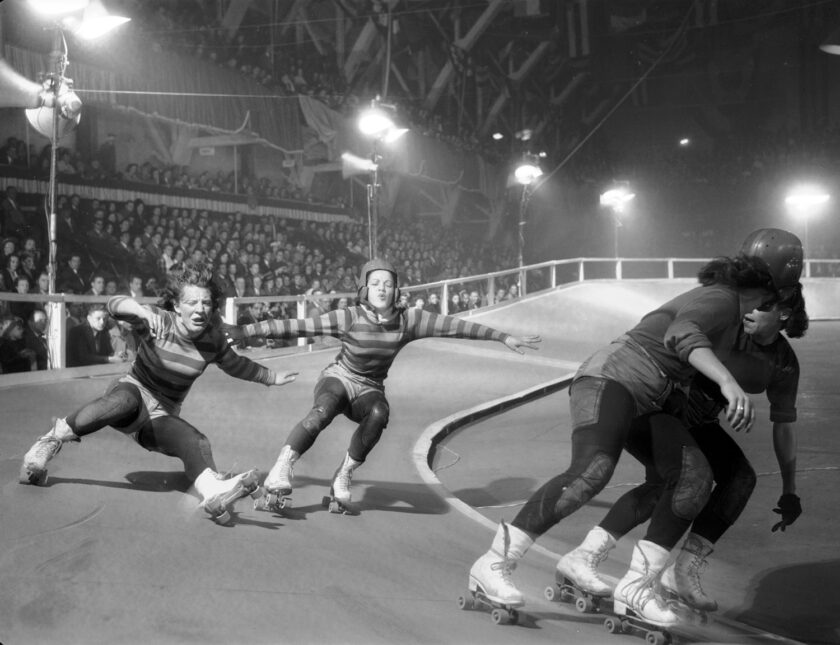
Will we again see professional Roller Derby matches in Atlantic City? That’s doubtful, as currently, there are no pro leagues ala the days of yesteryear, although the enthusiastic and dedicated amateur teams do keep it going. Like minor league baseball, professional roller derby, as least for the moment, is just a memory in Atlantic City.
Bruce Klauber is the author of four books, an award-winning music journalist, concert and record producer and publicist, producer of the Warner Brothers and Hudson Music “Jazz Legends” film series, and performs both as a drummer and vocalist.