In my last installment, I talked about the guarding breed of the working group. This week, let’s focus on the second half of workers, which are the drafters, swimmers, and rescuers.
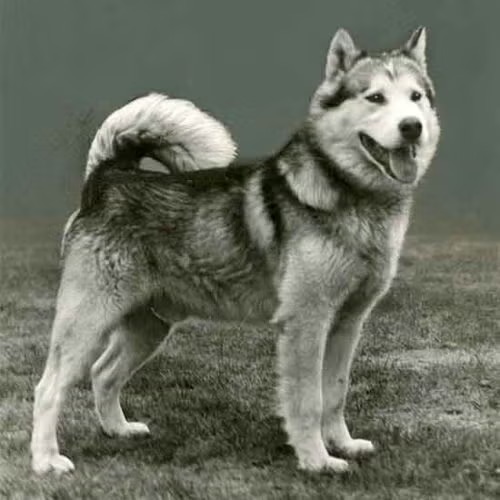
Before mechanized transportation, several working group dogs were used to pull carts or sleds for a variety of reasons. Both the Alaskan Malamute and Siberian Husky are ancient working breeds that were cultivated in Asia, and, while they may appear to be very similar in nature, they have different builds to perform different types of hauling sleds. The heavier-boned and larger Malamute is considered more of the freighter of the two breeds and is built to haul heavier loads at a slower pace, while also serving as a watchdog of the tribe that created them. The lighter-boned Husky is a racier sled dog that pulls lighter loads, covering longer distances at a higher speed. A team of Siberian Huskies led by musher Leonhard Seppala made world news in 1925, when they covered 658 miles of frozen Alaskan tundra to deliver diphtheria serum to Nome, Alaska, which was in the midst of an epidemic. Led by the famous husky, “Balto,” the team made the trip in only five days. If you are considering either breed, you should be prepared to put some work into leash training them, as they will most certainly want to pull you.
While the Husky and Malamute originated in Asia and primarily pulled sleds, the European drafters were bred to haul carts over mountainous terrain. Perhaps the most famous breed of European drafters is the St. Bernard. Bred by the monks of the St. Bernard Hospice located in the Alps between Italy and Switzerland, this massive breed became famous for its search and rescue of humans after avalanches, but was also used to pull carts loaded with firewood and supplies. And contrary to popular belief, they did not carry small barrels of brandy around their necks. The Greater Swiss Mountain Dog was known as the “poor man’s horse” and was used to pull carts laden with farm goods to the marketplace while also serving as a guard dog to protect the goods. While known for their smiling faces, the Samoyed was used for pulling sleds in frigid temperatures, hunting, and, later on, herding reindeer. Also, because of their thick coats, they were used for huddling with the tribe at night to keep warm. They are an extremely loyal breed who attach to their families easily and will keep a watchful eye on them.
The swimmers of the working group are the Newfoundland and Portuguese Water Dogs. Known as “Newfies,” they have webbed feet and a water-resistant double coat. They are natural maritime lifesavers, still used by the Canadian Coast Guard to dive into the icy waters of the North Atlantic to rescue any man overboard. As the breed made its way inland, they also excelled in the Newfoundland region in assisting lumberjacks by hauling loads of timber. While not as massive as the Newfoundland, the Portuguese Water Dog is the other swimmer of note in the working group. Porties were used to herd fish into the nets and then pull the fish-filled nets to the boats. They have a racier design than the Newfie and were used to quickly deliver messages between boats.
The Standard Schnauzer is the original of the Schnauzer breeds and was bred to be an all-purpose farm dog in Germany. Used to protect and herd flocks, they were also known for their vermin-hunting abilities. Unlike a herding dog or terrier, they were known to be formidable guard dogs who were not afraid to physically intervene in a problem. Similar breeds include its larger cousin, the Giant Schnauzer, as well as the German Pinscher and the Danish Swedish Farm Dog.
Each one of these breeds will be loyal and faithful companions to your family. However, because they were bred to do a job, they will need to be socialized and trained early. Their heavy coats will require either regular brushing, or, in the case of the Schnauzers, stripping. The working breeds may have technically lost their jobs, but are still, by and large, true to their origins and will need an owner ready to give them a purpose.
The drafters and swimmers of the working group are the Alaskan Malamute, Bernese Mountain Dog, Greater Swiss Mountain Dog, Leonberger, Newfoundland, Portuguese Water Dog, St. Bernard, Samoyed, Siberian Husky, Standard Schnauzer, German Pinscher, and the Danish Swedish Farm Dog.
If you have any questions, please email fouronthefloorschool@gmail.com.
Heidi Clayton started Four On the Floor Dog Training to provide positive, reward-based dog training in South Jersey. She breeds, trains and shows bull terriers under the SoraBully’s Bull Terriers kennel name. Email questions to heidi@fouronthefloordogtraining.net or learn more at https://fouronthefloordogtraining.net