Drink Up!
A reader recently asked me to write an article about the wines of Sicily. So, for my last in a series of articles discussing the wines of Italy, I am accommodating his request and doing one better. There are two significant wine-producing islands in Italy: Sicily and Sardinia. Pour yourself a glass, because we are going to the islands!
Sicily is the largest island in the Mediterranean Sea, located immediately southwest of the “toe” of the “boot” that is Italy. The history of vineyards on the island dates back to the 4th millennium B.C.E., over 6,000 years ago. The Phoenicians and the Greeks advanced the viticultural techniques of wine production in Sicily during the first century B.C.E. Not surprisingly, it was during the Roman Empire, between 27 B.C.E and 476 C.E., that wine production expanded and the wine produced on the island became popular throughout the known world. Marsala wine was the principal wine produced in Sicily until the 1970s. At that time, local vineyards switched their focus to other quality indigenous grapes grown on the island.
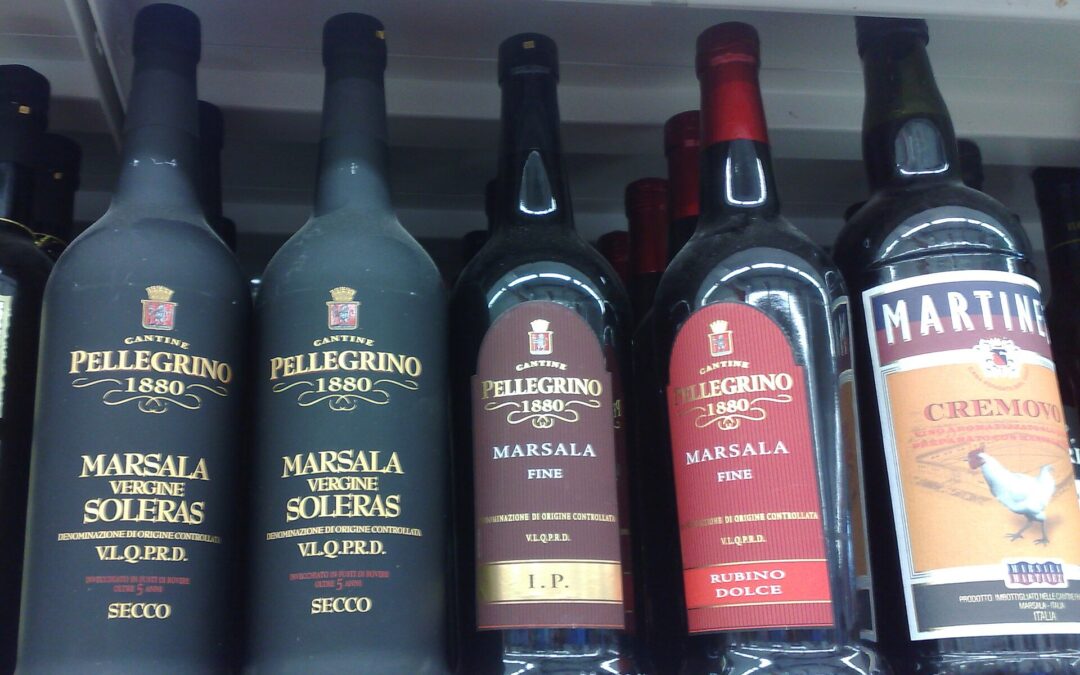
Marsala is a fortified wine, similar to port wine or sherry, in which the juice from the grapes is fermented to make wine. Then, before all the sugar is consumed by the yeast, brandy or another neutral grape spirit is added. The addition of the spirit stops the fermentation process while the wine is still relatively sweet and low alcohol, about 5-7%. The spirit then increases the alcohol content to 15-20%. The indigenous grapes used in making Marsala include Grillo, Inzolia, Catarratto, and Rubino. Although the most common usage of Marsala in America is as a cooking ingredient (e.g., Chicken Marsala or tiramisu), it is consumed as a beverage throughout most of the world. Dry Marsala is used as a before-dinner aperitif; sweet Marsala is used as a dessert wine or digestif. It can also be used in cocktails as a substitute for vermouth.
The terroir of Sicily is much more diverse than one might imagine. The island has a warm Mediterranean climate with Maritime influences along the coast. Daytime summer temperatures can be very hot, but the ocean breezes cool them significantly after the sun sets. Most of the topography of the island is dominated by hills and mountains. Mount Etna is still an active volcano there, with eruptions earlier this year. As a result, the soil has notable volcanic influences from the ash and pumice added to the limestone and clay soil. This gives the wines of Sicily a unique minerality and savory aroma and flavor.
The most popular white grape, other than those used for Marsala production, is Grillo. The popularity of this grape has grown significantly since the turn of the century, with plantings increasing by as much at 400% on the island. Grillo is an indigenous grape that produces a very dry, medium-bodied, fruit- and floral-scented wine. A great example is the Villarini Grillo Sicilia DOC. Villarini wines are produced from family-owned vineyards in western Sicily. This certified organic wine is 100% Grillo fermented and aged in stainless steel vats to preserve the natural flavor of the grapes, and is very reasonably priced. The aroma and flavors are dominated by notes of mango, melon, apricot and mint with a notable stone-like minerality. Try it with seafood, white meat, and antipasti.
Nerello Mascalese is another indigenous red grape of Sicily. Though sometimes produced into a single-varietal wine, it is more frequently blended with other grapes of the island. The Murgo Etna Rosso is an example of a single-varietal Nerello Mascalese. This wine is a dark ruby red, medium-bodied wine with soft and smooth tannins. The fruit notes are tart cranberries and pomegranate with a very notable minerality from the volcanic soil. Cantine Colosi Rosso Terre Sicilane is a great example of a Sicilian red blend. This wine blends Nerello Mascalese with Syrah to produce a beautiful dark red wine with the flavor and aroma of red cherries and blackberries, with notes of black pepper and vanilla. Both wines pair perfectly with red meat, aged cheeses, and Italian sausage dishes.
The other significant wine island of Italy is Sardinia, or as it is called in Italian: Sardegna. If a healthy life with 100-plus years interests you, Sardinia is one of five identified “Blue Zones” where the population of centenarians are found in higher concentrations. Dan Buettner introduced the world to this concept in his bestselling book in 2004. In the case of Sardinia, Buettner and others have identified one of the contributing factors to be a grape that is grown on the island and produced into wine: Cannonau. While virtually all red grapes have antioxidant properties, Cannonau grapes from Sardinia have higher concentrations of polyphenols, flavonoids, and procyanidins, which may contribute to better vascular health, less inflammation, and improved circulation for those who consume them regularly. To be clear, although this wine has been called “the longevity wine,” it is only one possible factor in why Sardinia is a Blue Zone. Cannonau is actually a close cousin of Garnacha grown in France, Spain and other parts of the world. An example is the Santa Maria Le Bombarde Cannonau. This is a smooth, full-bodied, rich, flavorful wine with notes of dark cherry, blackberries, sage, oregano, and tobacco leaf.
The dominant white wine of Sardinia is Vermentino. The Santa Maria Aragosta Vermantino is a wonderful example. This dry, light, crisp wine has notes of peach and green apple with a touch of salinity and notes of almond on the finish. It’s a perfect choice for seafood and shellfish, as well as salad and cheese platters. Try the Cantina Santa Maria La Palma Akènta Sub Extra Brut sparkling Vermantino. This sparkling wine is aged 120 feet below the Mediterranean Sea within the Porto Conte Regional Natural Park near Alghero, Sardinia. Why? At that depth, the temperature is a constant 50-55 degrees Fahrenheit, and there is virtually no light. The gentle movement of the sea, combined with the pressure, creates a perfect environment for aging this wine. In addition to the fruit flavors noted above, this wine has crisp notes of yeasty bread. This one is a special treat to share with family and friends.
I hope you enjoyed this exploration into the wonderful wines of the Italian islands. Thank you to the reader who recommended the topic and to all of you who read every week. I am humbled by your support. As always, contact me at dsetley@passionvines.com or stop by the Somers Point store. Until next time, arrivederci and happy wining!
Featured Photo By Dedda71 – Own work, CC BY-SA 3.0, https://commons.wikimedia.org/w/index.php?curid=4757322