Drink Up!
Many wine enthusiasts are familiar with the great Italian wines from the wine regions of Tuscany, the Piedmont, Barolo, the Veneto, Valpolicella and Sicily. Even the most casual wine drinker knows the names Chianti, Prosecco, Pinot Grigio, Barolo, and Montepulciano D’Abruzzo. But have you heard of the wine region Campania or the wonderful Aglianico, Taurasi, Falanghina, or Greco di Tufo wines that are produced there?
Campania is south of Rome along the Tyrrhenian Sea on the western coast of Italy. The capital of this region is Naples, the birthplace of Margherita Pizza. Mount Vesuvius, the volcano that destroyed Pompeii in 79 C.E., is located in the center of Campania. Naples is also the gateway to the Gulf of Naples and the beautiful islands of Ischia, Capri, and Procida. The Greeks first colonized the region in the 8th century B.C.E. and founded the city of Naples. The Etruscans, a culturally sophisticated, wealthy civilization of ancient Italy that originated in modern-day Tuscany, inhabited this region late in the 8th century until the 3rd century B.C.E. The Romans conquered the Etruscans at the Battle of Lake Vadimone in 283 B.C.E.; Campania Felix, as they called it, became a resort for wealthy and affluent Romans. The Roman name for the region meant “fertile” or “happy.”
The terroir of Campania is dominated by a Mediterranean climate with hot, dry summers and mild winters. The region’s proximity to the coastline results in a significant Maritime influence from the cooling sea breezes. The terrain is hilly with many of the vineyards situated on steep slopes as high as 1,300 feet. The soil is mineral-heavy with heavy concentrations of ash, pumice, and obsidian, especially in the areas around Mount Vesuvius. The remainder of the soil is mostly clay and limestone. This environment is why the wines produced from Campania have long been valued in Italy.
The dominant red grape of Campania is Aglianico, pronounced “ahl-YAH-nee-koh.” Just pretend the “g” is not there. Aglianico is a thick-skinned, late harvest red grape that produces a high tannin, intensely aromatic and flavorful, age-worthy wine. A very affordable and enjoyable example is the Fattoria La Rivolta Beneventano I Vigneti Di Bruma Aglianico. Beneventano is the appellation of Campania where the Fattoria La Rivolta vineyard is located. The given name of this wine — I Vigneti Di Bruma — means the vineyard of the mist and describes the atmosphere around the hills of the vineyard in the early mornings. The Cotroneo family launched production in 1997 and immediately initiated organic farming practices, earning organic certification in 2001. This wine is medium to full-bodied, dry, and aged in stainless steel to retain the rich, intense red fruit flavors. Enjoy the slightly earthy notes with a long, flavorful finish.
Another excellent example is the Terredora DiPaolo Aglianico Campania. The Aglianico grapes are macerated for no more than 5-7 days to maintain the natural aromatics and to prevent the tannic structure of the wine from becoming excessive. The wine is fermented in temperature-controlled stainless steel vessels, resulting in a medium-bodied, ruby red wine with a smooth texture and fresh aromas of black cherry and thyme. The flavors of black cherry and herbs pair perfectly with charcuterie, soups, pasta, salad or any Mediterranean dish. The relative lightness also serves well as an aperitif when slightly chilled to about 60 °F.
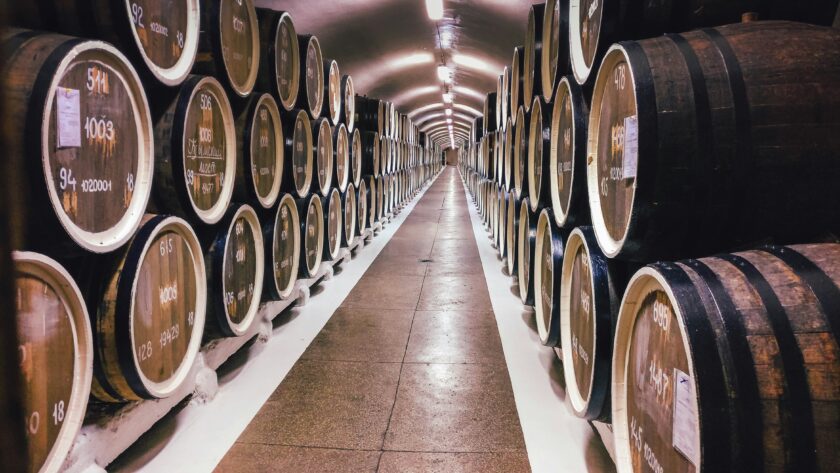
Arguably, the most perfect expression of Aglianico wine is from the strictly regulated Taurasi subregion of Campania. Similar to other Old World wine regions, wines with the name Taurasi DOCG on the label must be cultivated and produced in the 16 specific villages within the province of Avellino in Campania. Additionally, the wine must be aged for a minimum of 3 years, with at least 1 of those years in oak. Try the Terredora DiPaolo Fatima Contadina Taurasi. “Fatima Contadina” translates to “hard farm work” in honor of the vineyard and the many hard-working laborers who make this fine wine. Taurasi wines are frequently referred to as the “Barolo of the South” due to the extreme quality standards required to earn the name. This Terredora Taurasi is macerated for 10-12 days and then aged in French and Slovenian oak barrels for 24 months before bottle aging for 24-36 months before being made available for sale. The resulting wine is full-bodied with a dark ruby color and a complex aroma of dark cherry, spices, tobacco leaves, and earth. The rich tannins are velvety and well-structured and the flavor is well-balanced with notes of dark fruit and minerality. Enjoy this age-worthy wine with roasted or grilled beef, lamb, or game, or with aged cheeses. Though compared to a Barolo, it’s generally less than half the price! If you are a lover of Italian wine and you have not treated yourself to Taurasi, what are you waiting for?
Campania is also the home of wonderful white wine. Two of my favorites are Falanghina and Greco di Tufo. The name Greco di Tufo reminds us that the Greeks first planted many of the vines in this region of Italy. Tuff is the word used to describe the volcanic soil of the region around the village of Tufo. Greco is the name of the ancient grape used in producing this wine. Terredora DiPaolo Greco di Tufo is a wonderful wine with an intense aroma of apricot, apples, peaches, and herbs. The flavor is dry with the perfect balance of fruit notes and minerality from the volcanic soil. Greco di Tufo pairs well with all seafood.
You may not be familiar with the grape Falanghina, but if you enjoy Italian white wine, you should be. Terredora DiPaolo Irpinia Falanghina is a classic example of this wine. The wine features the intense aromas of tropical fruit, such as pineapple, as well as notes of citrus and apple. This crisp, fresh wine is the perfect summer white that pairs well with cheese, cream sauces, and seafood. If Pinot Grigio or Sauvignon Blanc are your usual white wines of choice, try a Falanghina or Greco di Tufo.
I hope you enjoyed this exploration into the wonderful wine of Campania. If you would like to taste and learn much more, I invite you to join me for “Week Two of Wine Foundations Italy” on May 5 where I will feature many of the wines above. Details may be found at passionvines.com. As always, contact me at dsetley@passionvines.com or stop by the Somers Point store if you have any questions or comments. Until next time, happy wining!
David Setley is enjoying his retirement from higher education as a wine educator and certified sommelier at Passion Vines in Somers Point, New Jersey.