Drink Up!
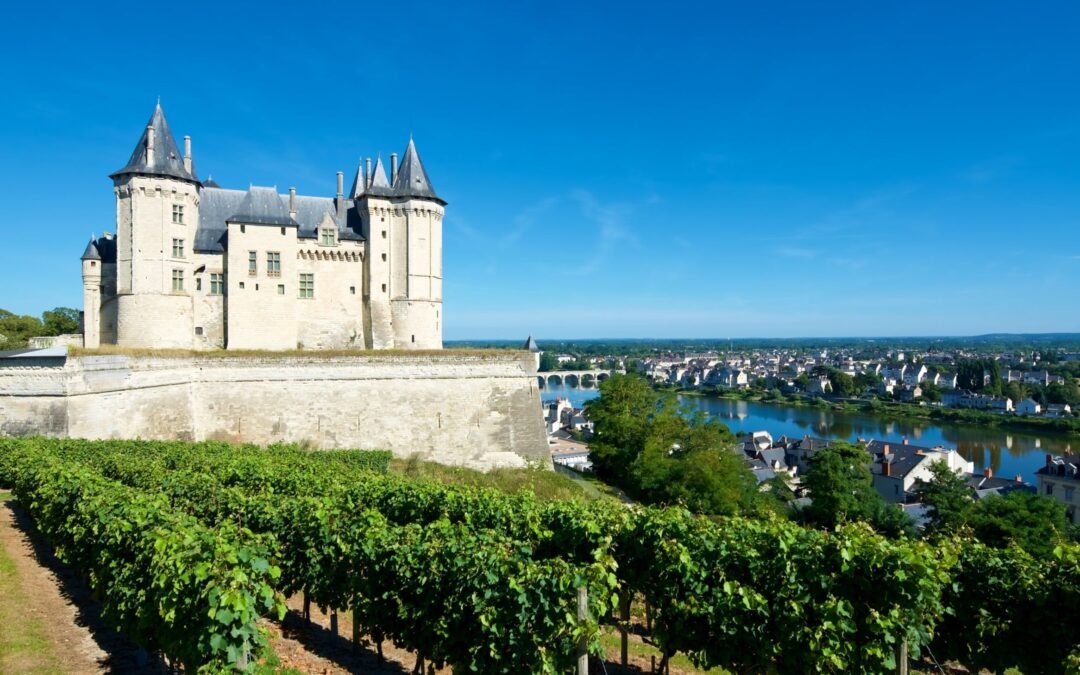
The Loire Valley, a region known for its many chateaus, is also regarded as the “Garden of France” for its many diverse orchards, gardens, and vineyards. The Loire River is the longest river in France at 634 miles, starting near Ardeche in the mountains of central France, traveling north and west to Nantes, before emptying into the Atlantic Ocean. The fertile soils of this region have been farmed for more than 6,000 years. Vineyards were introduced to the Loire Valley during the Roman Empire. After their fall, the Huns had a short stint of rule until King Clovis I, the first King of France, re-conquered the region in the year 506. Christianity returned to the region and, thanks to local Bishops St. Gatian and St. Martin of Tours, vineyards flourished. Today, we benefit from their work through the wonderful and diverse wines that we enjoy from the Loire Valley.
Vouvray is an appellation not far from Amboise in the middle section of the Loire Valley and is the Chenin Blanc region. The terroir is unique, as it is located on a plateau high above the river. This provides a relatively warm maritime influence with breezes moving through the valley from the Atlantic Ocean. Additionally, the limestone just under the clay soil, called tuffeau, creates the perfect combination of drainage and water retention that protects the vines from both drought and floods.
Vouvray white wines are incredibly food-friendly and pair with seafood, poultry, or pork. They are light- to medium-bodied with high acidity and tasting notes of pear, honeysuckle, ginger, and green apple. The Chenin Blanc grape is used to make dry, off-dry, sweet, and sparkling wines. I had the pleasure of tasting them all during a wonderful tour at the Chateau Vigneau-Chevreau. Christophe, who owns and operates the vineyard and winery alongside his brother Stephane, generously offered a tasting of each wine. Our favorite was the Vigneau-Chevreau Cuvee Silex. Silex is the type of soil present at the vineyard and is rich in flint, which results in outstanding minerality in the wine. I was thrilled to be able to get this wine in at Passion Vines! Many who attend events and classes know this wine as my absolute favorite white wine. We also have the Vigneau-Chevreau Sparkling Vouvray wine available. This wine has the same wonderful flavor profile with the addition of effervescence. The bubbles are created utilizing the Methode Traditionnelle, the same method used for making Champagne.
Sancerre is a region that has become so famous that the wine produced there is better known by the name of the region rather than the grape varietal. Customers looking for a Sancerre may not realize they are actually requesting a Sauvignon Blanc. Sauvignon Blanc accounts for approximately 81% of all the grapes grown there. As famous as the wines are, however, this region is a bit off the beaten path. When my wife and I visited, we were surprised when the train doors opened onto grass. The Tracey-Sancerre stop is quite literally a stop, not a station! Sancerre is the epitome of pastoral beauty as a small medieval hilltop town overlooking the Loire River with a population of just over 1,300 people.
Sancerre AOC (Appellation d’origine contrôlée) is located in Centre-Val de Loire (the Central Loire Valley). This region is comprised of the area immediately surrounding the town, plus 14 nearby villages. It is the terroir, specifically the soil, that makes the Sauvignon Blanc of Sancerre so outstanding. The calcareous (calcium carbonate and chalk) and silicious (silica limestone) soils are what give the wines such wonderful minerality that is a perfect balance of fruit and minerality with a crisp, clean, fresh taste. Sancerre Sauvignon Blanc wines are very dry and typically extremely low in sugar. Many wine enthusiasts consider Sancerre the world’s most perfect demonstration of Sauvignon Blanc wine, but I leave that for you to decide.
An incredibly common name in Sancerre is Mellot. The Mellot family has been making wine there for over 500 years. As young men, brothers Alphonse and Joseph worked together at Domaine La Moussiere Alphonse Mellot Wines. In 1969, Joseph broke off and established Domaine Joseph Mellot. Both have been very successful and have continued the family’s tradition of outstanding winemaking. Try the Alphonse Mellot Sancerre La Moussiere Sauvignon Blanc to experience exactly what makes Sancerre famous. You can also try the Domaine Henri Bourgeois Sancerre Blanc or the Karine Lauverjat – Sancerre.
Before we leave the Centre-Val de Loire, there are several other appellations worth mentioning. Menetou-Salon is located very near Sancerre and also produces Sauvignon Blanc. The soil here is called Kimmeridgian and is similar to that found in Burgundy. This soil was deposited here after the last Jurassic period. The wine is equally dry, crisp, and fruity but with a touch of spice and mint. Try the Domaine Durand Menetou-Salon Blanc.
Very near Sancerre is Pouilly-Fume, where Sauvignon Blanc is again the primary output, but with yet another distinct terroir. The soil is diverse with many of the types already discussed, but with a dominant vein of Silex. I met with Pauline Pabiot at Domaine Roger Pabiot in Pouilly-Fume during my visit last year. Pauline is the fifth generation to be the president and head winemaker of the family estate. Try the Pauline Pabiot Pouilly-Fumé Coteaux des Girarmes to better understand why Pouilly-Fume wines are becoming nearly as famous as Sancerre. The aroma features notes of pear, white peach, orange blossom and honeysuckle. On the palate, you will notice white peach, green apple, and a distinctive minerality that distinguishes Pouilly-Fume wines from those in neighboring Sancerre. Fume means “smoked,” which comes from the unique flint rock soil in the region.
On the opposite end of the Loire Valley, near the city of Nantes and where the river empties into the Atlantic Ocean, is the Muscadet AOC wine region and its primary appellation, Muscadet Sevre-et-Maine. Their wine is known as Muscadet, but is made from a grape with an unusual name: Melon de Bourgogne. I visited a winery and was impressed by the meticulous process used to produce this wonderful wine. Upon crushing, the juice rests in holding vats for 48 hours. The temperature-controlled alcoholic fermentation then lasts 3-4 weeks before the wine is pumped into underground holding tanks for up to 14 months on the lees (sur lees). Lees are the dead yeast that fall to the bottom of the vat. Rather than pumping out the lees, the wine remains in contact throughout aging to enhance the flavor. Try the Domaine de la Bregeonnette Muscadet. Though great with all seafood, Muscadet is the ultimate “oyster wine.”
Warmer weather is upon us, and white wine is on our minds. I hope you will try some of these Loire Valley white wines. I know you will not be disappointed. As always, contact me with any questions at dsetley@passionvines.com, or stop into the store. Until next time, “santé” and happy wining!
David Setley is enjoying his retirement from higher education as a wine educator and certified sommelier at Passion Vines in Somers Point, New Jersey.