
One of the things I love about having a garden is being able to run outside while dinner cooks on the stove and grab some fresh herbs to add to my meal. While the dried version of some herbs will do in a pinch, in my book, cilantro must be fresh-picked from the garden for the best taste. Cilantro tastes delicious on fish tacos, enchiladas, and Thai dishes. It’s a quintessential ingredient in pico de gallo — which I can never get enough of.
While we may think of cilantro as a summertime herb, it is actually a cool-season plant. Seeds can be started in early spring once the soil begins to warm and the days grow longer. Once temperatures reach 80 degrees or more, your cilantro will begin to bolt, flower, and set seeds. This is simply the completion of its life cycle as an annual plant. You can slow the process a bit by trimming your cilantro before the flowers form, causing it to push out new growth and fresh leaves. You can also delay the bolting of your cilantro by keeping them well-watered or giving them a little shade. Cilantro does like full sun, but the intense heat of a summer afternoon can be too much. Plant your cilantro in a space that starts with sun in the morning, but gets shade in the afternoon. If you grow your cilantro in pots or other containers, you can move them around and place them in shade during the hottest days. But in due time, a little umbrella of white flowers will appear, marking the transition to the next stage. Fortunately, the flowers of cilantro are edible, and you can harvest the lower leaves. However, don’t remove all of the flowers, because once they are pollinated by your favorite bees, you will receive the gift of seeds for the next season.
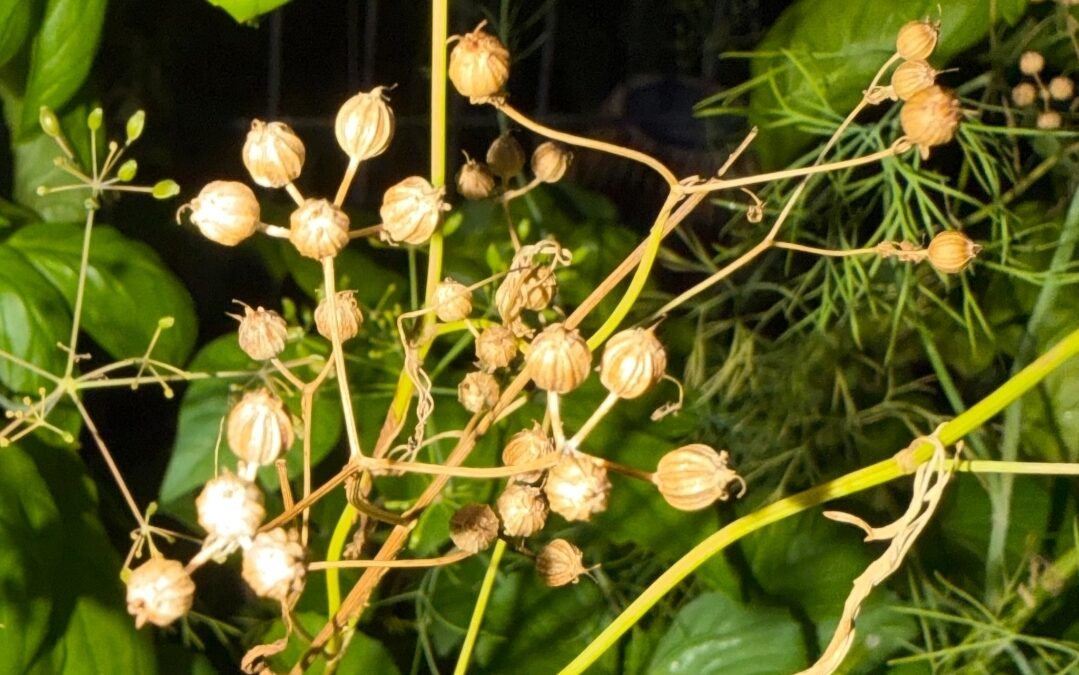
Allow the seeds to mature until they form tiny, hard little brown orbs called coriander. It may be a bit confusing since in other countries, such as England, they call the whole plant coriander, even when it is fresh. Stop at the spice aisle of your supermarket and you will see that you can purchase small bottles of whole or crushed coriander. If you have enough seeds to spare, you can grind your own coriander. Personally, I imagine each seed as a future plant and do not want to waste a single seed. Once the seeds have fully dried and hardened on the plant, you can collect them to plant the next season. In my garden, most of my cilantro plants have reached this stage of maturity. While I do collect some of the seeds for next season, I like to grab a handful and fling them wherever I wish to have cilantro growing next year. Every spring, I am delighted to see new plants popping up in unexpected places. I’m sure my feathered friends help spread and plant some of the seeds as well. Of course, you may prefer to have a more orderly garden. In addition to my “chaos” gardening method, I also plant nice neat little rows of cilantro that I can keep an eye on.
If your cilantro has gone to seed, or if you missed planting it this year, you are in luck. This is the perfect time to plant a new crop. Warm temperatures will aid in the germination process, but by the time the plant begins to mature, our weather will have cooled down a bit, providing the perfect conditions for your cilantro to thrive. Cilantro plants do not like to be moved around, so plant them directly in the soil where you want your plant to grow. The little seed balls have a tough outer shell. You will want to soak them in water for about 12 to 24 hours before you plant the seeds. When planting in summer for a fall harvest, keep an eye on the weather. Do not plant your cilantro seeds if we are experiencing another heatwave. Especially when planting in summer, keep your seeds and seedlings well-watered and do not let them dry out.
We would love to hear from our readers. What is your favorite food to make with cilantro? Send your comments and questions to: shorelocalgardener@gmail.com.
Tammy Thornton lives with her husband, children, and crazy pets while enjoying a life of gardening, cooking, and going to the beach.