
By Tammy Thornton
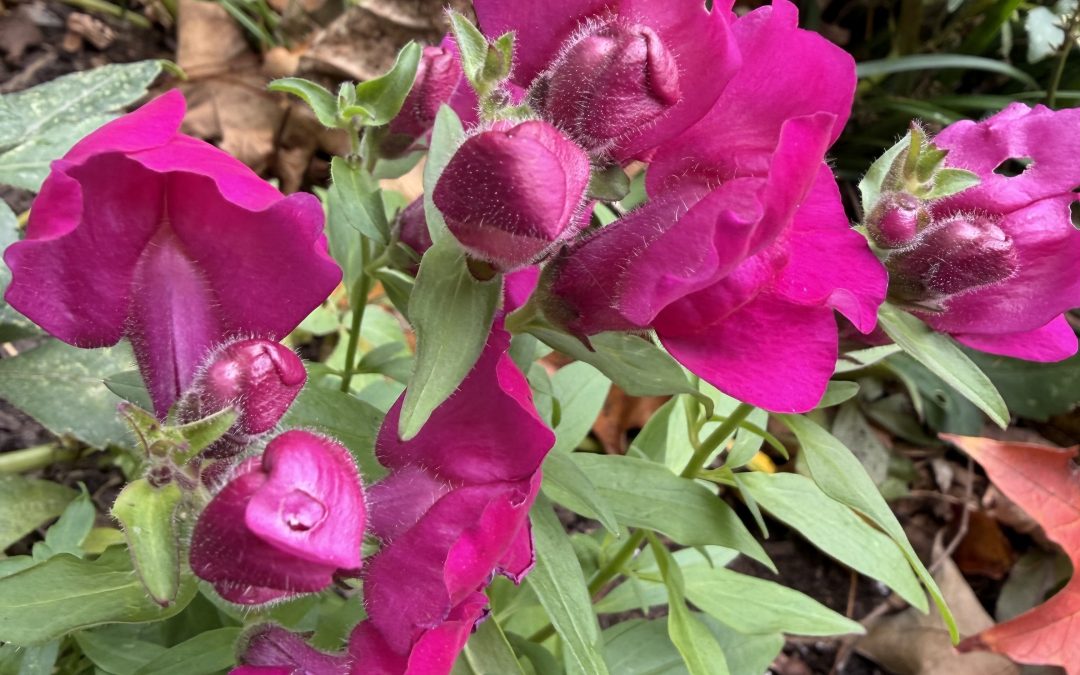
Normally, when we think of snapdragon flowers, we picture a cottage garden full of blooms that can be picked in spring. We treat them as annuals that die after blooming, and plan to start all over again next spring. However, in recent years, snapdragons have been making their appearance at garden nurseries for fall gardens as well. In addition to the pastel colors of spring, snapdragons in orange, peach, burgundy, red, and yellow perfectly fill the garden with fresh new blooms in fall. Snapdragons are cool-season plants, happy in both spring and fall weather. But once the heat of summer grows intense, they will take a little siesta and stop blooming. Some may succumb to the heat altogether, but given a little protection from the heat, they can bounce back in fall with a new flush of flowers. Though we often treat them as annuals, snapdragons are actually tender perennials or short-lived perennials. They can even handle a light frost. When winter arrives, it is possible for the roots to survive underground if they are well-protected. Living along the eastern coast, we often have milder weather than our friends living north or west. But, of course, there are notable exceptions like last winter.
Even so, your snapdragons can freely reseed, and cold weather can help aid in germination of the seeds in a process called cold stratification (something to keep in mind when we are shivering this winter). This makes them excellent candidates for winter sowing, a plant-propagation technique, which takes advantage of the natural freezing and thawing of winter. If you want to collect and save seeds, wait until the seedpods turn brown and are completely dry. This is when things get interesting. Once the seedpods form and dry out, three small holes appear in the dried seedpod giving the appearance of a “face” that some gardeners refer to as a monkey face or even a skull. Though this might sound a little creepy, this is nature’s way of freeing the seeds, which can then escape from the holes in the seedpod and land in the soil. If you would like to collect the seeds, wait until these holes form and give the seedpod a little shake. But be ready because the seeds are very tiny and it will be easy to drop them.
You may have wondered about the snapdragon name. If you give the flowers a little squeeze on the sides, the “jaws” of the flower open and shut, giving the appearance of a dragon’s face and mouth. This works because the corolla, or petals, are fused together like a two-lipped hinge. It is thought that these closed lips help keep the “gate” closed until bigger and more effective pollinators like bumblebees can push their way into the flower. A closer look at the individual flowers helps us understand the humorous genus name of Antirrhinum which comes from the name meaning “like a snout” for the funny-looking, big-nosed animal face of its flowers. Personally, I prefer to try to forget this image and just enjoy their beauty as a whole.
Snapdragons make excellent cut flowers and are valued for their tall stems and long vase life.
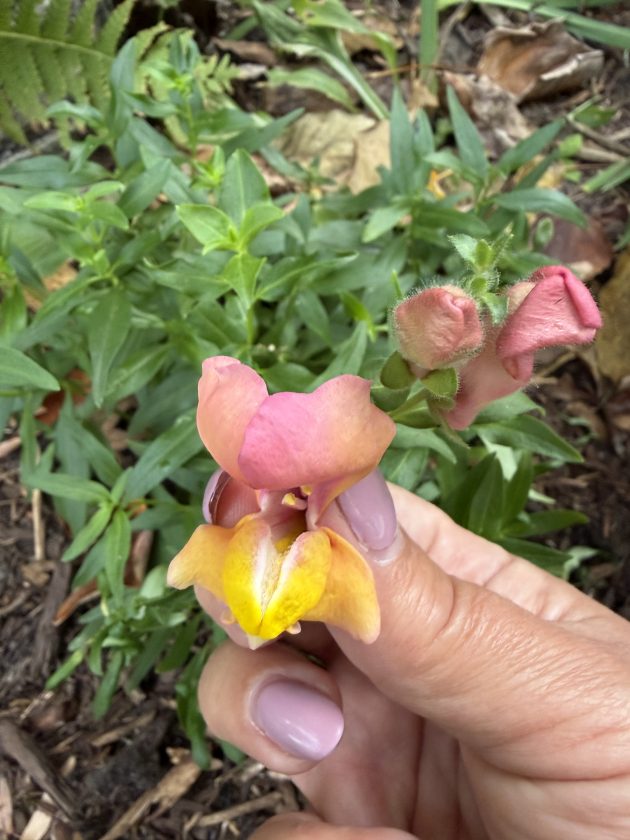
They bloom starting with the buds from the bottom of the stem and gradually bloom moving up. Harvest cut flowers when only some of the lower flowers have bloomed, and the other buds will continue to bloom indoors. Change the water frequently for a longer vase life. Provide bright but indirect light for your vase of flowers and turn the vase every couple of days to keep the bouquet even, because the flowers will lean towards the light.
We would love to hear from our readers. Have you been more successful at growing snapdragons in the spring or fall? Have you ever opened and closed the dragon’s mouth? Send your comments and questions to shorelocalgardener@gmail.com.
Tammy Thornton lives with her husband, children, and crazy pets while enjoying a life of gardening, cooking, and going to the beach.