There was a time when thousands of beachgoers came to the shore armed with transistor radios that were tuned in to oldies, the Phillies game, or maybe even talk radio. Though transistor radios have been replaced by cellphones, Atlantic City residents, and visitors, are still listening to the radio quite a bit, according to the ratings outfits. Here’s how it all started:
In January 1925, Atlantic City featured an estimated 1,000 hotels and guesthouses. There were six piers, 21 movie theaters, 13 churches, six newspapers, three golf courses and three hospitals. The “seasonal average” population, according to city records, was around 100,000.
It’s been reported that the city hosted an estimated 10 million visitors annually. And, though Prohibition had been the law since 1920, those living in or visiting Atlantic City, and neighboring areas, had no problem obtaining liquor. Atlantic City, it would seem, was a place that had everything.
Except for its own radio station.
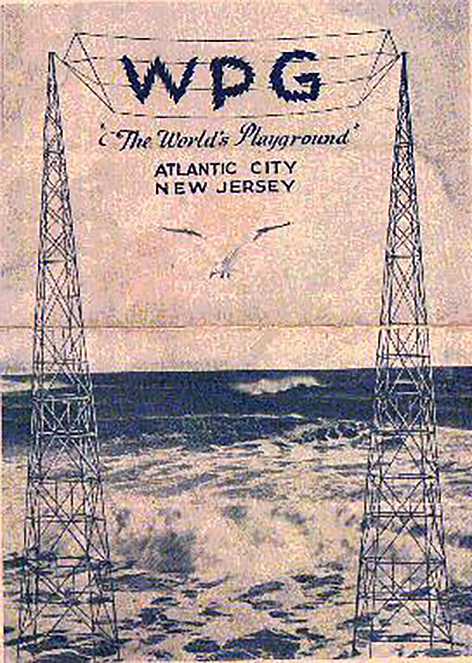
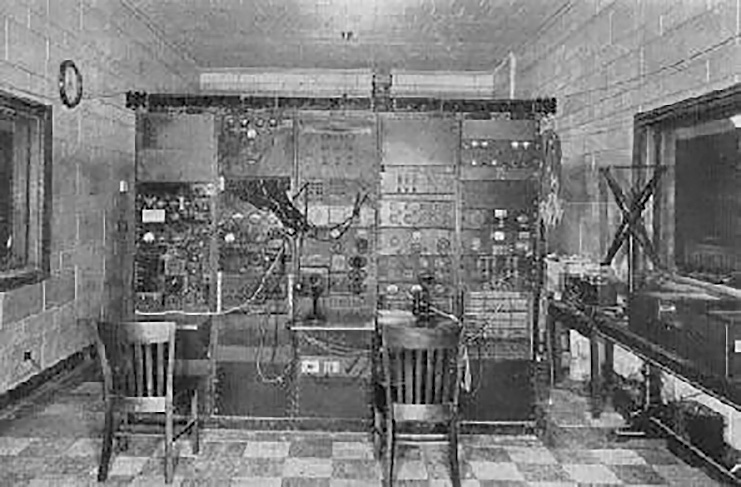
That changed on Sunday, Jan. 3, 1925 when the city-owned WPG radio station, located within Atlantic City High School on Albany Avenue, went on the air at 9 a.m. Among the first guests were Mayor Edward L. Bader and Senator Edward I. Edwards, who both welcomed WPG to the city airwaves. The first musical entertainment was a concert by the Ambassador Hotel Concert Orchestra.
WPG, 1100 on the AM dial, stood for “World’s Play Ground.” Early programming consisted of local and national news and live concerts. Business was so good that the station moved its headquarters to Convention Hall – now Boardwalk Hall – in 1929.
In a sales sheet sent to prospective advertisers in 1929, station Vice President/General Manager Edwin M. Spence touted the station’s extraordinary signal and coverage.
“WPG covers the normal range of a 5,000-watt station, which in this instance is all South Jersey, Delaware and a great portion of upper Maryland,” Spence wrote. “In addition, as stated above, to our so-called overspill, which is the entire Atlantic Seaboard, I venture to say our listening audience in many places on the Atlantic Seacoast is considerably greater than that of small-power local stations.”
From the beginning in 1925, WPG was the only show in town. Great while it lasted, but by 1938, the fortunes of WPG changed.
There were unspecified financial problems. Media at the time speculated that competition from an ultra-strong signal emanating from New York City, also at 1100 AM, may have been the cause. Though the station was not in the immediate Atlantic City area, the signal was strong enough to create reception issues.
In 1938, WPG shut down leaving Atlantic City without its own radio station; but that wouldn’t be the situation for long.
On Feb. 15, 1939, a federal permit was granted for radio station WFPG to broadcast at 1420 on the AM dial via a 100-watt signal. The first year or so was deemed “experimental” by the city, giving the station time to work out the kinks and ensure there would be no interference on its dial position like what happened previously.
On Aug. 9, 1940, WFPG officially went on the air, with studios located at Virginia Avenue and the Boardwalk. A year later, the station’s power was upped to 250 watts and it moved to 1450 on the AM dial where it remains today, in addition to its FM counterpart at 95.5 on the dial.
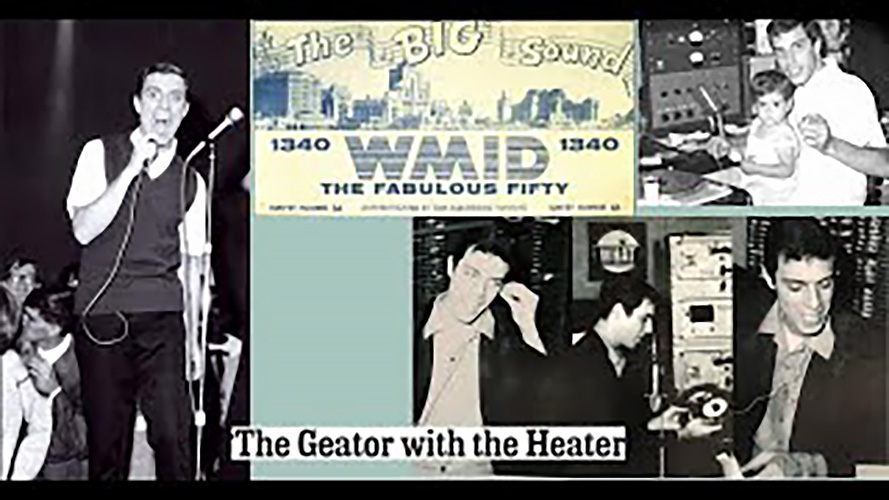
The Mutual Broadcasting System, from 1934 to 1999, was a major syndicator of radio programs like “The Lone Ranger” and “The Adventures of Superman.” On May 30, 1947, Atlantic City‘s WMID radio, 1340 on the AM dial, went on the air with studios at the old Brighton Hotel as the 400th affiliate of the Mutual Broadcasting System as the city’s second radio station. At 250 watts, WMID‘s power was, from the day it went on the air, equal to that of WFPG. WMID was to become the musical voice of the city from the 1950s through the 1970s.
The floodgates opened for Atlantic City radio stations in the summer of 1950, when WOND became Atlantic City’s third radio station, broadcasting from a Linwood studio via 1400 on the AM dial. As an ABC affiliate, WOND had a power advantage, broadcasting with a 1,000-watt signal.
Like most other radio stations, WOND has had a number of format changes through the years, including Top-40 music and talk from the likes of Pinky Kravitz and a very young Jessica Savitch. Today, the station’s format is conservative talk.
WFPG FM, known today as Lite 96.9, began broadcasting in September of 1962 as the FM counterpart of WFPG’s AM signal at 1450 on the dial.
It had numerous name changes through the years, including WFPG, WIIN, a return to WFPG from 1988 to 2002, then WKXW and WENJ. Now called “WPG Talk Radio,” in 2020, the station was voted Atlantic City-Cape May radio market’s top-rated news/talk station.
Despite cable television, streaming and every other form of entertainment seemingly available on the airwaves these days, radio remains popular in Atlantic City. Though not considered a big market by the Nielsen Audio Ratings people – of all the radio markets in the U.S., Atlantic City is ranked No. 15. It may be small in size, but the fact is, a lot of folks tune into these stations, and others, in this market.
An analyst for Nielsen described the Atlantic City/Cape May market as “an active radio scene with a dedicated local listenership.” Who could ask for anything more?
WFPG, WMID and WOND paved the way for more than a dozen stations on the air today. Some are classified as educational or religious, others have limited power, but the vast majority have proven music formats that range from adult contemporary to classic rock.
Atlantic City may be a small town when it comes to size, but as a radio market, it’s as impressive as any big city.
Bruce Klauber is the author of four books, an award-winning music journalist, concert and record producer and publicist, producer of the Warner Brothers and Hudson Music “Jazz Legends” film series, and performs both as a drummer and vocalist.