Allergies, costumes and what to do with all that candy
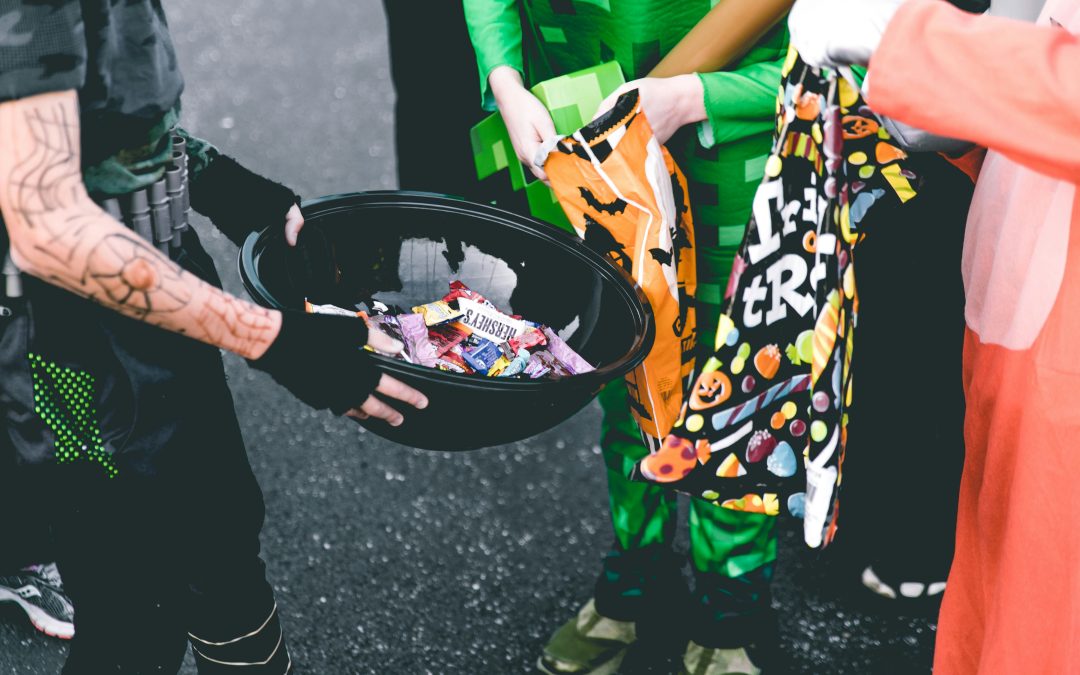
This Saturday our little goblins and ghouls will be out ringing doorbells to collect their sweet and colorful loot. By 8 p.m. we all know the scene: an empty candy bowl by the door, a pillowcase heavy with treats, and a kitchen table covered in wrappers. Then Sunday arrives, and we get to deal with the aftermath. With a little planning, we can keep the fun and skip the stomachaches, cavities and trips to urgent care.
Let’s start with the candy itself. No candy is a health food, but some choices are kinder to teeth than others. Dentists generally prefer chocolate over sticky, chewy and hard candies. Chocolate melts and rinses away easily, while taffy, caramels, gummies and candy corn cling to teeth, and lollipops and hard candies bathe teeth in sugar for as long as they last. Sour candies add acid, which can wear down enamel. Hard candies and gum are also choking hazards for children under four, so please keep them out of little hands.
Allergies also deserve our attention, and this one is close to my heart. My son has a severe dairy allergy, and when he was a little boy and dumped his candy haul, we read every label like detectives. I remember how carefully we had to watch what came out of his bag, because one wrong bite could mean a reaction and a trip to the emergency room. Chocolate, the candy dentists like best, is often one of the biggest culprits, so it can be the trickiest part for a child with a dairy allergy. We learned to search for words in addition to milk, such as whey, casein and butterfat. If you are in the same situation, be aware that fun size and seasonal packages can have different ingredients and manufacturing than the regular versions, so read the label every time, even on candy you have bought for years. Families managing food allergies should inspect everything at home, set aside anything unwrapped, unlabeled or homemade, and carry an epinephrine auto-injector while out. While we teach children not to eat anything until a grown-up has checked it, excited trick-or-treaters will be tempted to sneak a piece of their favorite candy, so a reminder before the first doorbell ring goes a long way.
Families with allergies should look for the teal pumpkin. It is the symbol of the Teal Pumpkin Project from Food Allergy Research & Education, and it means a home is offering non-food treats like stickers, pencils and glow bracelets. A teal pumpkin or a second bowl of non-food items costs little and lets every child take part. If you are the one handing out treats, this would be a welcome addition that the parents of kids with allergies will notice and appreciate.
Then comes the question every parent and grandparent asks around November 1st: what do we do with all of this? When the bags come home, let each child pick a handful of favorites to keep and put the rest out of sight. One small piece with dessert each night beats an all-at-once binge, and it gives the stash a finish line, whether that is a week or the last favorite.
For the extra candy, many dental offices run buyback programs that send leftovers to troops or community groups, so a quick call to your dentist could turn the pile into a good deed. Some families trade candy for a small toy. Others chop it up for baking or trail mix. The freezer is also a surprisingly effective hiding place.
Costume safety is also an important consideration. Make sure hems clear the ground and shoes fit well, since tripping is one of the most common Halloween injuries. Let’s choose costumes labeled flame resistant and keep children away from candles and jack-o’-lanterns. Battery-operated lights are a safer choice. Masks that block vision or hearing are risky, so consider face paint instead, tested on a small patch of skin a day or two ahead in case of a reaction. Skip decorative contact lenses that do not come from an eye doctor, because they can cause serious eye injuries. Keep props soft and flexible and plan for layers on a chilly evening.
Be aware of your child’s choice of footwear, too. I will never forget one Halloween when I was about eight. I tripped over untied moccasins and cracked open my lip. I had to go to the ER for stitches and still have a tiny scar on my lip today. I remember being more upset that I would miss the rest of the night of trick-or-treating than the fact that my lip was split open and bleeding!
Pedestrian accidents rise on Halloween, so we want every child to be seen. Add reflective tape, glow sticks or flashlights to costumes and bags. Children should stay on sidewalks, cross at corners, look both ways, and keep phones in their pockets. Young children need an adult with them, and older ones should travel in a group on a planned route. Drivers, this one is on us too. Slow down in the early evening and expect little ones to dart out between parked cars.
We don’t want to remember our Halloween for tummy aches, cavities or a trip to the ER. With a little care and a lot of love, let’s make this a Halloween everyone remembers for the costumes, the fun and the laughs.
Robin Stoloff is an award-winning health reporter in South Jersey. A former TV reporter, she now hosts Living Well with Robin Stoloff, Sunday mornings at 10 am on Lite 96.9 WFPG, Lite 96.9.