Ask anyone what their favorite thing about fall is, and the most likely response will be the beautiful colors of the season. Falling leaves with golden, orange, and ruby-red colors somehow bring a much-needed warmth to the otherwise cool, crisp autumn air. In contrast, gardens during this time of year are often past their prime and tend to look brown and crumbly. But why should trees have all the fun? With minimal effort, you can infuse the colors of fall into your garden, giving it new life.
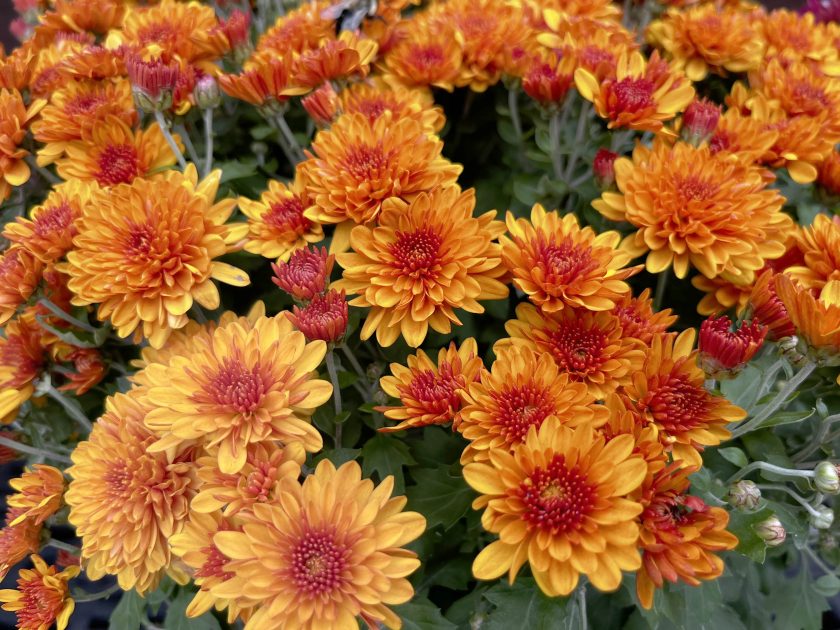
Of course, chrysanthemums (mums) are the quintessential fall flower. Who can resist their rich burgundy, yellow, orange, red, bronze, pink, purple, and pink colors? We often use them as annuals, enjoying their colorful flowers for a short time, then tossing them to the curb after blooming. But mums are actually perennial flowers that can be planted in the ground and will bloom year after year. As you add new mums each fall, over time, you will soon have a tapestry of colorful flowers brightening your path. Mums are a type of herbaceous perennial. When frost arrives in South Jersey, the plants will die off above ground, but underground, the roots will go into a dormant state. In the spring, you can cut away the brown and dried tops of the plant to reveal fresh new growth as the plant wakes up from its winter slumber. By late spring, you will see your perennial mums take off and begin to grow taller. At this point, you will want to trim your mums and snip off one or two inches. This will encourage them to grow fuller and less “leggy.” Give them another haircut in summer, but stop pruning by the Fourth of July, so that you are not cutting off future blooms. To maximize the blooms of potted mums, choose plants that have tight and partially closed flowers, make sure you give them plenty of water, and do not let them dry out. Make sure the pots have good drainage, and deadhead the flowers as they finish blooming.
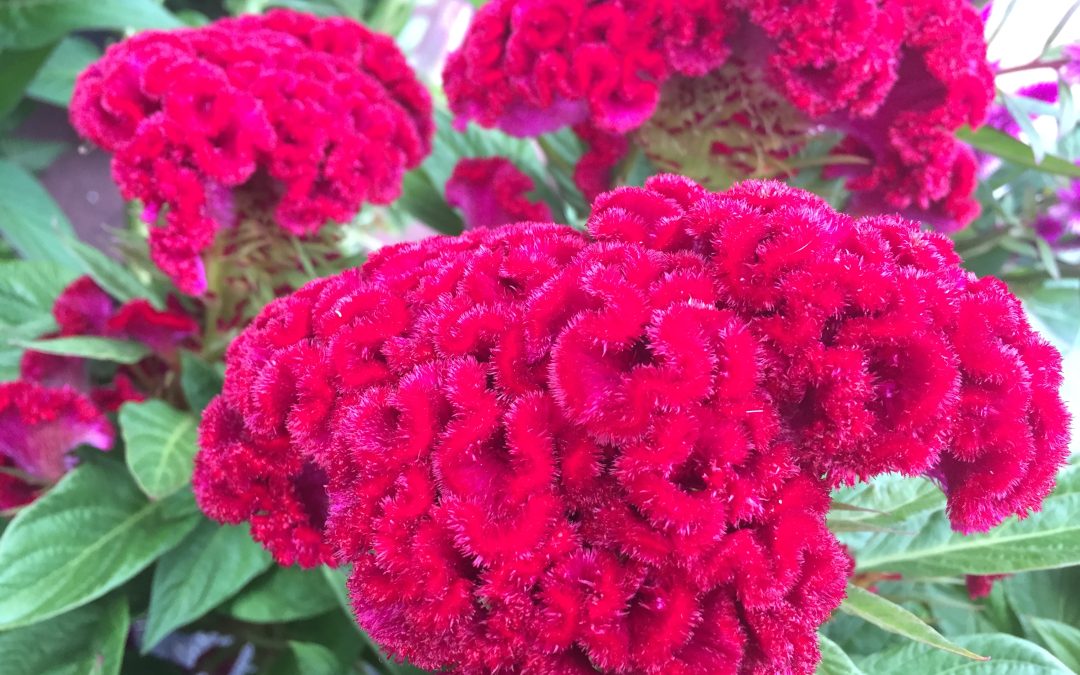
For some nontraditional fall flowers, celosia can add color and interest to your garden, while attracting pollinators. You will often find three different types of celosia at our garden nurseries, and each variety is widely different from the other. Wheat or spike celosias are the most attractive to pollinators, and you will see bees humming and butterflies dancing around their spiky magenta and pink flowers. Plumed celosia will make your garden look like it is on fire with its flaming flowers of red, yellow, and orange. When you see these flowers, you will understand why the name is derived from an ancient Greek word meaning burning. Cockscomb is one of the most unique types of celosia. Depending on your perspective, you might describe this variety as living velvet, and you won’t be able to resist touching the fascinating flowers. On the other hand, you might think the unique curvy flower heads look like coral, or with thoughts of Halloween ahead, you could describe them as looking brain-like. Perhaps celosia could be used as a modern-day Rorschach test, based on your interpretation of these flower heads.
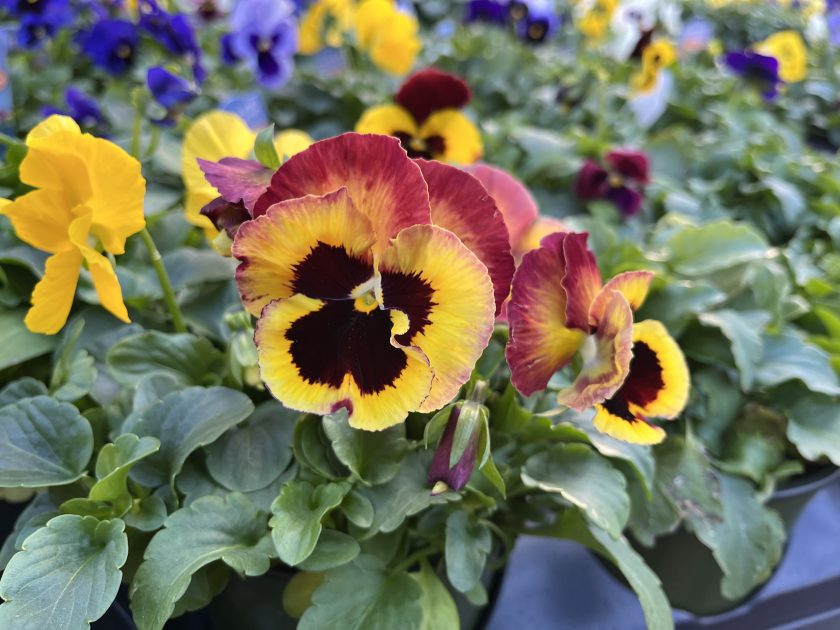
Pansies will not only add color to your garden, but a bit of cheer. These cool-season flowers have happy little “faces” that will smile back at you and laugh at the cold. I have seen these flowers, which come in a myriad of colors, blooming under the snow. Often in the earliest days of spring, you will find new blooms on your pansies in an amazing feat of survival. If the flowers grow tall and lanky, simply pinch off spent blooms low in the stem, and they will bloom more fully. In addition to these cheery flowers, offer pollinators “Autumn Joy” sedum that will provide late-season nectar for bees and butterflies. This type of sedum is one of the easiest types to propagate from cuttings. You can soon fill your garden with sedum or have enough to share with a friend.
We would love to hear about your favorite fall flowers. Send your comments or questions to: shorelocalgardener@gmail.com.
Tammy Thornton lives with her husband, children, and crazy pets while enjoying a life of gardening, cooking, and going to the beach.