
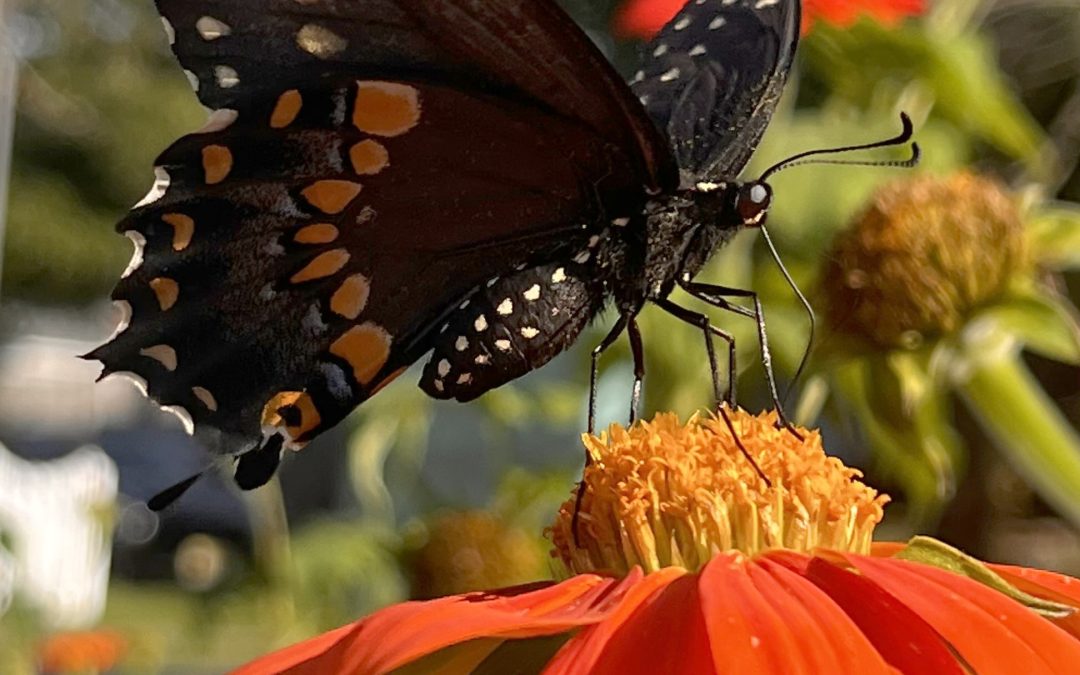
Something is stirring in the gardens of South Jersey and you may miss it if you aren’t paying attention. After waiting all summer for butterflies to visit your flowers, you may suddenly find yourself being rewarded for all of your hard work in the garden. Not only will you see an influx of butterflies dancing among your flowers, but caterpillars are munching away with hopes of earning their own wings. September gardens along the coast play host to a myriad of butterflies at various stages and with different goals, but all taking advantage of the shoulder season.
Monarchs that you see this time of year are powering up for the great migration south, 2,500 miles to Mexico. In contrast to the butterflies you see in early summer that live only two to six weeks, these are members of the “super generation” that live six to nine months. They use this extended lifespan to make the epic journey. Along the way, they are consuming as much nectar as possible to fuel their voyage. Late-blooming flowers like goldenrod, sedum, and asters help provide these sources of nectar. After stopping for a meal in your garden, they will head to Cape May where they will wait for the right conditions before crossing over the Delaware Bay. As they travel down the Atlantic Coast, the tip of New Jersey narrows, creating a funnel effect and resulting in a bit of a monarch traffic jam at Cape May Point. Meanwhile, monarch caterpillars that have not yet formed their chrysalises, are busy fattening themselves on milkweed, the only source of food for a monarch caterpillar. You may have been watching them grow and then one day they go missing. While it’s possible that they were eaten by a bird or some other predator, these caterpillars will leave the milkweed to find a safe place to pupate. Look around, and you might see their majestic chrysalises trimmed in gold. In 10 to 20 days, you may be able to witness the magic of this final stage of metamorphosis.
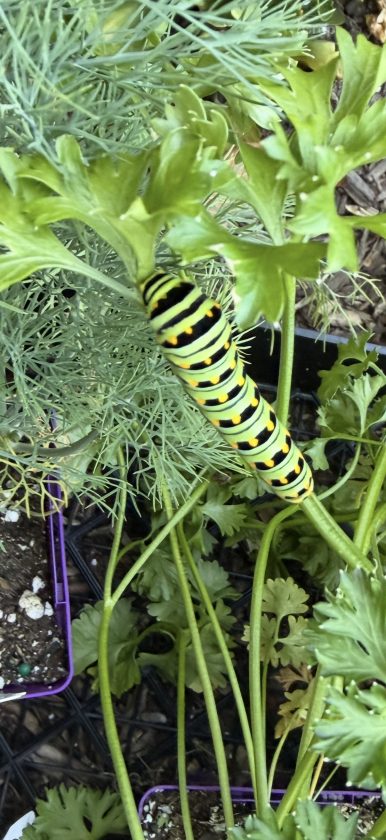
September is also a peak time to find black swallowtails in your garden. Formally, the Eastern Black Swallowtail, our New Jersey state butterfly. This third and final brood of black swallowtails is typically the largest in population, making them more visible. Less conspicuous are their caterpillars, but once you learn how to find them, you may be surprised about how many you spot. Unlike monarch caterpillars that have only one host plant, black swallowtails are not as picky. Black swallowtail caterpillars enjoy parsley, dill, fennel, Queen Anne’s lace (and other members of the carrot family), rue, and Golden Alexanders. At first, you may think that you are hosting different types of caterpillars at once. But if you find caterpillars on your parsley or some of the other plants listed, they are all most likely swallowtails. At their first growth stage (or instar), they are black and spiny with a little white “saddle” in the middle of their back. You may have trouble finding them, because they are hard to see and are meant to look like bird droppings as camouflage from predators. During the later instars, they become much more visible and molt into large caterpillars with green-and-black stripes. You might mistake them for monarch caterpillars, which is exactly the plan. Monarch caterpillars feed on milkweed, which can be distasteful or toxic to predators. Black swallowtails use this type of mimicry to help ward off birds. They also have a defense mechanism called an osmeterium. When threatened, swallowtail caterpillars fling out bright orange forked “horns” that release a stinky chemical to drive away predators. If you find swallowtail caterpillars, be sure not to disturb them and incur their wrath, but also provide them with large amounts of host plants, because they are voracious eaters. Unlike monarchs, these locals are year-round residents. The caterpillars will wander off when they are ready to form a chrysalis and find a safe place to remain all winter. Their chrysalises are brown and bark-like, so they will crawl to a structure to blend in with their winter surroundings. They will remain in this suspended state called diapause until spring. Once it becomes consistently warm in April or May, the new generations of black swallowtails will emerge, beginning the cycle of life once again.
If you would like to hear about other butterflies and caterpillars hanging out in South Jersey, send an email to the: shorelocalgardener@gmail.com. We would love to hear your gardening questions and anecdotes.
Tammy Thornton lives with her husband, children, and crazy pets while enjoying a life of gardening, cooking, and going to the beach.