For Angels in Motion, a larger building means more than just extra square footage.
It means more shelves for food. More racks for clothing. A room for yoga and breathwork. A lawn where families can gather to remember loved ones lost to the opioid epidemic. And, perhaps most importantly, more opportunities to meet people exactly where they are.
The nonprofit organization, which serves people affected by substance use disorder, homelessness and other challenges, expanded its space at 2 W. Glendale Ave. in Pleasantville this summer, marking another step forward for a grassroots effort that has steadily grown throughout Atlantic County.
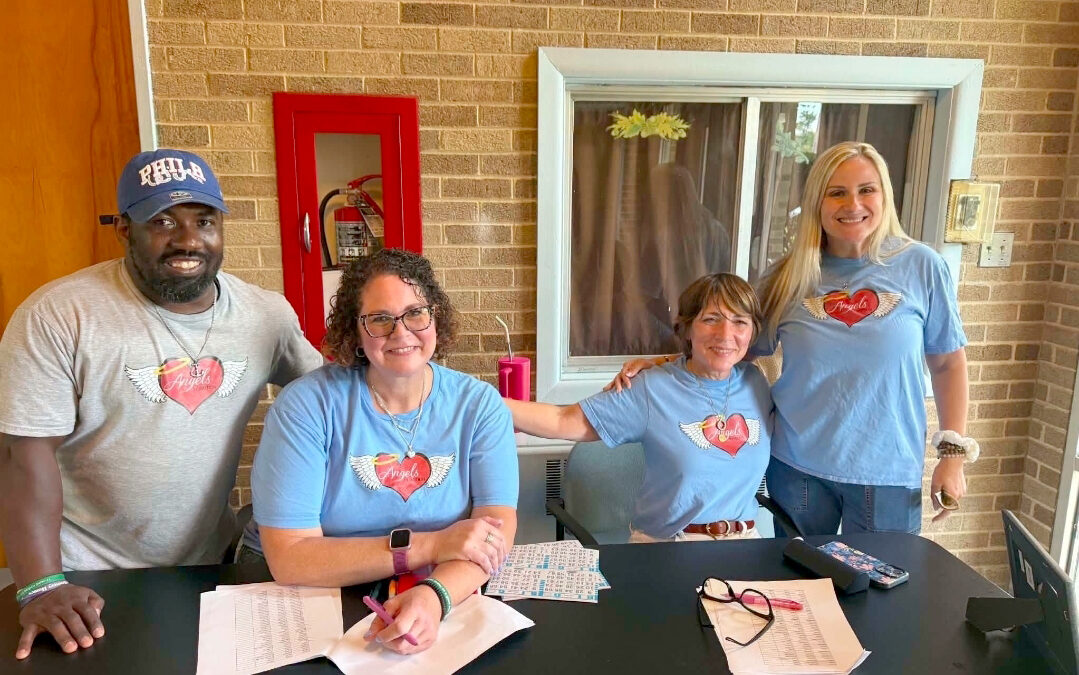
“We knew there was a need for more community support,” Executive Director Susan Long said. “Our main thing was always street outreach, but there’s so many other needs with people in the community, with food and basic needs, and recovery support services.”
From the streets to a community hub
Angels in Motion began in Philadelphia in 2015 after founder Carol Rostucher searched the streets of Kensington for her son, who was struggling with substance use disorder. Along the way, she encountered many other people in need and began distributing food, clothing, hygiene supplies and resource information with an emphasis on compassion rather than judgment.
Her efforts attracted other volunteers and eventually grew into Angels in Motion. Long, who is herself in long-term recovery, volunteered with AIM in Philadelphia before helping establish its New Jersey chapter with Kerry Sullivan.
The organization’s trademark “Blessing Bags” is the heart of its outreach. Filled with snacks, toiletries, clothing, resource information and notes of encouragement, the bags provide both immediate necessities and a way for volunteers to begin building trust with people they meet on the streets.
The Atlantic County operation has distributed thousands of bags each month through the help of volunteers, churches, schools and families.
The Pleasantville location began years ago with a more modest mission.
Long said AIM originally occupied a small portion of the former OCEAN Inc. building, primarily using it for office space and donated clothing. Volunteers initially opened the center only a few days each week.
As the need and support grew, so did the operation.
A grant allowed AIM to hire a full-time employee, expand its hours and develop a community garden where visitors can pick produce, help water plants or simply spend time outside.
This June, AIM expanded farther into the building. Long said the Pleasantville location is particularly valuable because it sits along a bus route, offers parking and is centrally located in the community.
Now, AIM also has a large front porch, front lawn and garden where it can hold programs and events. “This space is for the community,” Long said.
Food, clothing and everyday necessities
AIM has enlarged its food pantry, clothing closet and toiletry supplies. Case manager and recovery coach Laura Rowan said anyone in need can come in for assistance without having to prove income or provide identification.
“They can get a food bag. If they need toiletries, if they need clothing, anything like that, we don’t ask any questions,” Rowan said.
Those items can be particularly important for someone moving from the streets into treatment or sober living, or for someone temporarily staying in a hotel.
Creating space for wellness
The expansion is also giving AIM room to address needs that go beyond food and clothing.
One area has become the Amber Blue Wellness Room, named in memory of one of Long’s close friends who died from an overdose.
In that space, AIM offers free yoga, breathing workshops, drumming and other stress-reducing activities designed to promote connection and emotional well-being.
Rowan said current offerings include garden yoga on Tuesday evenings along with free yoga programs offered through community partners later in the week.
The expanded office also includes meeting space where representatives from other agencies can speak with AIM staff about their services.
A community remembers
The larger property recently became the setting for one of AIM’s most meaningful annual traditions: its overdose awareness gathering.
Families, service organizations and members of the recovery community gathered outside the Pleasantville office to remember lives lost to overdose.
Visitors wrote the names of loved ones and messages on purple flags, then placed the flags around a tree on the property, creating a memorial visible from the road.
A number of people who had lost loved ones also spoke during the event. “It’s really a beautiful event,” Rowan said.
Earlier gatherings were also held on the Ventnor beach and at First Steps Church in Pleasantville. This year, AIM’s expanded property made it possible to bring the event directly to its own grounds.
Walking for recovery in 2026
The next major event on AIM’s calendar is the Angels at the Shore Recovery Walk, set for Saturday, Sept. 26, at Lakes Bay Unity Park in Pleasantville.
Walk-day activities run from 9 to 11 a.m., and registration is $20, according to the Greater Atlantic City Chamber’s event listing. Individuals and organizations can also form fundraising teams or sponsor the event.
It will be the second Angels at the Shore Recovery Walk. The inaugural event was held in Atlantic City in 2024. This year, AIM is bringing it home to Pleasantville.
“It’s really a walk to celebrate all of our recovery,” Long said. “But we also try to remember all the people we’ve lost.”
Removing the small barriers
Much of Angels in Motion’s work happens outside of public events.
AIM provides recovery support that can include referrals to inpatient and outpatient treatment, connections to supportive housing, overdose-prevention education and Narcan, along with nonjudgmental guidance for people navigating recovery.
In Atlantic County, that work has increasingly included formal case management.
County records show Angels in Motion was awarded a 2026 professional services agreement for case management as part of Atlantic County’s allocation of opioid settlement funds.
For Rowan, that can mean helping someone with issues that may seem routine until a person has to navigate them while starting over.
She assists clients with transportation to recovery court, replacing birth certificates or Social Security cards, obtaining identification and connecting with public assistance.
Transportation can be a major obstacle, Rowan said. Someone living in a sober home may technically have a bus route to an appointment but face hours of travel because of transfers.
The organization also works to connect people leaving treatment with sober living and other support. Rowan said move-in costs of several hundred dollars can present a major hurdle for someone coming directly from treatment or homelessness.
Atlantic County has identified sober living, transportation and case management among significant recovery-support needs locally, according to its opioid settlement strategic plan.
Lived experience comes full circle
That mission is especially personal for many of the people doing the work.
Rowan is in long-term recovery and said she spent years homeless while struggling with addiction.
Years ago, when she began her own recovery, she said many of the services she now helps people access were not nearly as readily available.
Today, she gets to watch people piece their lives back together by securing documents and health coverage, setting goals, building resumes and looking for jobs.
Rowan and Long described people AIM once encountered while they were homeless or actively using substances who later entered recovery, came back to volunteer and eventually became employees.
“There are people that we actually got off the streets,” Long said. “Now they have an opportunity to help others.”