
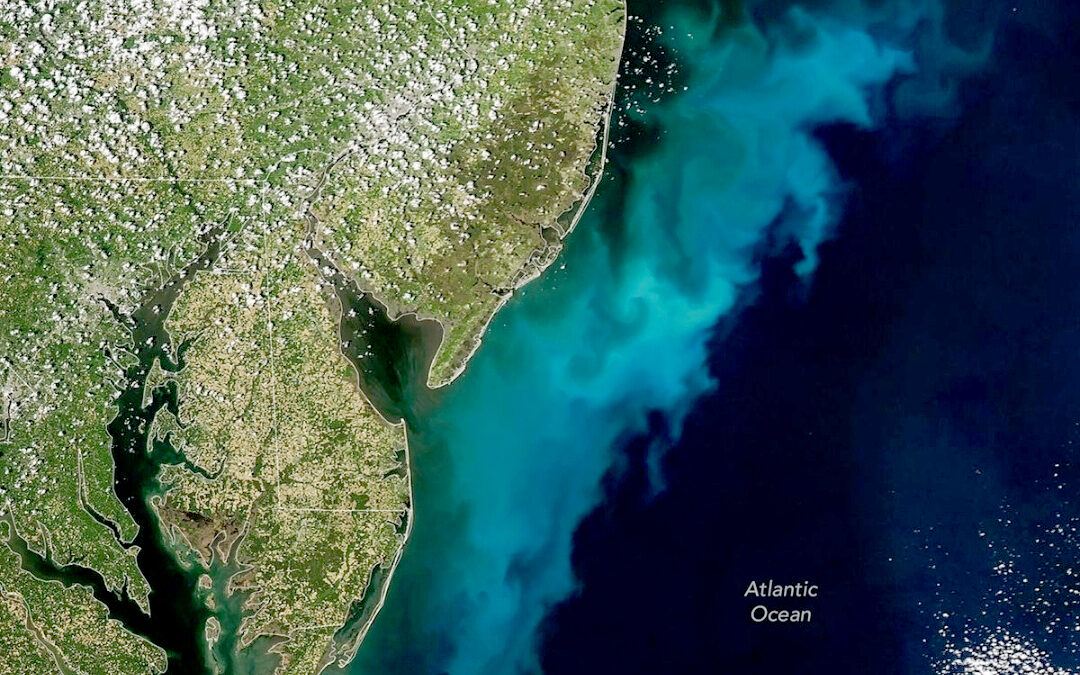
Beachgoers along the Jersey Shore have recently noticed an unusual sight: stretches of ocean water displaying turquoise and blue-green hues instead of the darker shades typically associated with the Atlantic Ocean.
The striking colors are linked to blooms of phytoplankton, microscopic plant-like organisms that serve as the foundation of the marine food web. Scientists say these blooms may include a variety of organisms, including algae, diatoms and coccolithophores. Although individual organisms are invisible to the naked eye, large concentrations can alter the appearance of the water.
According to researchers, patches of blue-green water have been observed from Raritan Bay south to Virginia. The coloration has appeared throughout portions of the Mid-Atlantic Bight, the coastal region where the continental shelf meets the Atlantic Ocean.
Seasonal phytoplankton blooms are common during warmer months, but researchers say this year’s display has been especially noticeable because of its intensity. When sunlight interacts with chlorophyll contained within the organisms, certain wavelengths of light are reflected, producing green tones that combine with the ocean’s natural blue color to create a turquoise appearance.
The blooms also play an important role in the marine ecosystem. Phytoplankton provide food for small marine organisms that support larger species throughout the food chain. The microscopic organisms help sustain fish, shellfish and even some of the ocean’s largest animals.
Oceanographers say weather patterns and ocean conditions contribute to the phenomenon. Periods of warm weather and southerly winds can push warm surface waters offshore, allowing colder, nutrient-rich water to rise from below. The influx of nutrients creates favorable conditions for phytoplankton growth. Combined with abundant summer sunshine, those conditions can lead to blooms large enough to be visible from beaches, boardwalks and fishing piers.
The colorful waters serve as a reminder of the dynamic nature of the Jersey Shore’s coastal environment. Scientists note that the phenomenon reflects the interaction of sunlight, ocean currents, weather patterns and marine life.
For residents and visitors, the turquoise waters offer a rare glimpse into the natural processes that shape the region’s coastline and marine ecosystem. Whether viewed from the beach or a boardwalk, the vibrant hues have become one of the shore’s most striking sights this summer.
Seasonal phytoplankton blooms are a regular occurrence in Mid-Atlantic waters, but scientists say this year’s event has been particularly noticeable because of a favorable mix of sunlight, nutrient-rich water and ocean conditions.
For South Jersey residents and visitors, the colorful waters may continue to appear on and off throughout June and into the summer. How long the phenomenon remains visible will depend largely on weather patterns, winds and changing ocean currents.