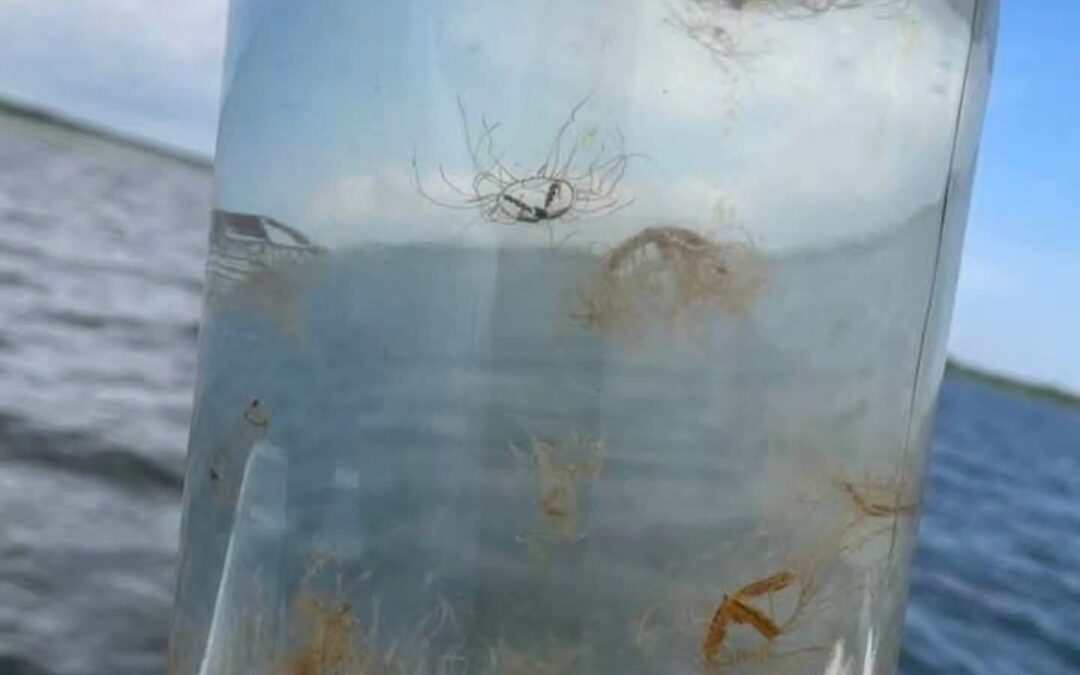
Residents and visitors enjoying New Jersey’s waterways this summer are being urged to use caution after reports of clinging jellyfish surfaced in locations stretching from Monmouth County to Cape May.
Despite the sightings, marine experts stress that ocean beachgoers along the Atlantic coastline have little reason for concern. Clinging jellyfish are not found in the ocean surf. Instead, the invasive species inhabits protected waterways such as estuaries, back bays and tidal rivers.
According to marine biologist Paul Bologna, the tiny creatures are commonly found attached to underwater vegetation in shallow water. People wading through seagrass beds may unknowingly brush against them and receive a sting.
The jellyfish are difficult to detect because they are nearly transparent and measure only about one-quarter inch in diameter. Their small size and camouflage make encounters hard to avoid in areas where they are established.
What makes clinging jellyfish particularly concerning is the severity of their sting. Unlike the more familiar moon jellyfish or sea nettles, whose stings typically cause localized pain that gradually subsides, clinging jellyfish release powerful toxins that can trigger a much stronger reaction. Victims often feel an immediate burning or stinging sensation.
However, symptoms may intensify over the following hours as toxins spread through the body. Severe muscle cramps, abdominal pain, chest pain and widespread discomfort have been reported. The pain can become debilitating enough to require emergency medical treatment. While no deaths have been linked to clinging jellyfish stings in New Jersey, some victims have been hospitalized for pain management. In one case, a patient reportedly required a morphine drip after being stung.
The symptoms can be alarming. Some individuals have mistaken the intense chest pain caused by a sting for a heart attack before learning the source was a jellyfish encounter.
Most recently, a 6-year-old girl was taken to an emergency room after being stung by a clinging jellyfish in the Metedeconk River in Brick Township.
While highly unlikely to be found at ocean beaches, these clinging jellyfish can be found in shallow bay and estuarine waters where they attach to seagrass and other aquatic vegetation. Despite their size, they can deliver an extremely painful sting.
Help reduce your risk of an encounter:
- Avoid wading in areas with dense seagrass or submerged aquatic vegetation
- Wear waders or long sleeves when recreating in waters where clinging jellyfish have been observed
- Stay aware of your surroundings when crabbing, fishing, kayaking, or exploring coastal bays and tidal creeks
If stung:
- Rinse the area with saltwater
- Carefully remove any tentacle material using gloves, a plastic card, or a thick towel
- Seek medical attention if symptoms persist or worsen
Clinging jellyfish are native to the western Pacific Ocean and are believed to have arrived in North America through international shipping. Since then, populations have become established in portions of the Northeast, including New Jersey coastal waterways.
Experts recommend avoiding contact with submerged vegetation in shallow bay waters where the jellyfish are most likely to be present. Swimmers, kayakers, paddleboarders and boaters should remain aware of their surroundings, especially in areas where sightings have been reported.
While the presence of clinging jellyfish serves as a reminder to exercise caution in back-bay environments, ocean beachgoers can continue enjoying the Jersey Shore without concern. The species does not inhabit the surf zone, making New Jersey’s ocean beaches a safer option for summer recreation.