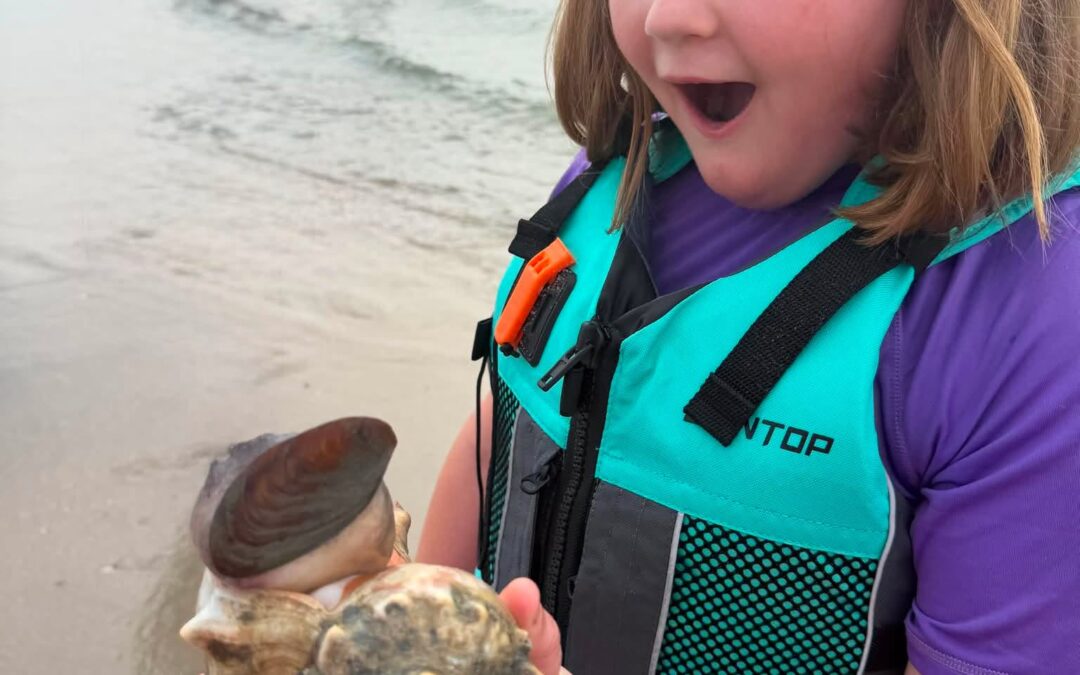
A day at the beach in Ocean City turned into an unexpected marine biology lesson last week when several children discovered live whelks along the shoreline.
While many visitors are familiar with the large spiral shells that frequently wash onto South Jersey beaches, finding a live whelk is much less common. The discovery sparked curiosity among beachgoers, many of whom had never seen the animal that creates one of the Jersey Shore’s most recognizable shells.
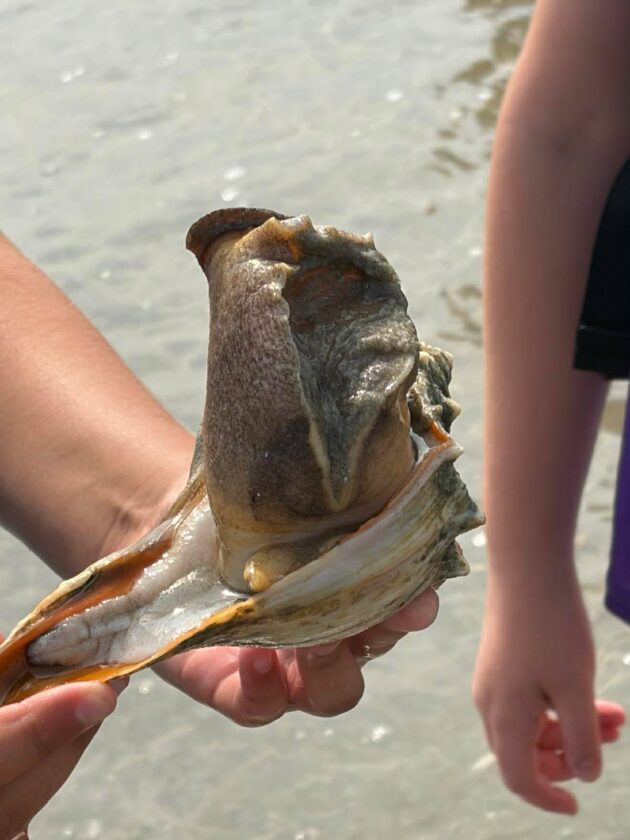
A whelk is a large marine snail that spends most of its life on the ocean floor. Unlike the empty shells commonly collected, a live whelk remains tucked inside its shell, emerging with a muscular foot that allows it to slowly move across the seafloor. It also has a long siphon, a tube-like organ it uses to draw in seawater and detect food.
Whelks are carnivores that feed primarily on clams, mussels and other shellfish. Using a specialized rasping organ known as a radula, they can drill through or pry apart shells to reach their prey. As predators and scavengers, they play an important role in maintaining the balance of marine ecosystems.
Most whelks remain in deeper water, but strong tides, rough surf and coastal storms can occasionally carry them into the surf zone or wash them ashore alive. Marine experts recommend observing live whelks without attempting to remove them from their shells. If the animal appears healthy, returning it to the ocean will improve its chances of survival.
Cape May County is home to one of the nation’s most productive commercial whelk fisheries. Local fishermen harvest thousands of whelks each year using baited pots placed on the ocean floor. The meat is considered a delicacy and is exported to seafood markets around the world. After processing, however, the shells are often discarded. Many eventually make their way back into the ocean, where currents and waves carry them onto beaches throughout South Jersey.
Because whelk shells are much thicker and stronger than clam or scallop shells, they are more resistant to breaking in the surf. As a result, they are among the shells most frequently found along the high tide line, particularly after periods of rough weather.
New Jersey’s long association with the species led lawmakers to designate the whelk as the state’s official shell in 1995. The legislation, signed by Gov. Christine Todd Whitman, followed a campaign led by students and educators who sought a state symbol reflecting New Jersey’s coastal identity and commercial fishing heritage.
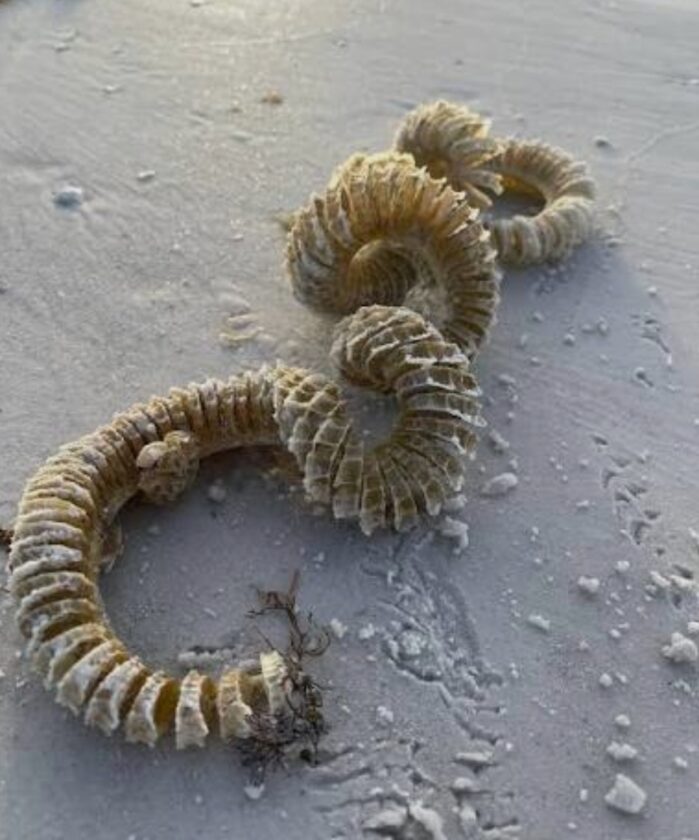
Another unusual beach find associated with whelks is the egg case. Often mistaken for seaweed or drift debris, these long strands of papery capsules are actually protective nurseries. A single strand may contain about 150 developing eggs. As the embryos mature, tiny whelks hatch inside the capsules before emerging into the ocean to begin life on the seafloor.
Sometimes, the ocean gives us a glimpse of the living world that exists just below the surface.
For the children who discovered live whelks on the 57th Street beach in Ocean City, a day at the beach became an exciting lesson in marine biology.