Why South Jersey beaches must become more accessible
By Sarah Fertsch
For generations, the Jersey Shore has been a place where memories are made. It’s where children build their first sandcastles, grandparents watch the waves roll in, and families gather beneath colorful umbrellas for long summer afternoons. The beach is part of our identity.
But what happens when the simple act of reaching the ocean becomes an obstacle course?
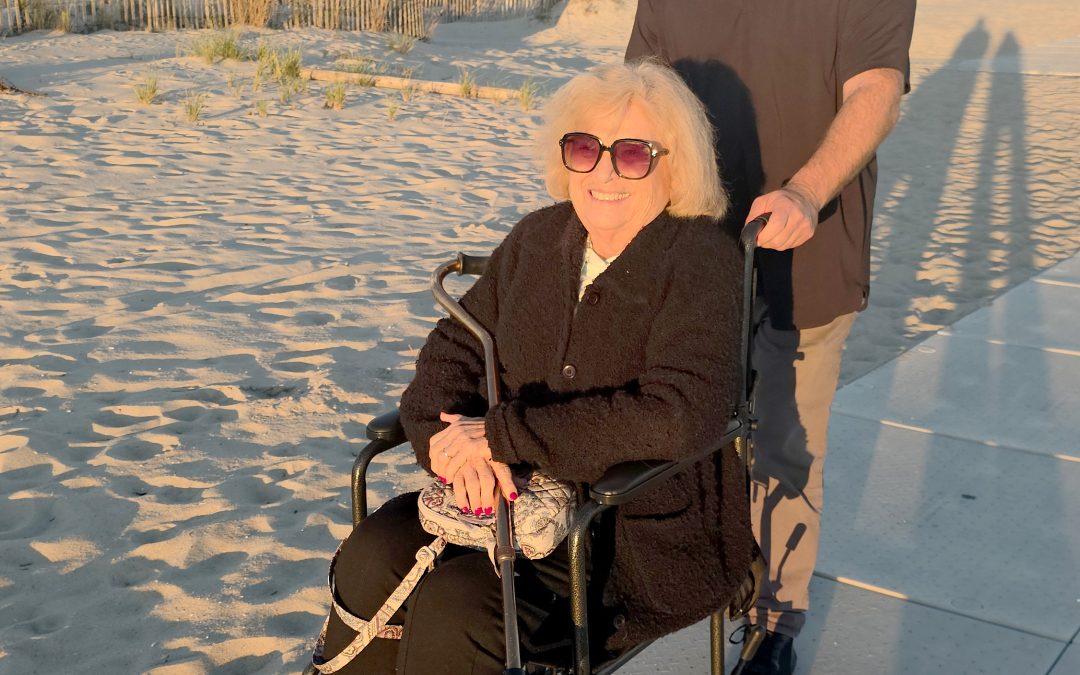
For people living with disabilities, a trip to the beach isn’t always as simple as packing a cooler, grabbing a towel and finding a parking spot. It can require hours of preparation, specialized equipment and the assistance of others. Sometimes, despite all that planning, the shoreline remains out of reach.
South Jersey’s coastal communities have made meaningful strides toward accessibility in recent years. But if we truly believe our beaches are for everyone, we must recognize that having an accessible beach entrance isn’t necessarily the same as having an accessible beach.
Consider the experience of Sea Isle City resident Steve Matyszczak, who lost his mobility five years ago because of a rare nerve disorder. This past July, Matyszczak addressed Sea Isle City’s council, urging officials to improve access to the beaches and marina for people with disabilities.
Although he owns a specialized beach wheelchair, Matyszczak explained that navigating soft sand still presents significant challenges. He advocated for additional wooden ramps extending farther onto the beach, beyond the existing mobility mats.
To its credit, Sea Isle City has already taken steps to make its beaches more welcoming. The city offers free beach wheelchair rentals and has installed mobility mats at beach entrances. Officials also expressed willingness to explore further improvements following Matyszczak’s appeal.
Other South Jersey communities are making progress, too.
In 2024, the Pinelands Preservation Alliance celebrated Cape May’s installation of an extensive beach mat system, providing more than a mile of improved access along the shoreline. The initiative demonstrates how relatively straightforward infrastructure investments can open outdoor recreation to people who use wheelchairs, walkers, canes and other mobility aids.
Atlantic City has expanded its network of accessibility mats and offers free surf wheelchairs through its beach patrol. Avalon provides ramps, hard-packed pathways and mats at numerous beach entrances. Ocean City, Stone Harbor and the Wildwoods also offer accessibility accommodations, ranging from specialized beach chairs to transportation services.
These improvements deserve recognition. They reflect a growing understanding that enjoying the ocean shouldn’t be a privilege reserved for those who can easily navigate the sand. But there is still work to do.
In 2022, an extensive investigation by NJ Advance Media revealed striking inconsistencies in beach accessibility along New Jersey’s 127-mile coastline. Reporters examined accessibility information from 44 coastal municipalities and visited 18 beaches, discovering that the experience could vary dramatically depending on the town.
Some beaches offered mobility mats extending toward the high tide line and specialized wheelchairs capable of entering the surf. Others advertised accessible entrances that still required visitors to navigate steep dunes or soft, sandy pathways.
The findings exposed a fundamental problem: Without consistent guidelines for what beach accessibility should look like, municipalities are left to develop their own approaches.
Under the Americans with Disabilities Act, public beaches must provide accessible access, but the requirements for navigating the beach itself are less clearly defined than those governing buildings and other public facilities.
That uncertainty leaves too many visitors navigating a patchwork of accommodations.
Imagine planning a family beach vacation only to discover that the nearest accessible parking space is several blocks from the entrance. Or arriving at the beach to find that the specialized wheelchair you need has already been reserved. Perhaps the mobility mat ends hundreds of feet from the water, leaving a stretch of soft sand between you and the rest of your family.
For someone without mobility challenges, these may seem like minor inconveniences. For someone using a wheelchair, they can determine whether a beach day happens at all.
Accessible parking, restrooms, showers, changing facilities and transportation are equally important. A beach might have an excellent wheelchair ramp, but if visitors cannot find an accessible restroom nearby, they may have to shorten their visit or choose another destination entirely.
Easterseals New Jersey emphasizes the importance of researching these accommodations before heading to the shore. Visitors are encouraged to confirm wheelchair availability, accessible restroom locations and assistance options in advance.
It’s practical advice, but it also raises a larger question: Why should people with disabilities have to do so much additional work to enjoy a public resource?
Accessibility should be the expectation, not an exception that requires extensive research and advance arrangements.
South Jersey doesn’t have to reinvent the wheel when it comes to beach accessibility. Across the country, coastal communities are developing innovative programs that go beyond simply helping visitors cross the sand. They’re creating opportunities for people with disabilities to experience everything the beach has to offer.
In Virginia Beach, Grommet Island Park offers a glimpse of what truly inclusive recreation can look like. The 15,000-square-foot oceanfront playground features wheelchair-accessible pathways, elevated sand tables, sensory play equipment and even a hand-operated sand scoop that allows wheelchair users to build sandcastles. The park also offers free beach wheelchairs and access to assistance through the city’s Beach Ambassadors program.
Imagine a similar destination along the Ocean City boardwalk, where children of all abilities could play alongside one another without the traditional barriers of sand and inaccessible playground equipment.
On the opposite coast, California has embraced specialized beach mobility equipment. The California Coastal Commission maintains a statewide directory of beaches offering free wheelchair loans, while several locations provide motorized chairs that allow users to navigate the sand with greater independence.
The commission has also supported grants for accessibility equipment, offering an example of how state agencies can help communities afford improvements.
For South Jersey, expanding beyond traditional push-style beach wheelchairs to include powered options could provide a greater sense of freedom for visitors who otherwise must rely on family members or attendants.
The possibilities extend beyond traditional beachgoing. Accessible kayak launches, sensory-friendly recreation spaces and specialized equipment rentals could help more residents and visitors participate in the coastal experiences that make South Jersey special.
New Jersey could benefit from a similarly comprehensive, regularly updated statewide guide identifying accessible parking, restrooms, mobility mats, beach wheelchair availability and accessible entrances across every shore community.
These examples demonstrate that accessibility isn’t simply about meeting a minimum requirement. It’s about creating opportunities for participation, recreation and independence.
New Jersey has already considered addressing the inconsistencies identified in the 2022 investigation.
Legislation known as “Penny’s Law,” named in honor of disability advocate Penny Gnesin of Asbury Park, would direct the New Jersey Department of Environmental Protection to develop beach accessibility guidelines in consultation with people with disabilities and disability rights organizations.
The proposal has been introduced repeatedly without becoming law. In January 2026, it was introduced again as Senate Bill S2570 and Assembly Bill A2019, underscoring the continued need for statewide direction.
Of course, making coastal environments accessible presents unique challenges. Sand shifts, tides rise, storms damage infrastructure and beach replenishment projects continually reshape the shoreline. Permanent walkways cannot simply be installed everywhere without considering environmental regulations, dune protection and coastal conditions.
Municipal officials also have legitimate concerns about the expense of installing and maintaining equipment, particularly in communities where beaches vary significantly in width, terrain and environmental conditions.
These are real challenges, but they shouldn’t become excuses for inaction. Instead, municipalities should work with engineers, environmental experts and disability advocates to identify solutions that balance accessibility with preservation.
Perhaps most importantly, beach communities should involve people with disabilities directly in planning these improvements. A solution that looks accessible on paper may fall short in practice. Those who navigate these challenges every day are best positioned to explain what works and what doesn’t.
There is also an economic argument for improving accessibility. Tourism is the lifeblood of shore towns, and accessible destinations welcome a broader range of visitors.
Families traveling with older relatives, people recovering from injuries and parents pushing strollers can also benefit from improvements originally designed for wheelchair users.
In other words, accessibility isn’t simply an investment in one segment of the population. It is an investment in the entire community. But the strongest argument isn’t economic. It’s about dignity, independence and belonging.
A person with a disability shouldn’t have to be carried across the sand to join friends for an afternoon at the beach. An older adult shouldn’t have to abandon a lifelong tradition of watching the waves because the walk has become too difficult. A child who uses a wheelchair deserves the same opportunity to experience the ocean as every other child building sandcastles nearby.
And accessibility is not only about getting someone onto the beach. It’s about giving them the freedom to enjoy it on their own terms.
They should also consider adopting more consistent accessibility guidelines across neighboring communities, so families don’t have to navigate an entirely different system every time they visit another beach.
South Jersey has an opportunity to become a model for inclusive coastal recreation. We already have communities demonstrating what’s possible. The next step is ensuring that progress reaches beyond a handful of designated entrances and becomes part of how we think about every public beach.
Sarah Fertsch of Egg Harbor Township holds a Bachelors of Arts in Public Relations. She is a locally renowned poet, storyteller, and dog lover.