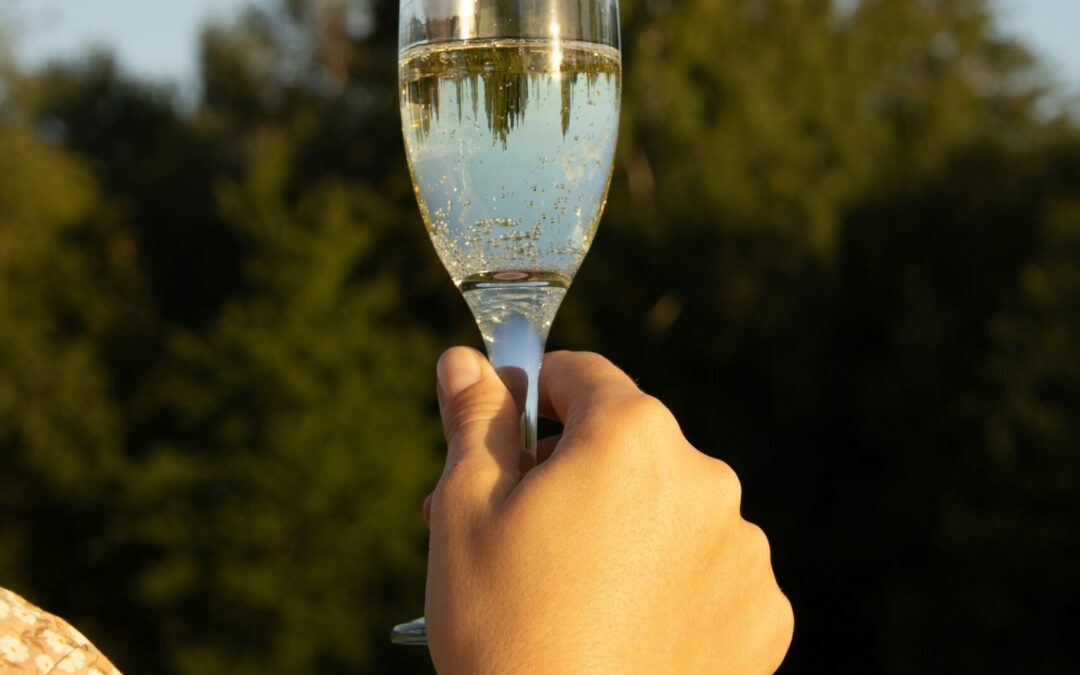
The 250th anniversary of the United States of America is in a few weeks, and many of us will be celebrating with family, friends, and neighbors by enjoying parades, picnics, and fireworks. As a child, my favorite form of “safe fireworks” was sparklers. There is something magical about the continuous shower of brightly colored sparks streaming from a handheld wand. Now that I’m older, my favorite sparklers come in a bottle of delicious, effervescent wine. This article discusses the many variations of summer sparklers available for your celebrations.
Champagne, the most famous sparkling wine in the world, has become something of an eponym — a brand or specific product that has become synonymous with the entire product category. When people think of bubbly beverages, they often reference Champagne. However, to carry the name “Champagne,” the wine must be produced in the Champagne region of France, and it must utilize only the Pinot Noir, Pinot Meunier, and Chardonnay grapes. Initially, Champagne is produced much the same way that still wine is. After being bottled for a while, however, the cork is removed so that additional yeast, flavorings and (sometimes) sugar can be added. The bottle is then recorked, and a second fermentation begins with the newly created carbon dioxide contained in the bottle. This process, known as the Méthode Champenoise or the Méthode Traditionnelle, originated in the Champagne region and is what produces the bubbles that distinguish sparkling wines from still wines.
Dom Pierre Pérignon, a 17th-century Benedictine monk from France, is credited with inventing sparkling wines. Legend has it that upon first tasting the bubbly wine, he exclaimed: “Come quickly! I am tasting the stars!” Although the accuracy of the quote and even some details of the origin story are questioned historically, the invention and standardization of the Méthode Champenoise process are attributed to Dom Pierre, along with one other very important contribution to the wine world. It was he who discovered that white wine can be made from red grapes by removing the skins, stems, and seeds from the juice during wine production. Pretty amazing guy! For his efforts, one of the world’s most famous and valuable Champagne wines bears his name. Dom Pérignon, though delicious, may be a bit of a stretch for the budget, but if you can swing it, it’s great for a celebration!
For those of us looking for a more reasonably priced option, there are plenty of wonderful Champagnes to choose from at a wide range of prices. In the Champagne region, Premier Cru is a certification of superior quality and has been awarded to less than 15% of the appellations in the region. For an outstanding and reasonably priced Premier Cru Champagne, try the Gonet-Médeville Champagne Premiere (1er) Cru Brut. Also worthy of your consideration are Veuve Clicquot and Charles De Cazanove Brut. You can absolutely enjoy French Champagne without breaking your budget.
Prosecco, the Italian sparkling wine, is another lower-priced option for your semiquincentennial (250th) celebration. Similar to the rules of Champagne, Prosecco must be produced in the Prosecco appellation of the Veneto Wine Region of Northeastern Italy and must be made from the Glera grape. It is a myth that Proseccos are always sweeter than Champagne; although sweeter options are available, most are quite dry. Dryness is indicated by the word Brut — the driest is Extra Brut, followed by Brut; Demi-Sec is the sweetest. If you are looking for maximum dryness in your Prosecco, the Belle Casel Asolo Extra Brut Prosecco is a great choice. The aromas are fresh with notes of golden apple and a touch of grapefruit. Or, for a wonderful, reasonably priced Brut Prosecco, try Brilla! Prosecco DOC Brut. This lovely effervescent wine has an intense stone-fruit taste, with a fine and long-lasting finish. The aroma is a bouquet of fruits and flowers. Brilla! and many Prosecco wines are also available in Rosé Prosecco. The rosé wines are equally dry and tend to have the added flavor of red raspberries and a slightly creamier texture. Valdobbiandene, a UNESCO World Heritage Site, is internationally famous for being the birthplace of Prosecco. Called the Crown Jewel of Prosecco, the wines from this area are considered the best example of this style of sparkling wine. Experience the difference by trying Col Vetoraz Valdobbiadene Brut Coste di Levante. And the best part? It is not expensive to experience the best.
Cava, Spain’s contribution to sparkling wine, is produced in the Penedès appellation of the Catalonia region near Barcelona and is made from the grapes that are native to the region: Macabeu, Xarel-lo, and Parellada. Cava has the flavor of ripe tree fruits, light notes of Meyer lemons, and a touch of almond and ginger on the finish. Cava, like Champagne, is produced utilizing the Méthode Traditionnelle. Roger Goulart Gran Reserva Cava is my favorite. This wine is bottled and aged in cellars located 30 meters below ground, maintaining a constant natural temperature of 55º F year-round. As a reserva wine, this wine is aged for 15 to 24 months before being made available for sale. It is outstanding. Dibon Cava and Freixenet Cava are also excellent options. Any of these will truly make your summer events sparkle.
If you choose to select an American-made sparkling wine for this most American celebration, try the Gruet Méthode Champenoise Brut or Brut Rosé from New Mexico. Gilbert Gruet moved his business and family to New Mexico in 1984. This wine utilizes the same grapes and production methods as any great French Champagne but is truly an American summer sparkler.
No matter how you choose to celebrate Independence Day this very special year, I hope you make it sparkle with one of my suggestions above. As always, if you have questions or comments, contact me at dsetley@passionvines.com or stop by the Somers Point store. Happy wining!