
By Bruce Klauber
Iconic songstress Peggy King, star of stage, screen, television, recordings and one of the last surviving performers from the big band era, died on Sunday, Oct. 25 at the age of 96.
King had a close association with the shore, dating back to the late 1940s and early 1950s when she worked at the Steel Pier with the big bands of Charlie Spivak and Ralph Flanagan. The first step on her 2013 comeback tour, when she emerged from retirement after more than 30 years, was as Grand Marshall of Ocean City’s Doo Dah Parade, spearheaded by archivist and radio host Anthony DiFlorio III, one-time producer of famed Atlantic City columnist Sonny Schwartz’s radio program. Other shore stops for King in the years following included performances at the Ocean City Library, The Palm and The Ocean Club.
After serving her apprenticeship with the aforementioned big bands, which also included the ensembles of Ray Anthony and Harry James, King was signed by MGM and appeared in several films, including “The Bad and the Beautiful.” In those early days as a Columbia Records recording artist, she also performed with Mel Torme’ on a CBS television series that was said to be one of the first television shows broadcast in color. And in 1955, both Billboard and Down Beat magazines voted her “best new singer.” Indeed, she sang “Count Your Blessings” at the 1955 Academy Awards gala.
Her biggest impact was as a certifiable television star via her featured role on the top-rated “George Gobel Show,” which ran from 1954 through 1960 and earned King an Emmy nomination. During that run, she was given the title “pretty, perky Peggy King,” which followed her all of her life. When the show ended its run, she worked the nation’s top nitespots, made a lot of records and guest starred on dozens of television programs. Tiring of the grind, she met and married Philadelphian Sam Rudofker of After Six formal wear fame in the early 1960s, and basically retired from singing.
While she did perform from time to time during the period she was off the grid, including two, mid-1980s recordings for the Stash record label, there was nothing but silence from Peggy King until 2013.
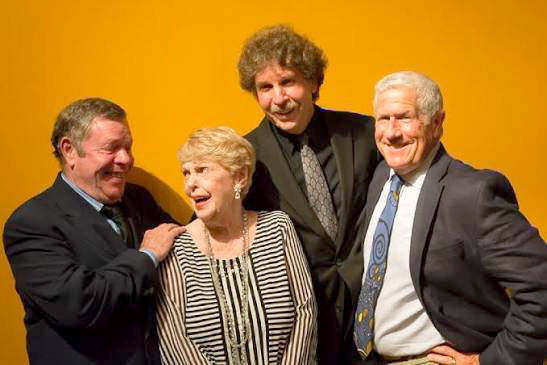
Anthony DiFlorio had been championing King’s career for years, urging her to get back into the business. The opportunity came by way of Philadelphia’s popular All-Star Jazz Trio — a group I co-founded in 1971 — which was set to headline a benefit concert at the Philadelphia Ethical Society on Rittenhouse Square. DiFlorio thought Peggy King and the All-Stars would make a great fit. He was correct.
King loved our group and said to us, “We must do something together someday.” That was all that the trio — comprised of pianist and long-time Atlantic City resident Andy Kahn, bassist Bruce Kaminsky, and yours truly at the traps — needed to hear.
Within days, Peggy King was at the piano in the Kahn residence while I listened. Andy Kahn and I wanted to see if “she still had it.” Not only did she still have it, but we invited her to be special, surprise guest at an upcoming performance we had on the books at one of the country’s oldest and most prestigious jazz clubs, Philadelphia’s Chris’ Jazz Café. She came, she sang and she conquered. People went crazy for her that night and what was originally supposed to be King joining the trio for just a few tunes ended up being a full-scale Peggy King concert.
She was back, at the young age of 83, singing better than ever. We were able to parlay this surprise success into a string of concert and club performances, which included shows at Drexel University’s Mandell Theatre, the Society Hill Playhouse, Miller Symphony Hall in Allentown, Bethesda Blues and Jazz Club, Chris’ Jazz Café several times, World Café Live in Wilmington, the Rrazz Rooms in Philadelphia and New Hope, PA, as well as the shows at the shore.
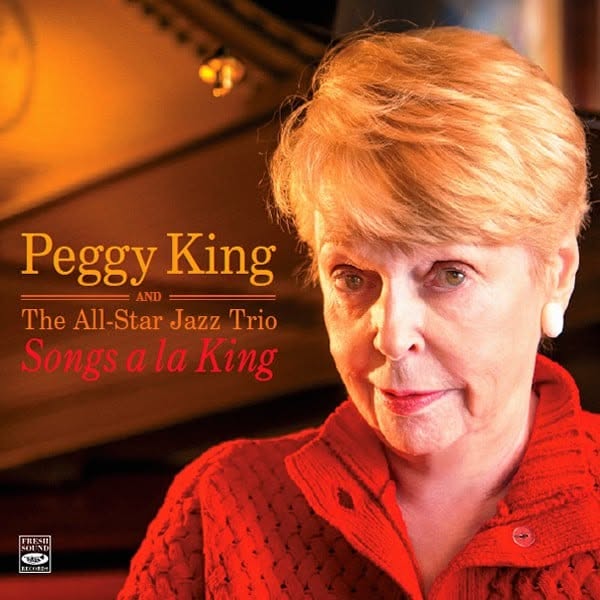
The next logical step, in the opinion of the trio, would be recording. I had been affiliated with the Barcelona-based Fresh Sound Record label for some time, having produced a number of jazz reissues and historic discoveries of 1950s Jazz at the Philharmonic material, as well as rare tracks of drumming legends Gene Krupa and Buddy Rich. I contacted Fresh Sound’s Jordi Pujol about Peggy King and as it turned out, he was a major fan.
“Songs Ala King: Peggy King and The All-Star Jazz Trio” was recorded at the home of Andy Kahn. We believed she would be more comfortable with the recording process at the Kahn residence, rather than in a cold, foreboding studio. We were right. The recording is superb and I continue to be proud of it. It still gets airplay today.
Eventually, she began to slow down. We did a few benefits here and there — including a 2019 show at the Saunders House assisted living facility outside of Philadelphia, when King was 90, that can best be termed “miraculous” — but eventually, it was becoming clear that her singing days were close to being over.
I can’t tell you what Andy Kahn or Bruce Kaminsky learned from Peggy King, but I can report what I learned. She taught me how to be a true professional, both onstage and off. When I informally started a singing career at a small Philadelphia club, there she was, front and center, with gentle advice on how to approach a song, the meaning of the lyrics, interpretation, and how rhythmic emphasis on a word or a phrase could generate an innate feeling of swing. And man, could she swing!
Peggy King was one of the few people, in or out of the business, who was almost unanimously loved and respected by all her heard her and all who knew her. She touched people, and that includes me. Knowing her and working with her enriched my life. And I wasn’t the only one.
Bruce Klauber is the author of four books, an award-winning music journalist, concert and record producer and publicist, producer of the Warner Brothers and Hudson Music “Jazz Legends” film series, and performs both as a drummer and vocalist.