By Roseann Smith
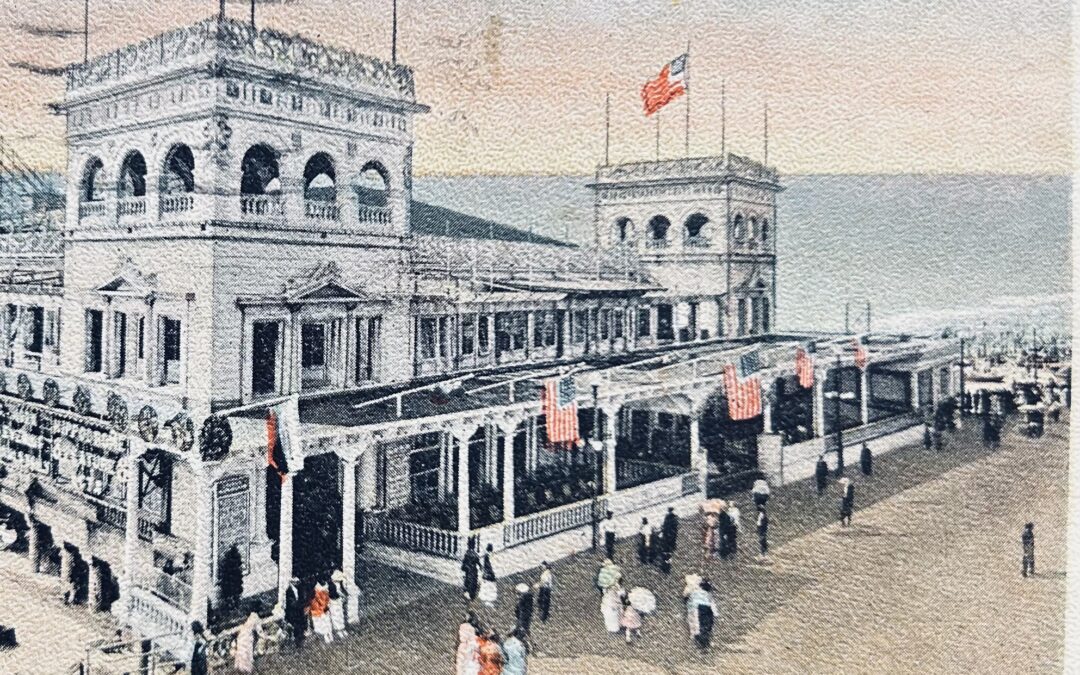
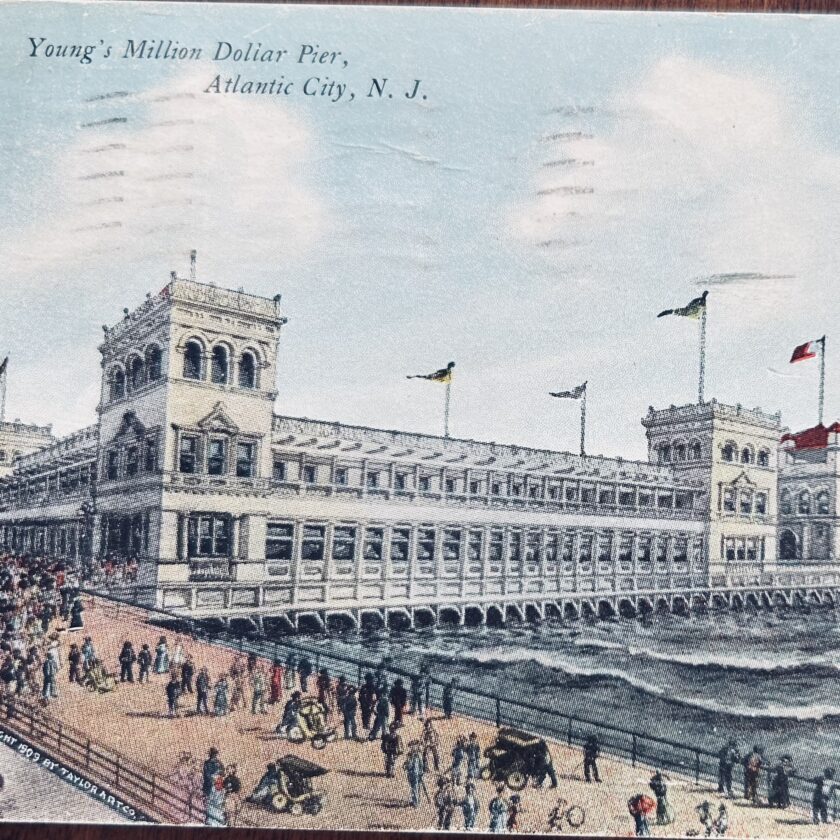
In 1906, Captain John Lake Young, along with builder Kennedy Crossan, touted spending $1 million to build Million Dollar Pier. The pier was a massive entertainment complex. Originally billed as “Young’s Million Dollar Pier,” the pier boasted a ballroom, an aquarium, a Greek Temple, a roller skating rink, and an enormous theater.
Located at Arkansas Avenue and The Boardwalk in Atlantic City, Million Dollar Pier extended almost 2,000 feet out into the Atlantic Ocean. Captain Young even built his home on the pier, living there for several years. He dubbed his address “No. 1 Atlantic Ocean.” The address stuck, and it remains so to this day.
Captain Young was a showman, and Million Dollar Pier was his prized possession. The 4,000-seat theater was the largest of its time. It hosted the most popular singers and entertainers, and featured big-band concerts. In 1925, the theater made history by introducing the first Miss America Pageant.
Million Dollar Pier was the mecca of extravagant entertainment in the early 1900s. However, by the 1960s, as Atlantic City faced economic challenges, it had become an amusement park with rides and inexpensive attractions.
However, as a little girl growing up in the 1960s, I remember a different Million Dollar Pier. Every summer, my family and I would “go down the shore” from Philadelphia for our vacation. Without fail, we would visit the Italian Village on Million Dollar Pier. It was a place that held deep significance for us, a connection to our Italian heritage.
My right-off-the-boat Italian grandmother, Carmella, loved visiting the Italian Village. It made her feel like she was back “in the old country.” And my dad made sure she got to have that slice of nostalgia. Her eyes would light up each time we visited the Italian Village.
Our visits to the Italian Village bring back a multitude of memories for me as well. I remember the beautiful Italian music that greeted us as we entered from the boardwalk. The delightful operas, the great crooners singing love songs in Italian, and the aromas of Italian food wafting through the air. These were the familiar smells that filled my own home in South Philly. Sausage and pepper sandwiches were a family favorite—those soft Italian rolls stuffed with sausage and peppers, loaded with onions, drenched in oil, that we greedily devoured.
Next, we would eat some pasta with extra tomato gravy. My mom and I loved eating pasta. We would sprinkle lots of cheese and hot pepper flakes on top. Then, I would hear my dad say, “Pizza, anyone?” Thick-crust, Sicilian pizza was a real treat.
On to dessert! I remember every pastry being smothered in white powdered sugar: the stuffed zeppoles, cannolis, and almond crescent cookies. We’d have our fill and bring some home for a late-night snack. If that wasn’t enough, the Italian Village was home to the best Italian water ice you ever tasted. My favorite was cherry, with the big chunks of cherry.
Before we called it a night at the Italian Village, we would peek into the array of store windows, their interiors decorated in Italian style. There were religious articles, such as statues of the Blessed Mother and rosaries. There were also necklaces with red horns hanging from them. These horns, known as ‘cornicelli’, are a symbol of protection in Italian culture.
Our annual visit to the Italian Village was more than just a tradition. It was a celebration of our Italian heritage, a time of togetherness. For me, it was a connection to my roots, a taste of Italy right here in America. For my grandmother, it was a bittersweet reminder of the country she left behind in search of a better life. As much as we loved our traditions in South Philly, the Italian Village on Million Dollar Pier was a touch of Italy —a place where we could feel our Italian heritage come alive.
Roseann Smith is a local freelance writer who resides in Brigantine . A retired Atlantic City school teacher, Roseann enjoys writing feature and human interest stories. On a good day, Roseann is an artist in training.