
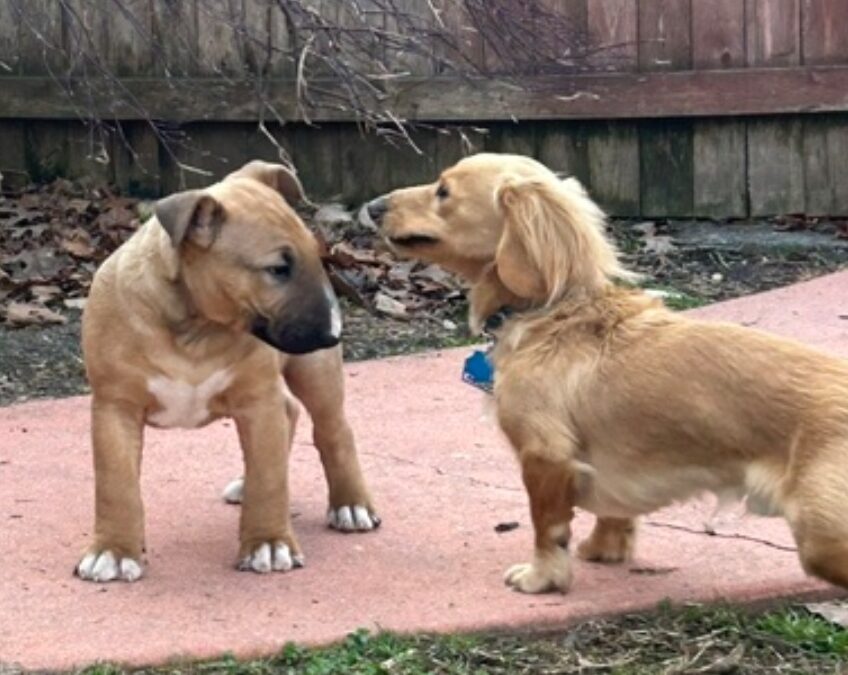
When it comes to puppies, you have a very small window in which they need to be exposed to the world and learn about interactions with other dogs that are not their littermates. The critical socialization period in all puppies, regardless of breed, ends about week 14 of life, at which time it becomes harder, if not impossible, to shape their emotional responses to things. While there is a balance of keeping your puppy safe from disease, science shows that puppies that do not have positive interactions with other dogs in their first 14 weeks of life grow up to be scared, shy, fearful, or reactive.
Having bred two singleton puppies, it became particularly critical that they learned to meet other dogs long before they had received all of their vaccinations. Also, since I have a challenging breed of dog, I feel it is crucial that my puppies get to meet other breeds of dogs. So, I have developed a safe way of handling these introductions.
All of my puppies meet other dogs before they have received all of their vaccinations. The trick is to pick an adult dog that has a rock-solid temperament, who will encourage the puppy to learn to play as well as gently correct them on what is appropriate and inappropriate. Of course, this dog should have all of their required vaccines. Also, if your puppy’s mother was fully vaccinated correctly, the puppies will carry her antibodies, decreasing the likelihood of trouble.
I usually choose my own house for the playdate, as I know it is disease-free and safe. I never take my puppies to dog parks, as the risk for infection is just too high. Also, you want your puppy to have a safe, calm introduction to other dogs; seeing the chaos that can happen at dog parks can result in an overwhelming and overstimulating experience for them.
When making the introduction, I have the adult dog on a leash, being held gently. I will either hold them in my lap while seated on the floor and let the puppy choose to go investigate the other dog, or if I know my puppy is confident, I will simply let them wander towards the other dog. What I try to avoid is walking them up to each other with them going nose to nose and staring each other down. Remember, your puppy is tiny. It could be scary for them to have a big dog towering over them.
Once I am sure that the puppy will be safe, I leave it to the other dog to guide the puppy to safe play. What I look for is mutual play bows to each other, and I don’t worry immediately about growling or barking that dogs do to communicate with each other. It is a normal part of play for dogs to be vocal and growl while wrestling. You should be able to tell based on body language what that growl actually means. I also give both the puppy and adult dog a “safe space” to run to if they need a break.
Playdates should last about 15 minutes or so. Puppies get tired quickly, then become extra bitey and tend to wear out their welcome. During the play session, I give both dogs treats and praise them for good behaviors like being nice to each other.
If you’re safe about picking the right dog and place for the meeting to happen, the benefits for your puppy will far outweigh the negatives. If you have any questions, please feel free to email me at heidi@fouronthefloordogtraining.net.
Heidi Clayton started Four On the Floor Dog Training to provide positive, reward-based dog training in South Jersey. She breeds, trains and shows bull terriers under the SoraBully’s Bull Terriers kennel name. Email questions to heidi@fouronthefloordogtraining.net or learn more at https://fouronthefloordogtraining.net