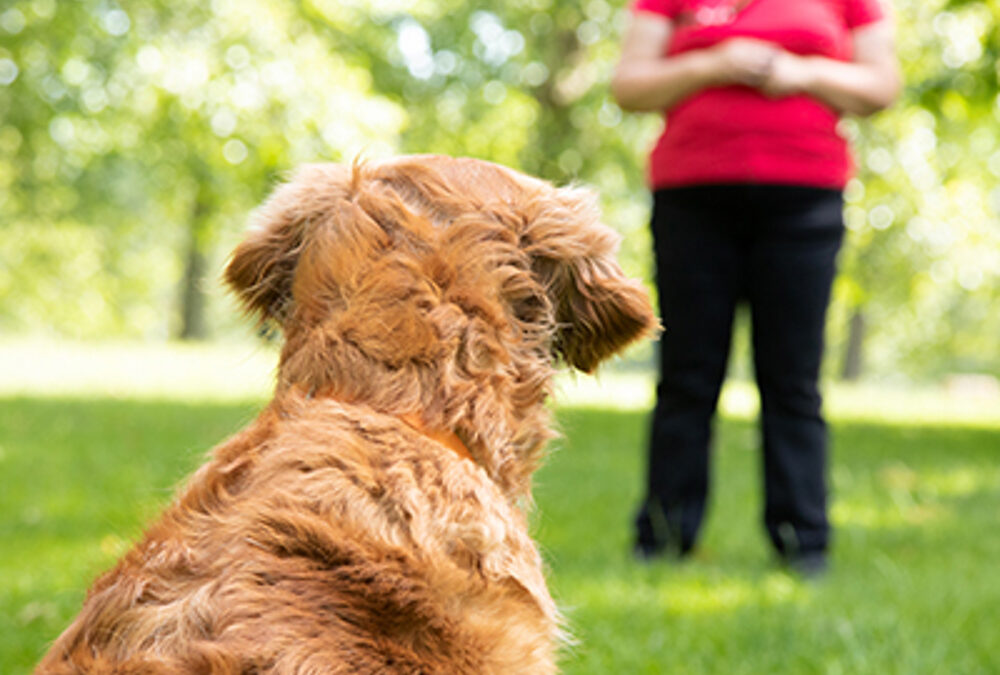
Training your dog to come to you when called is perhaps the single most important thing they can learn. Of all of the things I attempt to teach my bull terriers, this skill takes precedence over everything else. Bull terriers are not necessarily known for being obedient, so I have developed a few tricks to cement a solid recall.
Remember, if you say your dog’s name and they do not turn their head to look at you, please do not say the word “come” incessantly, because your dog is not paying attention and they are not going to do it. Instead, say your dog’s name in the happiest and highest-pitched voice you can muster so that it almost sounds a little silly when you’re doing so. Once they actually look at you, you can start encouraging them to come to you.
Here’s my first trick for getting my dogs to come to me: When we are out in the yard, I reward them with praise and treats for simply following me around. Sometimes I trot or jog in a silly fashion, making myself interesting to follow. Plus, I give treats and praise to make following me even more interesting in the presence of distractions. Before long, they are following me around the yard as much as they are sniffing. When they are sniffing and distracted, I will approach them, deliver a jackpot of treats and then run away in the opposite direction. If they follow me, I praise them with “good come” and they get another jackpot.
When trying to shape a solid recall, avoid calling them to you when you are going to be putting them away in their crates or kennel. For example, your dog or puppy is outside having a good time sniffing, then you call them to come inside and they immediately get put into their crates. While every dog I own is at some point going to be called inside to be put away, I try to allow a bit of time to elapse between them coming to me and putting them away. You don’t want to be seen as the party pooper who ruins their fun with crate time.
You should also practice coming when called when you are out on a walk and your dog is leashed. While they are highly distracted, say their name and start moving backwards. Don’t drag them to follow you, but reward them if they turn in your direction and start coming to you.
Another tip is to always politely take hold of your dog’s collar when they get you so that when in a pickle or, god forbid, they get loose, they are habituated to someone grabbing their collar and not backing up away from them. Every puppy I know starts doing this in their adolescence phase, but if you practice this from the time they are a baby, it becomes less of an issue.
Personally, I do not care if my dogs sit when they get to me. If it is important to you that your dog sits when they get to you, teach them the hand command for the action of sit and do not verbalize asking for the sit. When you do verbally say sit and then reward them, you are actually rewarding the sit and skipping over the very important coming when called.
I know that there are old-school obedience people in the world who do not feel that you should give your dogs treats to bribe them to come to you. I disagree 100%, because I feel that not every dog is wired the same and will not leave a distraction to come to you if it’s not somehow rewarding. I give treats to my puppies for as long as it takes. While I will eventually phase the treats out, I still like to occasionally give them treats for coming to me.
If you have any questions, please feel free to email me at heidi@fouronthefloordogtraining.net.
Heidi Clayton started Four On the Floor Dog Training to provide positive, reward-based dog training in South Jersey. She breeds, trains and shows bull terriers under the SoraBully’s Bull Terriers kennel name. Email questions to heidi@fouronthefloordogtraining.net or learn more at https://fouronthefloordogtraining.net