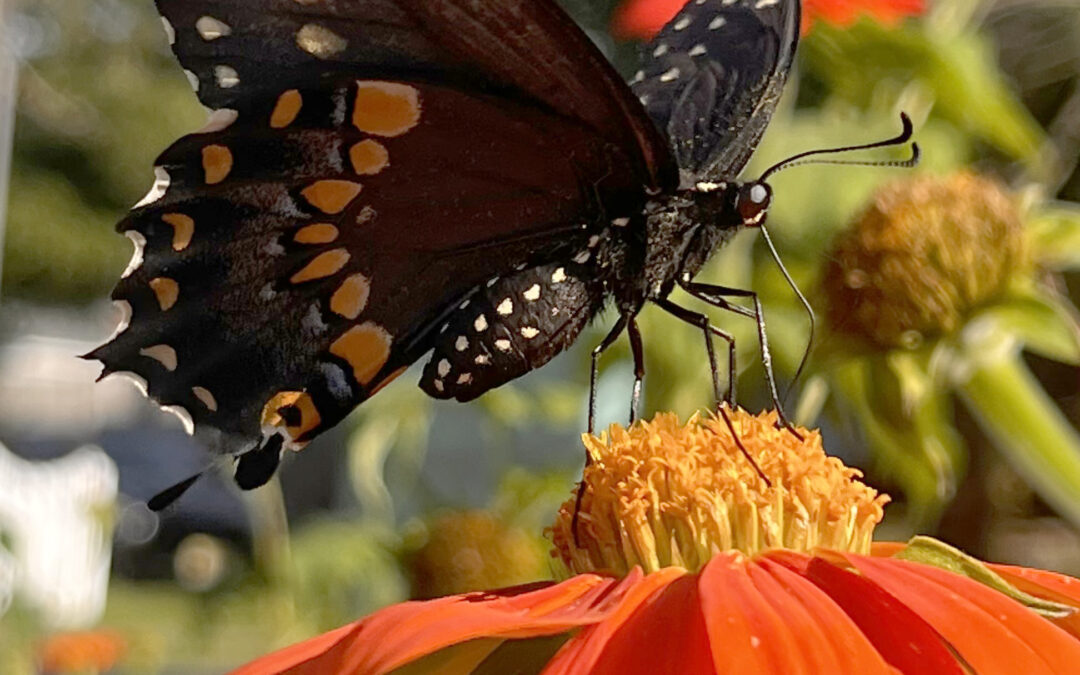
Did you know that you can play host to New Jersey’s state butterfly, the eastern black swallowtail? These beautiful butterflies with black wings and blue, yellow, and orange markings will be welcome guests to any garden. But before you rush to the garden market to fill your car with flowers, plan your butterfly garden with intention and start from the beginning.
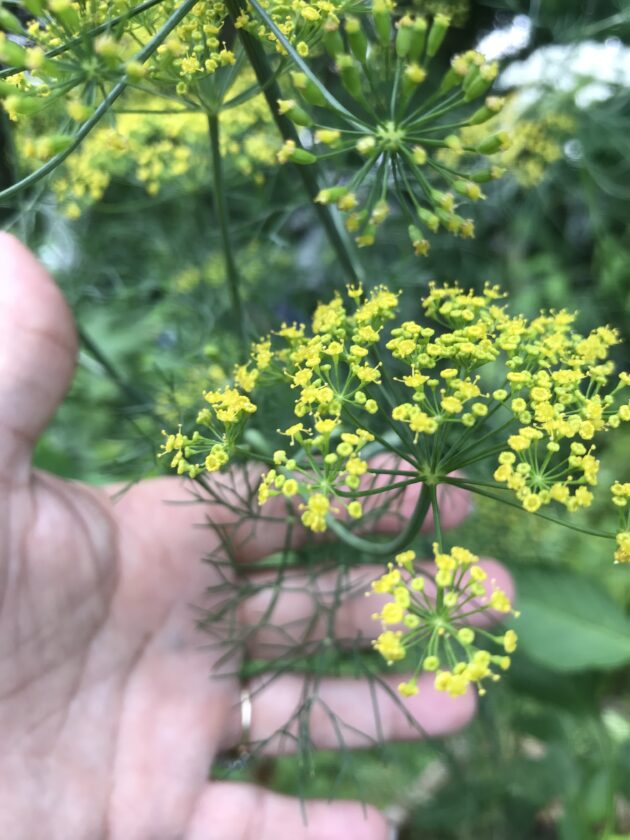
Often, when we think of attracting butterflies to our gardens, we think of creating an oasis filled with colorful flowers, assuming butterflies will automatically show up for the party. While this is a perfect way to offer nectar for adult butterflies, the starting point of a butterfly garden should be to plant the host plants for the caterpillars of the butterflies that we hope to attract. This way, the female butterfly will visit your garden, seeking a place to lay her eggs. Once the caterpillar emerges, mom will be long gone, but she will have provided for her offspring. If you wish to have eastern black swallowtails living in your garden, you will want host plants such as dill, fennel, carrots, and parsley. In fact, these little caterpillars like parsley so much that they are often referred to as “parsley caterpillars.” You may also find eastern black swallowtail caterpillars eating from the non-native plant Queen Anne’s Lace, also known as wild carrot. According to theplantnative.com, you can also plant Golden Alexander (Zizia aurea), a native perennial plant that is in the parsley family and is a host plant for the black swallowtail caterpillar.
Once you plant your buffet for these caterpillars, you will want to keep an eye out for visitors. At first glance, you may be annoyed to think some pest has started nibbling on the leaves of your plants. But keep in mind that black swallowtail caterpillars go through five different stages, called instars, and they will look very different at each stage. At first, they will resemble bird droppings. Though this might be a far cry from the beautiful butterflies that you are dreaming of, this ugly baby stage will help protect them from predators. As the caterpillars go through these different stages, they will eventually form a new, unique defense mechanism. When threatened, the caterpillar will stick out what looks like little orange horns or a forked tongue, which is a gland called its osmeterium. This gland will pop out and produce a foul-smelling odor to repel predators.
As your eastern black swallowtail caterpillar matures and begins its transformation, the chrysalis will form. These can be green or brown, depending on their surroundings, for camouflage. Normally, the butterfly will emerge in about 10-20 days. However, unlike most migrating butterflies, the black swallowtail can overwinter in its chrysalis, remaining there for months. When spring arrives and the weather becomes warm enough, the butterflies will finally emerge from the chrysalis. Be careful when doing your spring cleanup; without even realizing it, you might be hosting a black swallowtail right now.
The adult butterflies will be seeking nectar-rich flowers to enjoy. But of course, you also want to continue to provide host plants for the caterpillars. With some luck, the new butterflies will see these host plants and lay their eggs in your garden, and the process can begin all over again.
We would love to hear from our readers. Which host plants have attracted butterflies to your garden? Send your comments and questions to shorelocalgardener@gmail.com.