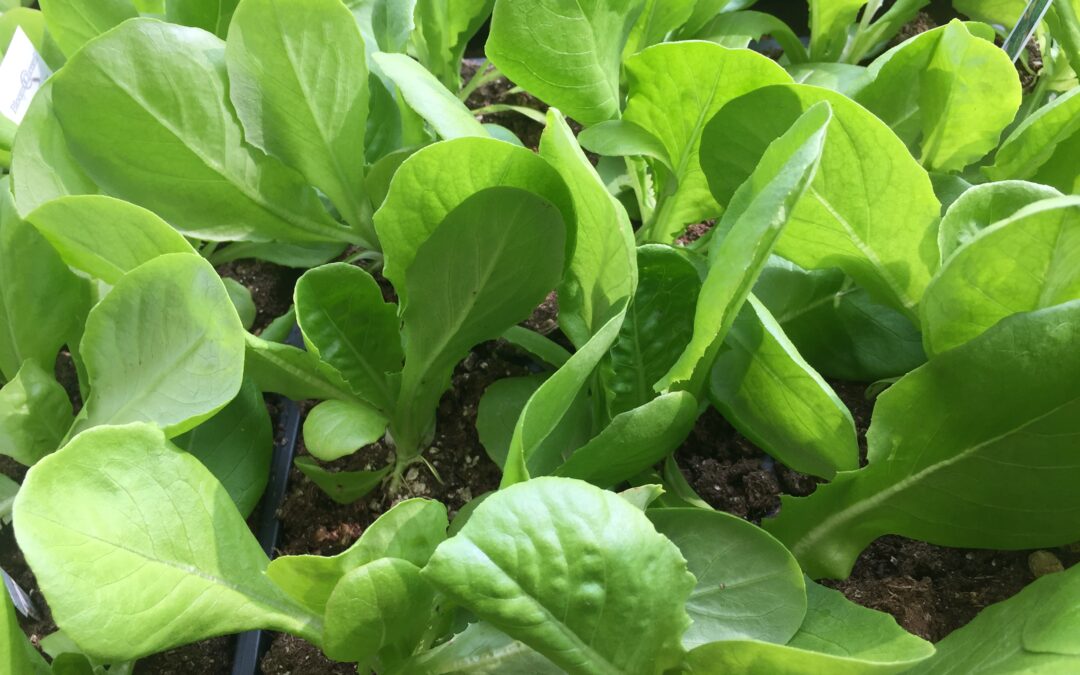
Now that we have made it past Mother’s Day (the unofficial start of the gardening season), we can get serious about planting. When it comes to growing vegetables and herbs, you can take two different approaches. You could head over to the garden nursery and purchase young seedlings that have already been started for you. This will help you get a jump on the season and will take the headache of starting plants from seed out of the equation. But this method can also be more costly. Another approach would be to grow plants from seed yourself. Not only can this be a rewarding and gratifying experience, you can save a lot of money since a packet of seeds can be found for only a few dollars. In my opinion, a mix of the two options would be a practical and balanced approach. Some seeds are fussy. They are sensitive to being too hot, too cold, too wet, too dry, and require grow lights and lots of time and indoor space. Especially for the new gardener, you want to set yourself up for success and not discouragement. In these cases, just buy the plant. However, certain plants are so easy to grow from seed that you really should just plant them yourself.
Once you gain some knowledge of growing plants from seed, you may become obsessed and will want to experiment and try to grow everything and anything. But if you are just starting out, choose plants that grow quickly from seed. Keep in mind that your growing season is the time between the last spring frost and the first fall frost. In our Shore Local reader area, you have around seven months to fit in the growth from seed to harvest. This does not count cool-season vegetables that will give up the ghost once it gets too hot. You can check on the estimated last and first frost in your specific location by entering your zip code on certain sites like almanac.com. Seasoned gardeners will extend the growing season by starting seeds indoors or winter sowing their seeds. But let’s talk about seeds that can be grown by planting them directly into the garden.
You can gain a wealth of information simply by reading the seed packet. This will tell you how many days it will take before you can harvest your herb or vegetable, whether it is frost tolerant, how deep to plant the seed, and how far to space the seeds apart. One key thing to look for is whether the seed company suggests soaking the seeds for better germination. You will want to pay attention to this advice, but it is very simple to follow. Some seeds have a hard outer shell, and this needs to be softened to help speed up the process of germination. Peas, okra, sunflowers, beans, beets, nasturtiums, and cilantro would all be good candidates for pre-soaking. All you need to do is open the seed packet and drop the amount you wish to plant in a cup of water the night before. After 12 to 24 hours, you will see a marked difference in the seeds. Pea seeds will go from a dry shrivelled seed to a plump seed that looks just like a pea (what a coincidence). Once the seeds have pre-soaked, get them into the ground right away, because they will be eager to start growing. Make sure you water the soil well and don’t let it dry out until the plants start growing.
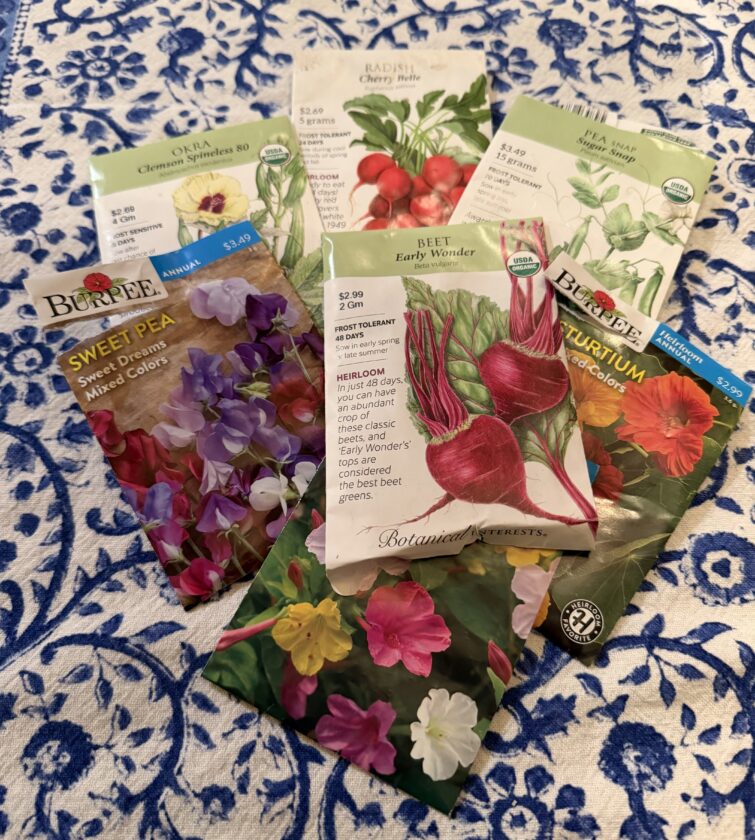
While you can plant some seeds in those little plastic four-packs to get them started, some plants are super sensitive to being moved. These plants really hate having their roots disturbed, so it’s best to plant them directly into their permanent home in the garden. These include peas, sunflowers, beets, dill, and radishes. At this point in the season, I would also suggest getting zinnias and marigolds directly into the garden right away. Marigolds will stand as soldiers guarding your vegetables from critters, and zinnias will bloom beautifully and attract pollinators.
For newbie gardeners, if you did not already start tomatoes and peppers from seed, just buy the seedlings. You need to get this party started. Parsley and rosemary can take weeks just to germinate and perennials can take a full year to flower. If you want to grow asparagus, be ready for the long commitment. They can take three years before the first harvest. But once established, they might outlive you and your adult children!
If you want quick results and almost instant gratification, these are among the fastest-growing plants from seed: radishes, lettuces, and cilantro, and following close behind are bush beans, dill, and beets. Depending on the variety, some of these herbs and vegetables are bred to grow earlier or later. This is another time to check that seed packet.
We would love to hear from our readers. Tell us what you are growing and what worked well for you and what was a learning opportunity. Send your questions and comments to: shorelocalgardener@gmail.com.
Tammy Thornton lives with her husband, children, and crazy pets while enjoying a life of gardening, cooking, and going to the beach.