
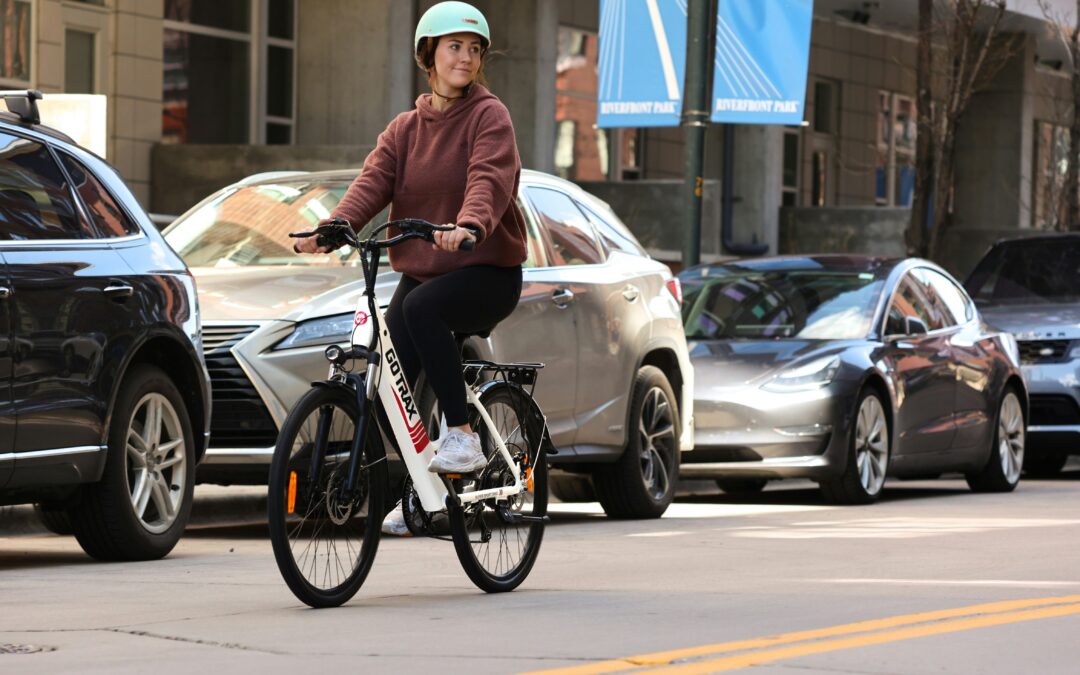
A new law regulating electric bicycles (e-bikes) in New Jersey is set to take effect this summer, introducing stricter requirements for riders in response to growing safety concerns. However, as the rollout approaches, questions remain about how the law will be implemented and enforced.
The legislation comes amid increasing reports of reckless riding and serious — in some cases fatal — crashes involving e-bikes. According to reporting from NBC10 Philadelphia, officials say the changes are intended to improve safety, but key details are still being worked out.
Beginning in July, New Jersey riders must be at least 15 years old to operate an e-bike. They will also be required to carry a valid driver’s license, or obtain a specific e-bike license or permit. In addition, all e-bikes must be registered with the New Jersey Motor Vehicle Commission (NJMVC) and insured. Helmet use will also become mandatory for all riders, regardless of age.
Uncertain logistics
Despite these clearly defined requirements, local officials say there is still uncertainty surrounding enforcement. Lt. Joe Scullion of the Margate Police Department told NBC10 that law enforcement agencies are still awaiting guidance on how the new rules will work in practice.
Questions remain about whether e-bikes will require visible license plates, or if riders will need to carry physical proof of registration. These logistical details have yet to be finalized, adding to confusion ahead of the law’s implementation.
Insurance is another area with significant unknowns.
Gary La Spisa, senior vice president of the Insurance Council of New Jersey (ICNJ), said e-bikes will require the same insurance as mopeds. However, only a few companies currently offer moped insurance, and it’s uncertain how many will extend coverage to e-bikes. He said the council is currently trying to gather that information.
La Spisa said ICNJ, which represents 19 carriers making up most of the insurance market in the state, did not support the legislation but its members must enforce it.
“It’s going to be very important for consumers to do their research and to speak to the carriers that they’re considering buying insurance from,” La Spisa said. “I’s really important for consumers to ask questions and to make sure that whatever they’re buying covers the product they’re using.”
Tom Heist of Heist Insurance Alera Group, speaking to NBC10, said pricing has not been firmly established and will depend on state guidelines that have yet to be defined. Early estimates suggest annual premiums could range anywhere from a few hundred dollars, but final requirements remain unclear.
Heist also pointed to potential complications for out-of-state visitors, particularly in shore communities that see heavy seasonal tourism. Because registration typically requires state residency, it is uncertain how the law will apply to visitors bringing e-bikes from neighboring states.
While local officials believe the new regulations could ultimately lead to safer streets, biking advocacy groups, like People for Bikes Coalition, argue that the law “sets New Jersey up to become the most unfriendly state for bicycling in the country,” according to the coalition’s website.
The group points to several concerns, including the elimination of widely used e-bike classifications in favor of a more complex system, potential negative impacts on retailers and tourism, and added burdens on riders through licensing, registration and insurance requirements.
The advocates also note concerns that the law does not adequately address the primary causes of roadway fatalities, particularly those involving motor vehicles, including “unregulated, high-speed e-motos.”
The requirements
An MVC spokesperson told NBC10 that the agency is still developing the registration process, including determining who will be eligible to register e-bikes.
Under current guidelines released by the MVC, a low-speed e-bike is defined as a pedal-assisted bicycle with a motor that stops providing assistance at 20 miles per hour. A motorized bicycle, or moped, can reach speeds of up to 28 miles per hour with throttle assistance.
To obtain an e-bike license, riders will need to complete a multi-step process through the MVC, including passing knowledge and vision tests, holding a permit, practicing for 45 days and completing a road test.
Registration will require proof of ownership, insurance and proper documentation, though the MVC has indicated that alternative forms of verification, such as affidavits, may be accepted in certain cases.
With several key components unresolved, residents and visitors alike may face a period of adjustment as New Jersey works to implement one of the state’s most comprehensive e-bike policies to date.
Julia graduated from Rider University in 2024 with a BA in multiplatform journalism and minor in social media strategies. In addition to reporting on local news for Shore Local, she is a social media strategist for small businesses. Connect with her: shorelocaljulia@gmail.com or @juliatrain on Instagram.