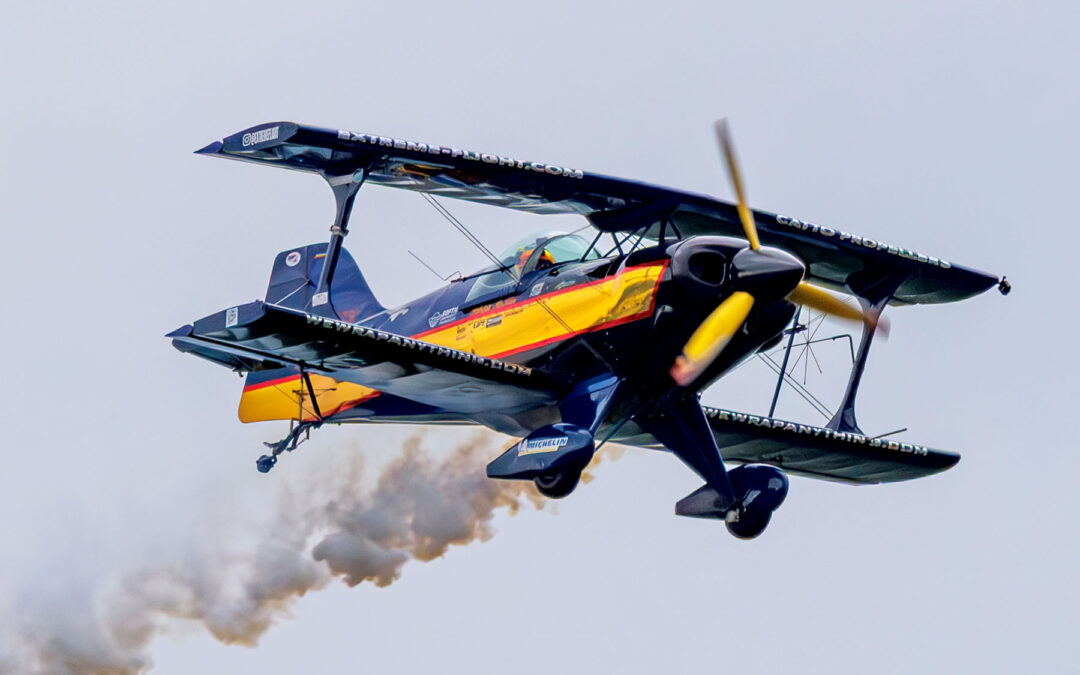
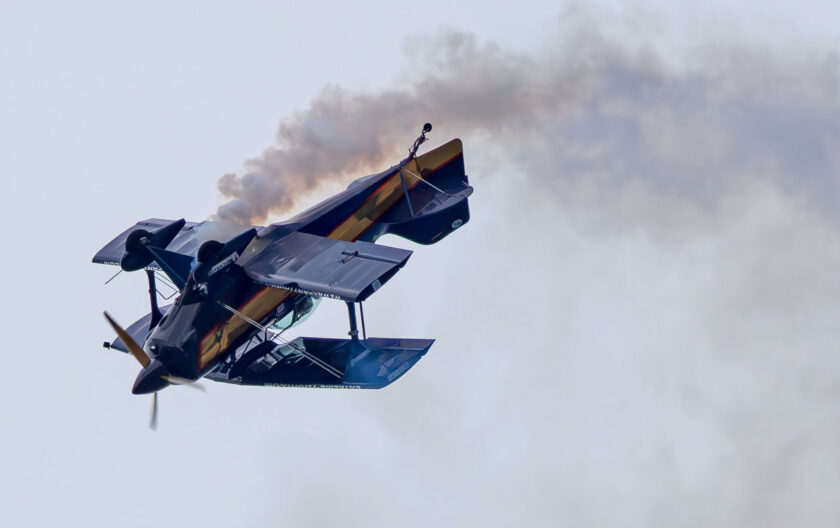
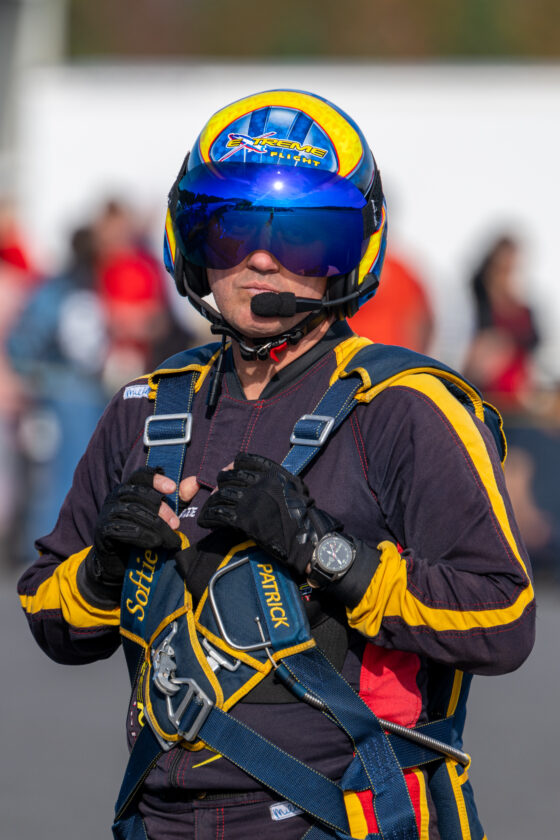
When spectators watch Patrick McAlee perform at the Wildwoods Air Show, they will see 5-10 minutes of aerobatic flying. Behind those minutes are decades of aviation experience, hours of preparation and a highly modified Pitts S1S known as The Blue Demon.
McAlee, 46, will return to the Wildwoods Air Show Sept. 12–13 following his 2025 appearance over the beach. As a professional airshow performer, airline captain, A&P mechanic and former aerobatic competitor, McAlee brings several perspectives to the cockpit.
His interest in aviation began when he was a child flying with his father, an airline pilot. The two eventually built airplanes together, including a Skybolt and an Ultimate biplane, and McAlee said his experiences at the annual EAA AirVenture Oshkosh fly-in helped inspire him to pursue airshows.
When he was there, McAlee recalled seeing Patty Wagstaff, an American aerobatic stunt pilot and aviation pioneer. He remembered her giving a speech in her iconic, white flight suit.
“And then when I watched her fly, I was just like, ‘Wow, I want to be an air show pilot. That’s just awesome,’” McAlee said.
Over the years, McAlee met other prominent aviators, including Sean Tucker and Bob Hoover. He eventually found himself being coached by some of the pilots he had admired as a child.
The Blue Demon’s story
McAlee’s aviation career transcends aerobatics. He has worked as an airline captain at Republic Airways for 20 years, flying the Embraer 145 and 170, and holds a degree in aircraft maintenance.
That mechanical knowledge is particularly useful when preparing The Blue Demon for the demands of airshow flying, McAlee said. He has modified the aircraft over the years to make it lighter and improve its performance, including changes to the propeller, engine, ailerons, rudder and fuel system.
The aircraft’s name and appearance also have their own history. McAlee said the Blue Demon name came from the sound produced by the airplane’s propeller and flying wires, while the current paint scheme evolved from an earlier competition design.
McAlee said he has remained drawn to biplanes because of the impression they make on audiences, comparing them to sportscars.
“To me, if you go out in the car on the highway and you see a McLaren go down the road, you expect it to do McLaren stuff. It’s loud. It’s fast,” he said.
That visual connection is particularly effective at beach airshows, where onlookers can see the aircraft performing over the water from the beach and boardwalk.
McAlee said he enjoyed his first Wildwoods appearance and is looking forward to returning this year.
During his performance, spectators may hear McAlee communicate with the crowd while flying. He said he tries to make the experience as immersive as possible, using cameras positioned throughout the aircraft to provide views that aren’t possible from the ground. Those videos will be posted on his social media accounts, @extremeflight on Instagram and ExtremeFlight on Facebook and YouTube.
The 2026 performance will also feature a new educational element. McAlee said he is planning an informal, hands-on activity for children involving airplane-shaped cookie cutters and sand, allowing him to discuss different types of aircraft and the basics of aviation.
This year’s performance also comes one day after the 25th anniversary of the Sept. 11, 2001 terrorist attacks, a date that carries particular significance for McAlee as an airline pilot.
He was in college when the attacks occurred and remembers seeing diverted aircraft and military activity near the Air Force base by his school. McAlee said remembering the past also means recognizing what those sacrifices have made possible today.
“It’s a time to reflect and honor, but it’s also a time to understand the freedom of what we get to do every day, and that there are bad people out there that want to take these freedoms from us, and there are great people out there that will protect us from it,” he said.
The preparation
The performance itself is only one part of the work for McAlee. He spends days preparing the airplane, training and reviewing previous flights. He also uses visualization before takeoff to mentally rehearse the routine.
“My wife hates that I call it this, but I call it a dirt dive. She calls it a ramp dance. I think dirt dive sounds more manly. Basically it looks like I’m doing ballet or like I’m auditioning for ‘Dancing with the Stars’ in a very poor way,” he said. “It’s me using my body as my airplane, doing my routine. So you’ll see me dancing around, and I’m actually doing my routine in my head, and then that’s me getting in the moment, thinking, and I’m visualizing too. It’s almost like a mode of transcendence. I’m visualizing everything.”
Once in the air, the routine is largely choreographed, but McAlee must account for changing weather conditions. Wind direction and ceiling are among the factors he watches most closely, particularly when performing over the shoreline.
“Pretty much everything’s choreographed,” he said. “You fly how you train. You don’t do anything new.”
Safety remains a top priority to that preparation. McAlee said his goal is to create excitement without making those watching believe the performance is genuinely unsafe.
He also pays close attention to audience engagement, structuring his routine to give spectators a variety of maneuvers and perspectives.
“You get about 10 to 12 seconds to keep their attention,” McAlee said.
The physical demands of aerobatic flying add another layer to the preparation. McAlee flies wearing a flight suit, gloves and helmet, and said cockpit temperatures can climb significantly during a performance.
After landing, he checks the aircraft before heading out to interact with viewers. McAlee said he tries to get out to the crowd as fast as possible.
Ultimately, McAlee hopes onlookers take away more than the spectacle of the flight. He said his years in aviation have reinforced a lesson he believes applies to every pursuit.
“I have to commit to everything I do, and I have to be dedicated to this industry. Or it is not forgiving,” McAlee said. “And I think everybody should take that to anything they do in life.”
Julia graduated from Rider University in 2024 with a BA in multiplatform journalism and minor in social media strategies. In addition to reporting on local news for Shore Local, she is a social media strategist for small businesses. Connect with her: shorelocaljulia@gmail.com or @juliatrain on Instagram.