
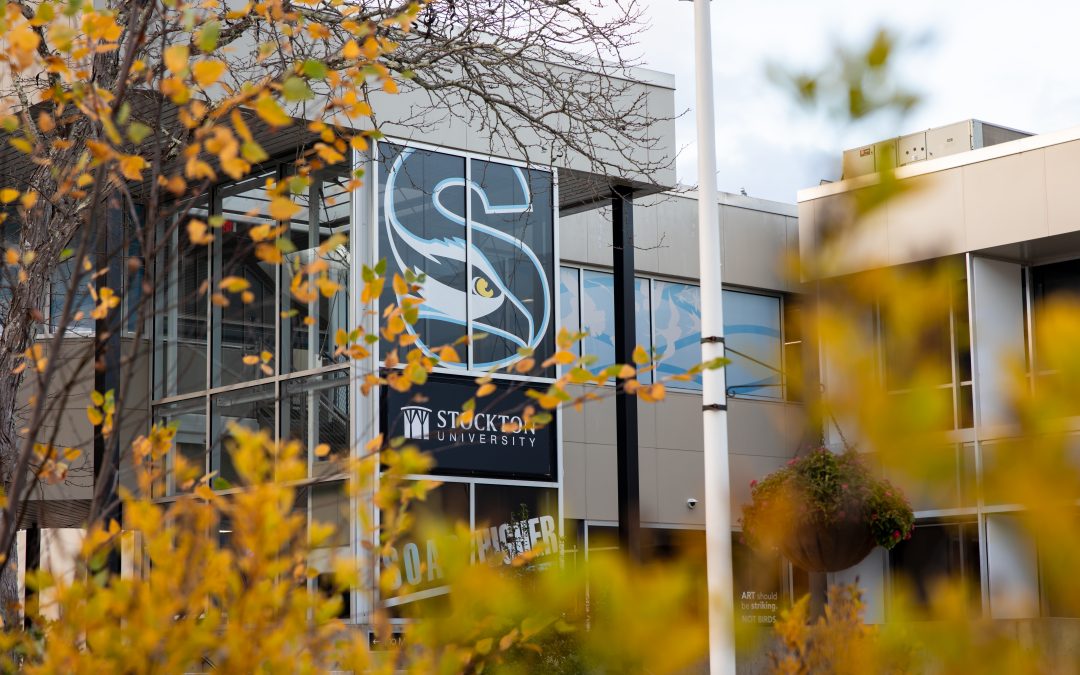
In an Oct. 6 email to students and families, Stockton University President Joe Bertolino announced plans to layoff 21 faculty and professional staff positions at the end of the academic year as the institution grapples with a multimillion-dollar budget deficit, declining enrollment and lower student retention.
Bertolino said the university had notified two unions represented at Stockton, the American Federation of Teachers (AFT) and the Communications Workers of America (CWA), of its intentions that day.
However, on Tuesday, Oct. 13, the university notified 22 employees that their positions are being eliminated. Stockton did not explain to Shore Local why the number of affected employees increased from the 21 positions initially announced or what factors determined which employees would be laid off.
In his email last week, Bertolino acknowledged the effect the decision would have on employees and their families, noting that university officials had explored several options to address Stockton’s financial challenges, including voluntary separation programs.
The cuts include 14 faculty positions and seven professional staff positions represented by AFT, according to his message.
The university said the layoffs would take effect at the end of the current academic year, with the process governed by the applicable collective bargaining agreements.
“This is a difficult but necessary step to address our structural deficit, align our resources with the needs of the institution we are becoming, and position Stockton for long-term sustainability. We do not make this decision lightly,” the university said in a statement to Shore Local. “Our students remain at the center of our decisions, and we will continue working to protect the core academic and student experience while preserving Stockton’s ability to serve students for generations to come.”
Fitch cites enrollment and financial pressures
Fitch Ratings, a credit-rating agency that assesses the creditworthiness of institutions and governments, revised Stockton University’s financial outlook from Stable to Negative on July 31 while affirming its ‘A’ credit rating.
The agency cited projected budget deficits in fiscal years 2026 and 2027, an estimated 7% enrollment decline and reduced state support. Fitch also identified affordability concerns, lower demand for campus housing and graduate programs, and a relatively low rate of admitted students enrolling.
Stockton’s available funds rose to $215.1 million at the end of fiscal year 2025, but its adjusted debt totaled $554.8 million, including pension-related liabilities. Fitch said the university’s high debt burden and reliance on state operating and pension support could limit its ability to absorb further financial losses.
Although planned spending reductions and the use of reserves could provide temporary relief, Fitch warned that restoring a sustainable budget could take time. Further enrollment declines, reduced state support, continued deficits or significant depletion of reserves could lead to a downgrade.
The Negative Outlook does not mean Stockton’s credit rating has been downgraded; the rating remains ‘A’.
University faces projected deficit of at least $32 million
During his State of the University address on Oct. 8, Bertolino discussed the university’s efforts to address a structural budget deficit estimated at approximately $25 million.
Without further cuts or other financial changes, Stockton could face a deficit of at least $32 million next year, Bertolino said, according to The Press of Atlantic City.
He also projected that the university’s investment account could decline from $140 million to $78 million over two years when accounting for existing deficits and the costs of voluntary separation programs.
Since Bertolino became president in 2023, Stockton has eliminated 41 managerial positions and removed 135 positions through vacancies, voluntary separation agreements and other personnel actions, he said, according to The Press of Atlantic City.
The university offered voluntary buyouts to some employees in the spring as part of its initial efforts to address the budget shortfall. Bertolino said Stockton hoped to save $10 million through voluntary separation incentive programs and another $10 million through measures such as vacancies and retirements. Final savings from those efforts had not yet been determined.
Bertolino said layoffs alone would not resolve Stockton’s financial problems. Other measures include reducing operating expenses, reviewing academic programs, increasing revenue, improving student enrollment and retention, and seeking additional state assistance.
Enrollment decline raises additional concerns
Stockton reported 8,101 students enrolled for the fall 2026 semester, a 10.8% drop since 2022 and 6.8% decline from last year, according to figures cited by the institution.
The university’s first-year retention rate also has declined. Bertolino said the rate fell from 85% in 2019 to 74% this year, its lowest level in seven years.
Of the 1,486 first-time, full-time students who enrolled last fall, 380 did not return for their third semester, according to the newspaper.
Although Stockton has experienced growth in applications and admission offers, Bertolino said fewer admitted students are choosing to enroll. Financial aid is one factor affecting those decisions, he said. Tuition, fees, room and board account for 64% of Stockton’s operating revenue, making enrollment losses a significant concern for the university’s finances.
“We will approach these changes carefully, with particular attention to the academic programs, services and experiences that are essential to student success,” Bertolino wrote in his Oct. 6 message.
He added that Stockton would communicate directly with students when changes affect their programs, services or other aspects of their university experience.
Faculty and students protest planned cuts
The planned layoffs have prompted opposition from faculty members, students and other members of the Stockton community.
“Our faculty and staff are the heart of Stockton University, not line items to be erased,” said Tara Luke, SFT president and a professor of biology in an Oct. 7 press release. “Cutting 21 faculty and professional staff positions directly undermines Stockton University’s core educational mission, reduces student support services, and shortchanges the students who rely on us for a high-quality college experience.”
Approximately 100 people gathered outside the Campus Center during Bertolino’s Oct. 8 address to protest the cuts, according to The Press of Atlantic City.
Following the remarks, protesters circulated a petition urging university officials to consider other cost-saving measures before proceeding with layoffs. It also called for reviews of administrative spending, outside consulting and purchasing contracts, as well as postponing nonessential projects and considering additional proposals from labor unions.
Organizers requested a written response from the administration by 9 a.m. Oct. 16, The Press of Atlantic City reported.
Bertolino said the university will continue to share information relevant to students and families as the process moves forward.
“Even as Stockton changes, our commitment to our students and our future does not. Our Strategic Plan is the roadmap for how Stockton moves forward. We are continuing to strengthen programs in areas where we see student demand and workforce need, build pathways and partnerships across South Jersey, and invest in the work most essential to our future,” he wrote in his email. “Some areas will grow. Others will change. Our responsibility is to make those choices thoughtfully so that Stockton can continue providing a strong academic experience and preparing our students for what comes next.”
Julia graduated from Rider University in 2024 with a BA in multiplatform journalism and minor in social media strategies. In addition to reporting on local news for Shore Local, she is a social media strategist for small businesses. Connect with her: shorelocaljulia@gmail.com or @juliatrain on Instagram.