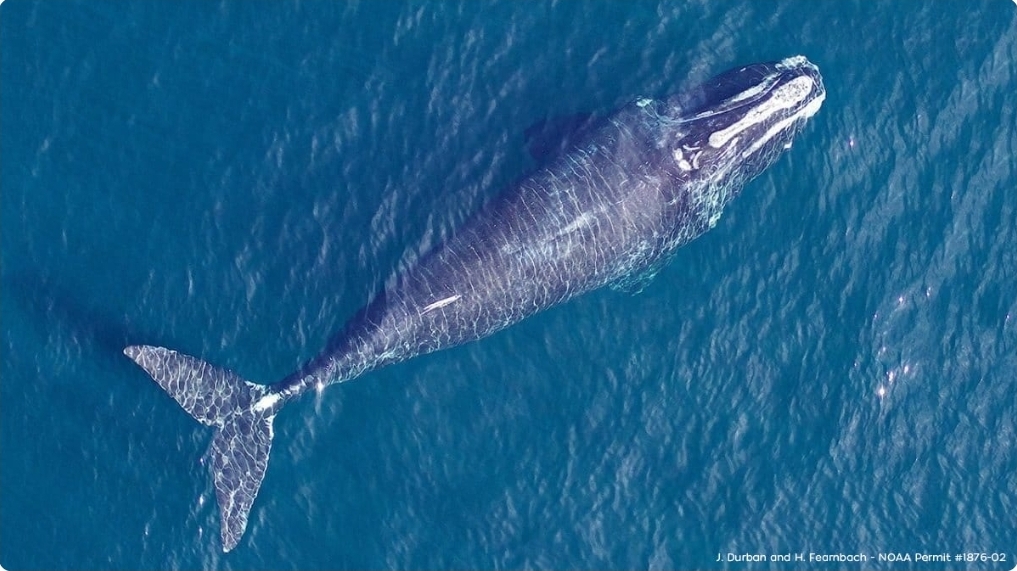
Marine scientists have detected the presence of critically endangered North Atlantic right whales in waters off the South Jersey coast, prompting federal officials to establish a temporary voluntary slow-speed zone for boaters operating in the area.
According to New Jersey Fish & Wildlife, an acoustic monitoring buoy located southeast of Atlantic City detected the whales June 10. The buoy is part of a network operated by the Woods Hole Oceanographic Institution that uses underwater microphones to identify whale calls and track the movements of marine mammals along the East Coast.
Following the detection, NOAA Fisheries issued a voluntary Right Whale Slow Zone that remains in effect through June 25. Mariners traveling through the designated area are encouraged to reduce their speed to 10 knots or less or avoid the zone whenever possible.
The advisory is designed to reduce the risk of vessel strikes, one of the leading causes of injury and death among North Atlantic right whales.
The North Atlantic right whale is considered one of the rarest large whale species in the world. Scientists estimate that only about 370 individuals remain, placing the species on the brink of extinction.
Adult right whales can reach lengths of up to 55 feet and weigh as much as 70 tons. Despite their massive size, the animals are particularly vulnerable to human activity because they often swim near the ocean’s surface and migrate through heavily traveled coastal waters.
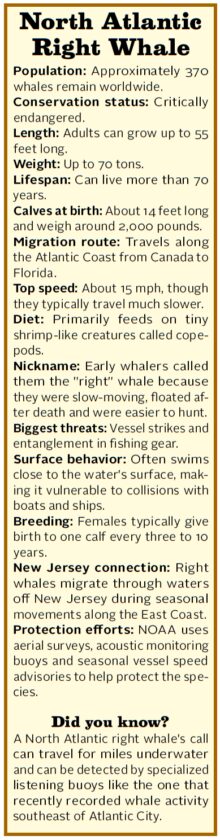
Collisions with vessels and entanglement in fishing gear continue to pose the greatest threats to the species. According to researchers, a majority of documented right whale deaths in recent decades have been linked to these human-related causes.
Conservation groups and marine scientists have expressed growing concern about the whale’s future. Some researchers warn that without significant reductions in vessel strikes and fishing gear entanglements, the species could face extinction within the coming decades.
The recent detection off Atlantic City highlights the importance of monitoring efforts along the Mid-Atlantic coast. Acoustic buoys can detect whale vocalizations even when animals are not visible from the surface, providing an early warning system that helps protect migrating whales.
The public can follow whale activity in near real time through online monitoring programs. Data collected by the Atlantic City buoy is available through the Woods Hole Oceanographic Institution, allowing users to view recent detections and identify which species have been recorded in the area.
Additional whale sightings along the Eastern Seaboard can be tracked through WhaleMap, an online platform that compiles reports and monitoring data from multiple sources.
Boaters, fishermen and others spending time on the water are encouraged to remain alert for marine mammals and report sightings to NOAA. Such observations help researchers better understand migration patterns and support ongoing conservation efforts.
While whale sightings are not uncommon off New Jersey’s coast, the detection of North Atlantic right whales serves as a reminder that some of the ocean’s rarest and most endangered creatures continue to travel through local waters. For scientists and conservationists, each confirmed detection represents both a conservation challenge and a sign of hope for one of the world’s most vulnerable whale populations.