Brigantine is preparing emergency repairs along its northern beachfront after erosion from a September nor’easter exposed an aging bulkhead and raised concerns about the safety of nearby homes, infrastructure and the Promenade.
City Council approved a $35,000 contract for engineering design and permitting work for a proposed stone revetment, a protective barrier made of large rocks intended to reduce the effects of waves and further erosion. The estimated cost of constructing the temporary protection is approximately $400,000, according to The Press of Atlantic City.
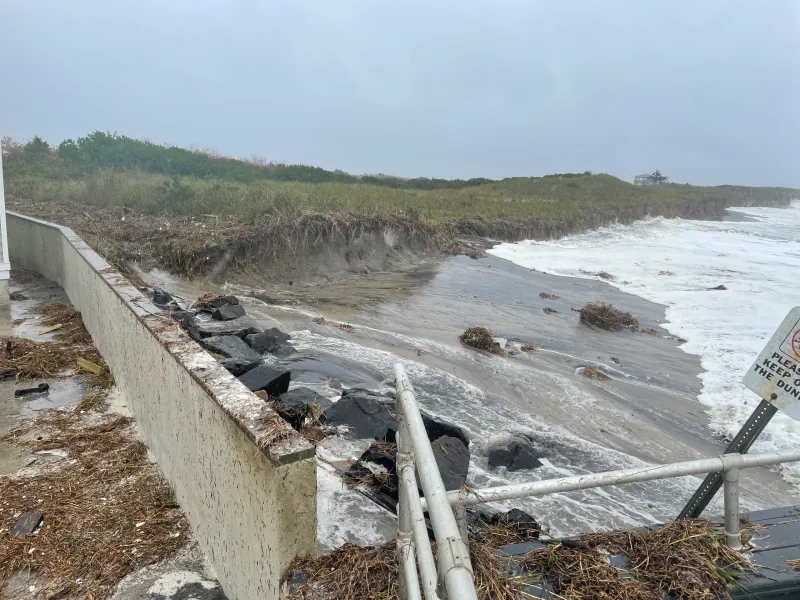
The project would address damage near the northern end of the Promenade, where the dune system has receded approximately 40 feet beyond the walkway’s endpoint, according to an Oct. 7 announcement from Mayor Vince Sera.
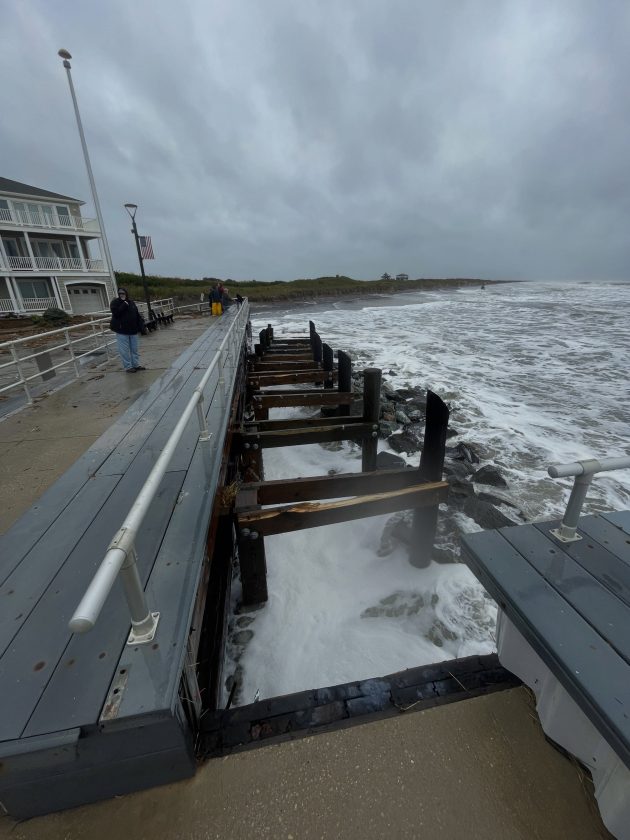
The erosion has left an older timber bulkhead exposed. Although the structure is currently helping prevent additional erosion, city officials are concerned that its failure could leave the surrounding area vulnerable to further damage.
Without additional protection, waves and erosion could threaten private property, the public right-of-way along Brigantine Boulevard and the Promenade itself. Erosion on the landward side of the walkway could also undermine its structure, according to the city.
“We know we cannot wait for the long-term solution to protect the homeowners and infrastructure at the end of the Promenade,” Sera said in an Oct. 7 press release. “The erosion has progressed significantly, and we need to take action now. City Council has authorized the design and permitting work for an emergency stone revetment that will provide temporary protection in the area of the potential breach.”
The proposed barrier would use stones weighing approximately 4 to 6 tons apiece. Plans call for placing the stones along the exposed timber bulkhead, beginning at the corner of the Promenade and continuing approximately 50 feet along the eroded dune face.
Arthur Chew Consulting has been retained to develop the design and secure the necessary permits. Construction cannot proceed until the city obtains approvals from the New Jersey Department of Environmental Protection and the U.S. Army Corps of Engineers.
After the design and permitting process is complete, Brigantine will seek quotes from contractors with experience in coastal construction, Sera said.
The temporary measure is intended to buy the city time to pursue more extensive shoreline protection rather than serve as a permanent fix.
“This is not the permanent solution,” Sera said. “It is something we can put in place to help protect the area while we continue working on the extension of the seawall at the end of the Promenade and the larger coastal protection projects we have been discussing with NJDEP and the Army Corps. We are moving as quickly as we can, but we also need to make sure the work is properly designed and permitted so we can get it done the right way.”
The emergency project is one part of a broader effort to address storm damage and improve coastal defenses across Brigantine. The city is working with government partners on beach and dune protection, a planned extension of the seawall at the northern end of the Promenade and additional long-term coastal projects.
The damage has also prompted discussions with state officials as New Jersey approaches the fall and winter storm season. Gov. Mikie Sherrill visited Brigantine on Tuesday, Sept. 29 to view the storm’s effects and hear local officials’ concerns.
In a social media post, Sera said he contacted the governor’s office during the nor’easter to alert officials to the situation. He said the state was ready to help — and continuously checked in throughout the storm.
The Press of Atlantic City reported that the governor’s office connected with Brigantine officials within 30 minutes to coordinate a response. Sherrill later visited the island to see the damage firsthand and discuss possible solutions with local leaders.
Sera told the newspaper that the governor responded to the city’s concerns by connecting officials with experts who could help evaluate their proposed approach. He described the interaction as an opportunity to work with state officials on protecting the community.
For now, the city’s priority is to reinforce the vulnerable section of the northern beachfront while continuing to pursue a permanent solution. The schedule for construction will depend on completion of the engineering work, receipt of state and federal permits, and the selection of a qualified contractor.
The city has said it intends to advance the emergency project as quickly as possible while ensuring the proposed protection is properly designed and approved.
Julia graduated from Rider University in 2024 with a BA in multiplatform journalism and minor in social media strategies. In addition to reporting on local news for Shore Local, she is a social media strategist for small businesses. Connect with her: shorelocaljulia@gmail.com or @juliatrain on Instagram.