
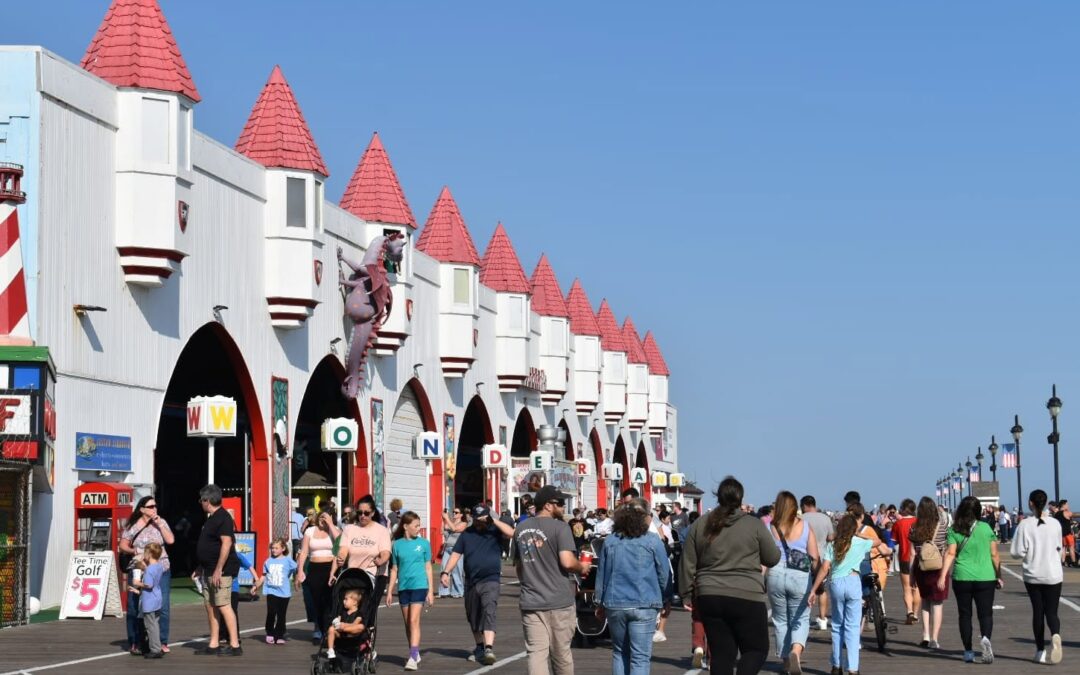
After about seven months of research, public input and analysis, Ocean City’s Boardwalk Subcommittee unveiled its recommendations for the future of the boardwalk. Now, City Council will be voting on whether to designate the property as an area “in need of rehabilitation.”
The subcommittee’s report suggested a compromise approach for the former Wonderland Pier site, rejecting both a return to a traditional amusement park and the large-scale hotel proposal currently under consideration.
The nine-member advisory panel presented its findings on June 12, outlining recommendations for the entire boardwalk while also addressing the future of the vacant 600 Boardwalk property, the former home of Gillian’s Wonderland Pier.
The report did not endorse a specific project. However, it suggested that any future development should preserve the character of the boardwalk, include public-facing entertainment and amenities, and avoid overwhelming neighboring properties.
Boardwalk Subcommittee Chairman and Fourth Ward Councilman Dave Winslow said the group identified several features it would like to see in a future hotel development, including restaurants, entertainment, parking and boardwalk-facing retail.
He said the committee intentionally avoided recommending a specific height or size for a potential hotel.
“We said it would need to be somewhat in keeping with the neighborhood, and not overshadow the boardwalk to the effect that all you see is the hotel and nothing else,” Winslow said in an interview with Shore Local. “[We] want to keep the flow in the nature of the boardwalk.”
The future of the property has been one of Ocean City’s most divisive issues since Wonderland Pier closed in October 2024.
Developer Eustace Mita, owner of the property, proposed an eight-story, 252-room luxury hotel project that has generated both support and opposition throughout the community.
Ocean City 2050, a community advocacy group that has opposed Mita’s proposed hotel project, said it agrees with the report’s finding that the Boardwalk’s primary challenge is a lack of entertainment and supports gathering additional data before major zoning changes are implemented. The group also expressed appreciation for the report’s emphasis on traditional planning tools.
“We are also encouraged by the recommendation that any development at 600 Boardwalk include substantial Boardwalk-facing entertainment, and be designed so as not to overwhelm neighboring homes,” said Bill Merritt, a member of Ocean City 2050, in a statement to Shore Local. “We remain cautious about allowing residential units above Boardwalk businesses and believe any mixed-use zoning must come with conditions that clearly enhance the entertainment experience and also preserve the iconic low-rise character that makes the Ocean City Boardwalk unique.”
Although the committee’s recommendations rejected the scale of Mita’s current proposal, the possibility of a smaller mixed-use resort development that includes entertainment, dining, retail and event space was left open.

A report driven by data
Winslow said that the subcommittee relied heavily on research rather than personal opinions when developing its recommendations.
“Our work was very data-driven,” he said. “We eliminated the emotional piece of it, and we just [asked], ‘What does the data show us as far as visitor trends?'”
The group reviewed parking patterns, beach tag revenue, tourism trends and demographic data while also examining how other resort communities are adapting to changing visitor expectations.
One major conclusion was the need for additional entertainment attractions along the boardwalk.
“The boardwalk, in and of itself, is an attraction, but we’ve seen a need for more entertainment on the boardwalk,” Winslow said. “That’s the primary driver.”
According to its report, entertainment should remain the central attraction of the boardwalk experience while future development incorporates modern amenities and evolving visitor preferences.
Throughout the presentation, speakers emphasized the need for compromise.
“The community realizes that we’re not going to have an amusement park there — that will never come back. It’s not financially viable, and a large high-rise hotel is not what the community wants, so compromise is somewhere in between,” Winslow said.
Now it’s in City Council’s hands
The report described the former Wonderland property as a “once-in-a-generation” development opportunity. Winslow said the site’s size and location make it uniquely important to Ocean City’s future.
Measuring 300 feet by 300 feet and sitting at the northern edge of the commercial boardwalk district, it’s the largest parcel on the boardwalk and a gateway location capable of influencing future economic activity, Winslow said.
“It serves as an anchor, and now we have the opportunity to really work with either this developer or any other developer and make this property something spectacular,” Winslow said. “These types of opportunities to basically start from the ground up don’t come very often.”
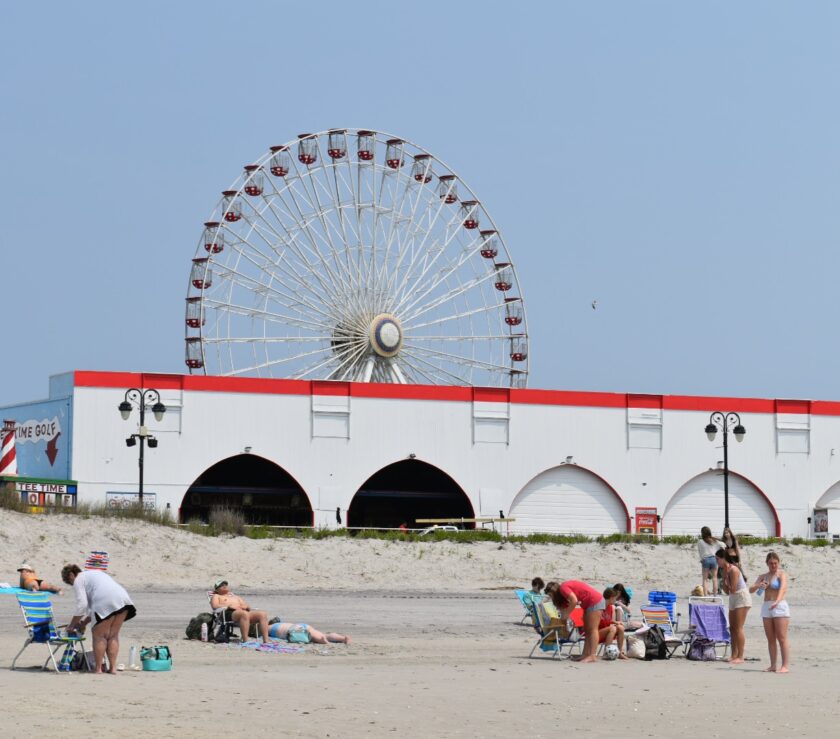
Although much public attention has centered on 600 Boardwalk, Winslow said the committee’s assignment was to determine what the future of the entire boardwalk should look like, including that parcel.
For that reason, they deliberately avoided taking a position on whether the property should receive an “in need of rehabilitation” designation, a determination that could affect future development options.
The designation remains under separate consideration by City Council, which is expected to decide the issue at a June 25 meeting.
A recent report by City Planner Jennifer Heller concluded that the property meets state criteria for rehabilitation due to structural deterioration and long-term underutilization.
The designation would not approve a specific redevelopment plan or alter existing zoning, but could provide additional options for future development of the site.
For residents who remain divided over the future of the former Wonderland site, Winslow hopes the panel’s work demonstrates an effort to balance competing viewpoints.
“We went in with an open mind,” he said. “We were very attuned to residents’ feedback, and we were very attuned to the emotional connection that a lot of people had.”
Winslow acknowledged that disagreement is likely to continue but said the committee focused on what it believed would best serve the city as a whole.
“We tried to come up with a compromise plan that really fit in with what is best for Ocean City,” he said, expressing concern that ongoing public disputes surrounding the issue could ultimately damage the city’s image. “Closing Wonderland has been a very emotional thing for a lot of people, and it’s become very, very divisive, and social media has made it worse.”
Julia graduated from Rider University in 2024 with a BA in multiplatform journalism and minor in social media strategies. In addition to reporting on local news for Shore Local, she is a social media strategist for small businesses. Connect with her: shorelocaljulia@gmail.com or @juliatrain on Instagram.