
One of the measures of a fictional film or television show’s quality and entertainment value is just how believable it is. In several cases over the decades, film fiction has almost become fact in the eyes of the public.
One example is “The Godfather.” As a result of Mario Puzo’s book and Francis Coppola’s film adaptation, many viewers actually believed the “horse’s head” sequence, in which a movie mogul, who doesn’t want to cast a Frank Sinatra-like character in an upcoming film, is persuaded to change his mind by “the mob,” who placed the severed head of the mogul’s prized racehorse in his bed.
No, that is not how Frank Sinatra got the part in “From Here to Eternity.”
Another instance is “The Gene Krupa Story,” a 1959 fictionalized “B” movie that traces the rise of the drummer from a Chicago youth who studied for the priesthood, to his ultimate success as the person who made the drums a solo instrument. In 1943, Krupa was jailed briefly on a bogus marijuana charge, which is awkwardly and amateurishly presented on screen. Perhaps as a result of that, there are still people today who fervently believe that Krupa was a hard-core drug addict. Again, not true.
The Oscar-winning motion picture, “Whiplash,” a tale about a tyrannical music teacher and his fledgling, young drum student who wants to be Buddy Rich, is another example. The jazz community was up in arms about, among other things, the portrayal of the teacher as tyrant and the aspirations of the young drummer. I was one of the technical advisers on the film and repeatedly told the naysayers that it was just a movie, but that made no difference.
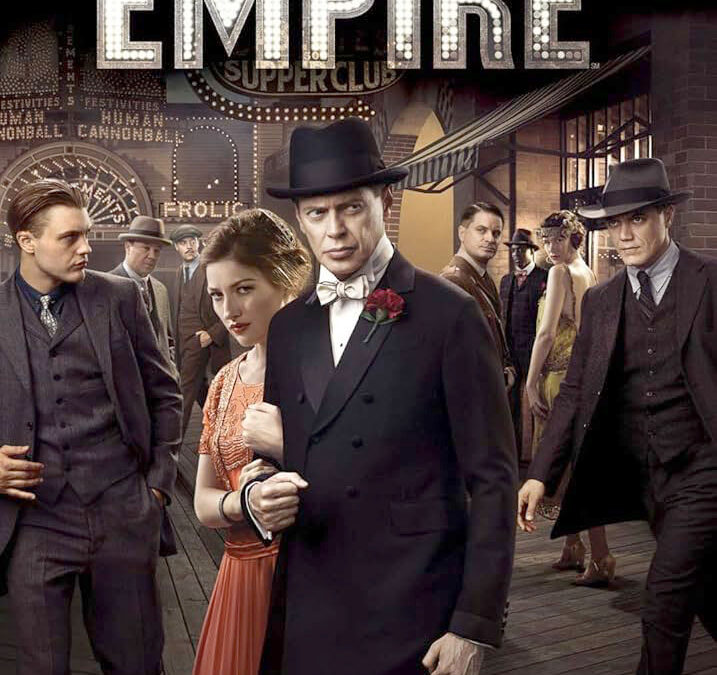
More recently, the HBO television series, “Boardwalk Empire,” adapted from Nelson Johnson’s book, is the perfect example of the blurring of fact and fiction.
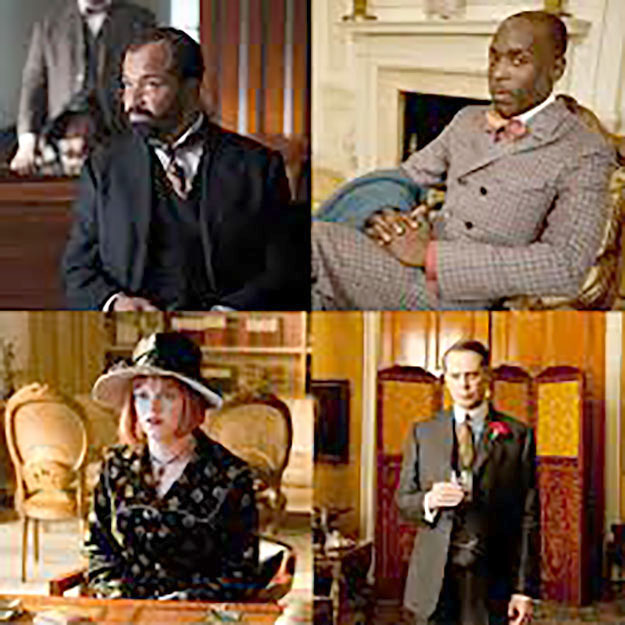
Though grounded in Atlantic City history, the writing and the acting were so spot-on and believable that parts of “Boardwalk Empire” have become, at least in some quarters, fact.
This is something I know about. While researching several articles about 1920s and 1930s Atlantic City history, I found that it was, at times, almost impossible to distinguish what actually happened from what was depicted in “Boardwalk Empire.”
Credit for the believability of “Boardwalk Empire” goes to the book’s author, Nelson Johnson. The life-long Hammonton resident has been associated with the Jersey Shore, personally and professionally, for decades.
A lawyer for more than 30 years, Johnson served two terms on the Hammonton Board of Education, two more terms on the Atlantic County Board of Chosen Freeholders and served for some 13 years as a New Jersey Superior Court judge.
He represented the Atlantic City Planning Board in the early 1980s and was closely involved in the granting of approvals to several Atlantic City hotel/casinos. It was during that period when he became interested in Atlantic City’s rich history.
In 2002, his landmark book, “Boardwalk Empire: The Birth, High Times and Corruption of Atlantic City,” was published. The HBO television series based on the book premiered eight years later.
The award-winning series ran for five seasons. In 2010, due to the immense popularity of both the book and the series, the New Jersey Superior Court ordered Johnson to stop promoting them to, as the court stated, “preserve the ethical neutrality of his position as a judge.” Perhaps the court didn’t realize, à la “The Godfather,” “The Gene Krupa Story” and “Whiplash,” that “Boardwalk Empire” was simply a work of fiction.
Believe it or not, the “Boardwalk Empire” book was a tough sell in the beginning. According to Jennifer L. Nelson, a writer for Edge Magazine, “When the author’s manuscript, originally dubbed ‘Nucky’s Town,’ found its way into the hands of Plexus Publishing, the publisher knew it would sell based on the company’s success with similar regional projects.”
Johnson always believed it could be more than just a book, though his trips to Hollywood to pitch the story as a feature film or documentary were fruitless. Fortunately, Johnson caught the attention of an agent and in 2006, John Bryans of Plexus received an email from an HBO television executive who was salivating for the rights to the book.
As for the book’s beginnings and the focus on a fictional version of Atlantic City’s infamous crime boss Enoch “Nucky” Johnson, the author told New Jersey Monthly’s Robert Strauss, “The history of Atlantic City was fascinating. Miss America, the Monopoly board, casino gambling, the ocean and the Boardwalk. Nucky was just the most interesting part of it, though. I don’t think there was anyone in the 20th century who wore both hats – organized crime and the Republican Party. He was able to cross back and forth between those two worlds.
“But Nucky was able to find what people wanted and give it to them, especially the middle classes who came down to Atlantic City to vacation. Gambling, prostitution and just plain fun – and when Prohibition came, he got them booze. Meanwhile, he also controlled jobs for people who needed employment year-round.”
Johnson spoke at length to New Jersey Television News anchor Mary Alice Williams about Atlantic City as it is today.
“What makes Atlantic City so special was it has a singular purpose for existing,” Johnson said. “It’s a resort and it’s never been anything but a resort. That’s what makes it such a strange experiment in urban American history.”

When looking at the city’s legacy, Johnson named Boardwalk Hall as “one of the best profit-making arenas of its size in the nation. It ranks in the top 10 consistently for dollars per seat. The second legacy is a dysfunctional city government. Atlantic City had such a long tradition of bossism. When the system collapsed, the conventional methods for exercising and passing on power never took root and so what we have is a dysfunctional city government that never has really learned to deal with conventional methods for exercising and transferring power.”
Johnson’s latest project, published in 2021, was “Darrow’s Nightmare: The Forgotten Story of America’s Most Famous Trial Lawyer,” described by Terence Winter, creator of the “Boardwalk Empire” television series, as “the riveting tale of America’s most famous lawyer as he fights for his life, marriage, career and reputation.”
The difference between this work and “Boardwalk Empire?” The Clarence Darrow work is all fact.
Bruce Klauber is the author of four books, an award-winning music journalist, concert and record producer and publicist, producer of the Warner Brothers and Hudson Music “Jazz Legends” film series, and performs both as a drummer and vocalist.