
During this season of creepiness and things that go bump in the night, you may notice some frightening mushrooms hiding in your garden. Often when we find unusual fungi growing in the woods or in our gardens, we stumble upon them unexpectedly. Though at first sight we might take a step back, after a closer look we can learn fascinating things about the fungus among us.
One of the first times I saw truly scary-looking mushrooms was when they seemed to appear out of nowhere in my friend’s yard, only a few blocks from my house. Aptly named dead man’s fingers (Xylaria polymorpha), these mushrooms looked just like eerie bluish hands, complete with fingernails, reaching up from a grave. This fungus forms on decaying wood or at the base of stumps, although the ones my friend and I found seemed to be attempting to climb right out of the ground. Needless to say, we avoided that area for a while, just in case the creature successfully emerged.
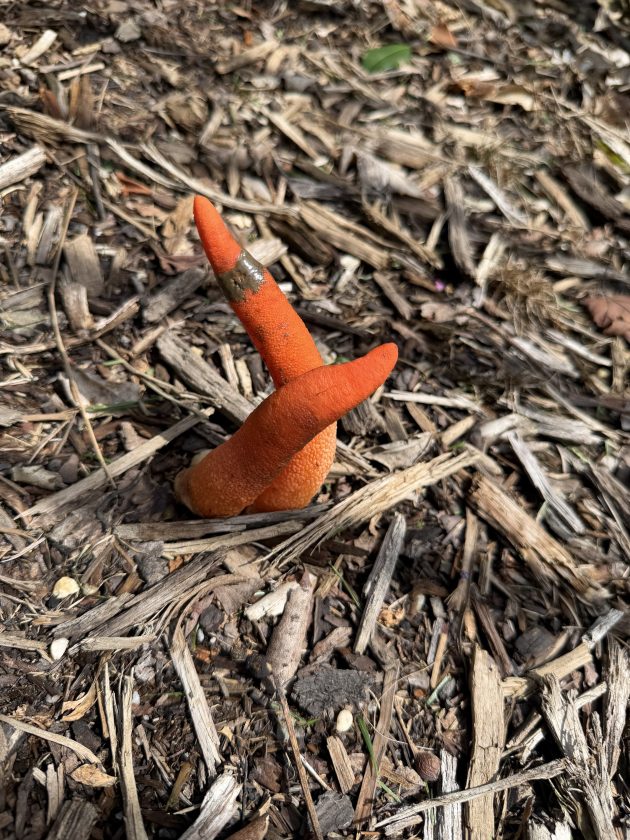
Another finger-like fungus appeared in my own yard last month. However, this time the digits sticking up from the mulch on the ground were a bright orange color from a fungus known as Mutinus elegans. It also has lovely common names such as devil’s lipstick, elegant stinkhorn, or stinkhorn fungus. The “stink” in the name comes from the fact that the tops of the “fingers” are covered in spore slime, which smells like rotting meat. Though this is disgusting to us, this odor attracts flies and other insects, and they in turn inadvertently spread the spores.
If you aren’t grossed out enough already, allow me to introduce you to dog vomit slime mold (Fuglio septica). One look at this type of mold and you will not question the name, but it can start out looking like some really awful scrambled eggs before changing to a sickly tan color. As the mold matures and dries out, it will spread by wind-borne spores. You can find it on mulch, rotting wood, or even in your lawn after humid weather or a heavy rain. Though it looks gross, it is non-toxic and not harmful to plants, since it feeds on decaying matter. Allow the mold to dry out and remove it, but resist the temptation to wash it away with your hose, which will simply spread the spores.
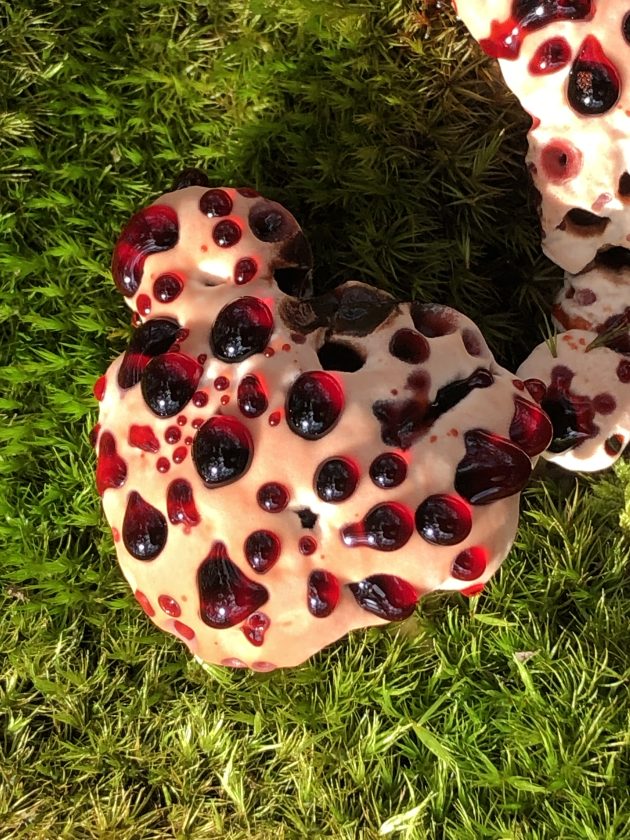
One of the most unique and perhaps most unsettling fungi found in our area was spotted in the woods of Birch Grove Park in Northfield by my photographer friend, Theresa Law. This mushroom (Hydnellum peckii) would be perfect for your Halloween decorations and is commonly known as devil’s tooth fungus or bleeding tooth fungus. Though as an adult the mushroom is rather plain and dull, in its “teenage years” it appears to bleed from its pores. In a process called guttation, excess moisture is pushed through these mushrooms and red droplets appear on the surface. In addition to Birch Grove Park, devil’s tooth fungus has been reported to also grow in the New Jersey Pinelands. In fact, earlier this year, Stockton University hosted a presentation by the New Jersey Pinelands Commission entitled “Taking the Devil out of the Devil’s Tooth and Other Pines Barrens Mushrooms: Illuminating the Hidden Kingdom of Fungi”.
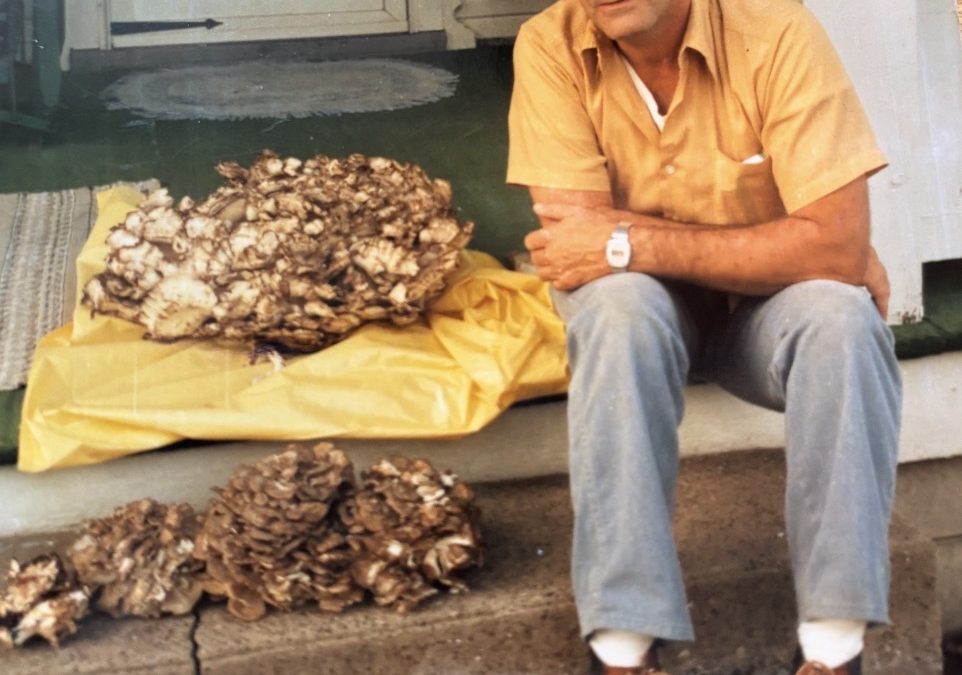
When I was young, my dad, my Uncle Mike, and other family members hunted for mushrooms such as morels and sheepshead. But you should only forage for mushrooms with an expert. Morels have look-alikes that are toxic, and even the “good” morels must be cooked to neutralize their natural toxins. Jack-O’Lantern mushrooms, which are also fitting for the season, are bright orange fungi that emit an eerie bioluminescent glow at night, but they are intensely toxic even though they are frequently mistaken for edible gold chanterelles or chicken of the woods mushrooms.
We love to hear from our readers. Have you ever found creepy-looking mushrooms in your garden or foraged for mushrooms? Send your questions or anecdotes to: shorelocalgardener@gmail.com.
Tammy Thornton lives with her husband, children, and crazy pets while enjoying a life of gardening, cooking, and going to the beach.