By Heidi Clayton
Once a part of the sporting group, herding breeds received their own group designation from the American Kennel Club in 1983. Consisting of 33 different breeds, the dogs of the herding group vary in size. However, they all share the same common theme of being incredibly active dogs who possess an innate ability to move other animals.
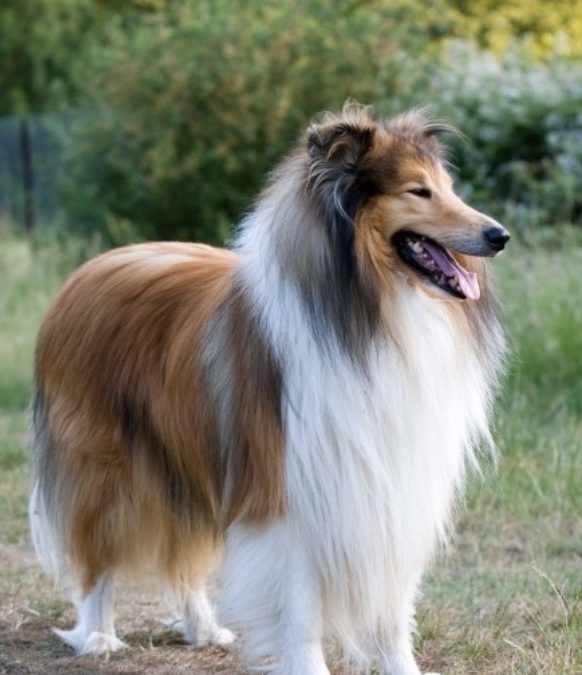
While the herding group may have only been formed in 1983, the breeds themselves span from all over the globe, with some tracing back thousands of years. Perhaps the oldest herding dog breeds are the two types of Corgis. The Cardigan Corgi can be traced back to Cardiganshire in Wales to at least 1200 B.C., when they were developed by Celts living in that region. The Pembroke, made famous by Queen Elizabeth, can be traced back to as early as 1107 A.D. Both Corgis were bred to move herds of cows by jumping and nipping them to move them. Made popular by the television show “Lassie,” the Collie was a favorite of Queen Elizabeth’s great-great-grandmother Queen Victoria.
The livestock that herding breeds were bred to move range from cattle to reindeer. The Border Collie was developed in England and its territories. This breed is a likely cross of dogs being brought into the region by invading armies, specifically the Romans and the Vikings. The Roman and Viking herding breeds were too stocky to move sheep through the rolling hills of England and Ireland and were downsized to create the Border Collie we know today that excels in the movement of sheep. Australian Cattle Dog was developed in Australia by the invading British whose herding dogs couldn’t handle the rough climate of Australia and were bred to the native wild dog, the dingo, to herd cattle. Another ancient breed is the Icelandic Sheepdog that is native to that country and was bred specifically to herd sheep and to endure their brutal sub-zero temperatures. So were the Swedish Lapphunds, who herd reindeer to this day. While each breed may have been bred to move a different kind of animal, herding dogs’ common purpose was the same: to move animals as a flock and develop a bond with them, which was important in terms of not harming valuable stock.
Herding dogs were not only bred to move the flock; some also served as a living fence to protect flocks from predators. Most people associate German Shepherd Dogs and Belgian Malinois as being working breeds because of their successful uses in police work. Both breeds were actually bred to serve as living and moving fences that also kept the flock safe. They were used in the mountains of Germany and Belgium to run circles around the flocks and fend off predators. Breeds like Bouvier Des Flandres, native to Belgium, and the Canaan Dog, the official dog of Israel, were not just responsible for moving the flocks but would also defend them against predators.
The herding breeds of modern times rarely get to do the jobs they were created to do, so it is not uncommon for them to resort to herding their families. Keep in mind that many of the herding breeds used their mouths to nip the livestock into moving, so they may not be a wise choice for a family with children. If you are considering one of these breeds, you will need to give them a purpose and be very ready to be extremely active to keep them entertained. Most people are not equipped to manage the intense work ethic of a Malinois or a Border Collie, so be sure to spend some time with one before you commit to getting one. Finally, most herding breeds have very thick or corded coats, which were necessary to live outside, so they will require regular grooming.
The breeds of the herding group include the Australian Cattle Dog, Australian Shepherd, Bearded Collie, Border Collie, Beauceron, Belgian Laekenois, Belgian Malinois, Belgian Sheepdog, Belgian Tervuren, Bergamasco, Berger Picard, Bouvier des Flandres, Briard, Canaan Dog, Cardigan Welsh Corgi, Collie, Entlebucher Mountain Dog, Finnish Lapphund, German Shepherd Dog, Icelandic Sheepdog, Lancashire Heeler, Miniature American Shepherd, Mudi, Norwegian Buhund, Old English Sheepdog, Pembroke Welsh Corgi, Polish Lowland Sheepdog, Puli, Pumi, Pyrenean Shepherd, Shetland Sheepdog, Spanish Water Dog, and the Swedish Vallhund.
Heidi Clayton started Four On the Floor Dog Training to provide positive, reward-based dog training in South Jersey. She breeds, trains and shows bull terriers under the SoraBully’s Bull Terriers kennel name. Email questions to heidi@fouronthefloordogtraining.net or learn more at https://fouronthefloordogtraining.net