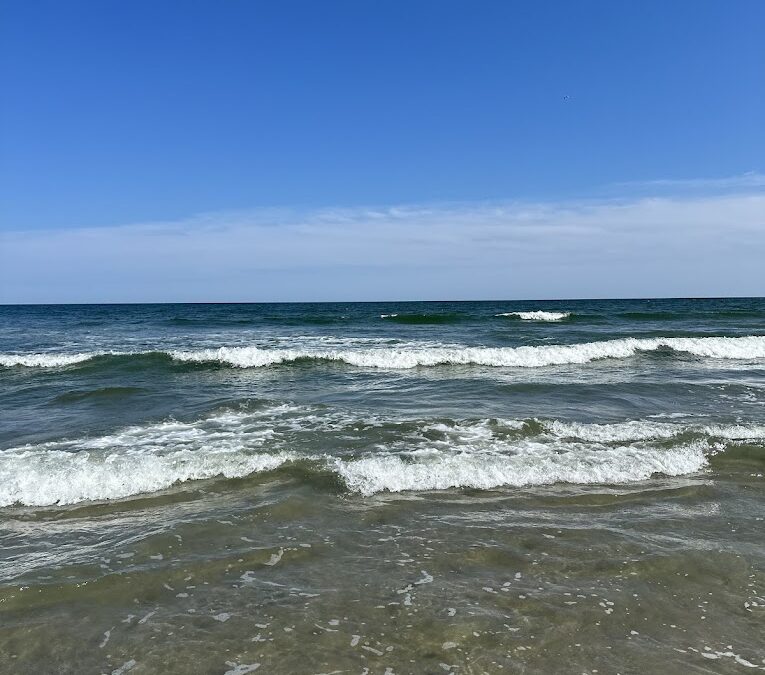
Next summer, Strathmere’s beaches will no longer be among those in Atlantic and Cape May counties to offer free access.
The Upper Township Committee voted unanimously Aug. 24 to adopt Ordinance No. 014-2026, establishing paid beaches along the Atlantic Ocean, Corson’s Inlet and Whale Beach. The ordinance was introduced Aug. 10 before receiving final approval following a public hearing.
Under the new rules, beach tags will be required during the bathing season, which the ordinance defines as the Friday before Memorial Day through the end of September. Tags will be required between 9 a.m. and 5 p.m. for anyone 16 or older.
Daily tags will cost $10, while a weekly one will cost $20. Seasonal tags will be available for $30 when purchased Oct. 1 through Presidents Day, increasing to $45 for purchases made afterward.
Children under 16, active-duty military members and veterans are exempt from the fee. The ordinance also allows one additional guest of an active-duty service member or veteran to receive a free tag.
The decision ends one of the few remaining stretches of free beach in South Jersey. Following months of debate on the subject, the committee approved the program in a 4-0 vote.
Upper Township expects to generate between $200,000 and $320,000 annually from beach tags, which will go into its General Fund and be used for operating and capital expenses attributable to beachfront operations, according to the ordinance. Those expenses include protecting, guarding, cleaning, policing, maintaining and otherwise managing the township’s beaches.
The township will also be required to review the financial performance of the program each year. By Dec. 1, the chief financial officer must provide the Township Committee with a report detailing beach tag revenue, beach utility operating costs, any surplus or shortfall and recommendations about whether changes should be made to the ordinance.
The new revenue comes as Upper Township faces significant costs associated with its beaches. PhillyVoice reported that the township borrowed $2.1 million through municipal bonds for beach replenishment projects, while approximately $21 million in federal funding was also provided for the work. The township also spent roughly $513,000 this year on beach maintenance, lifeguard wages and pensions.
Some residents questioned whether the projected beach tag revenue would make a significant dent in the township’s expenses. Others argued that requiring payment would alter what has made Strathmere different from neighboring beach communities, potentially affecting tourism and local businesses.
During the public hearing, some residents also raised concerns about whether charging for Strathmere’s beaches could shift visitors toward nearby free beaches, including Corson’s Inlet State Park.
Supporters of the measure, meanwhile, characterized the tags as a user fee that would have visitors contribute toward the costs associated with maintaining the beaches rather than placing the entire burden on township taxpayers.
Enforcement is expected to be handled by part-time beach tag checkers. The township plans to hire four workers at $22 per hour who will conduct randomized four-hour patrols, primarily on Fridays and Saturdays.
The ordinance allows enforcement by township-authorized personnel, including beach tag enforcement agents, code enforcement officers, parking enforcement personnel, New Jersey State Police and township administration staff.
The township has indicated that the program could be reconsidered if the revenue does not justify the cost of operating it.
“If it doesn’t make economic sense at the end of the day, we will discontinue the program,” Mayor Curtis Corson said.
Now, in 2027, Strathmere will join most other Jersey Shore communities in charging for beach access, while Atlantic City, Wildwood, North Wildwood, Wildwood Crest and the beach at Corson’s Inlet State Park in Ocean City will remain the last Shore communities in Atlantic and Cape May counties offering free beaches.