
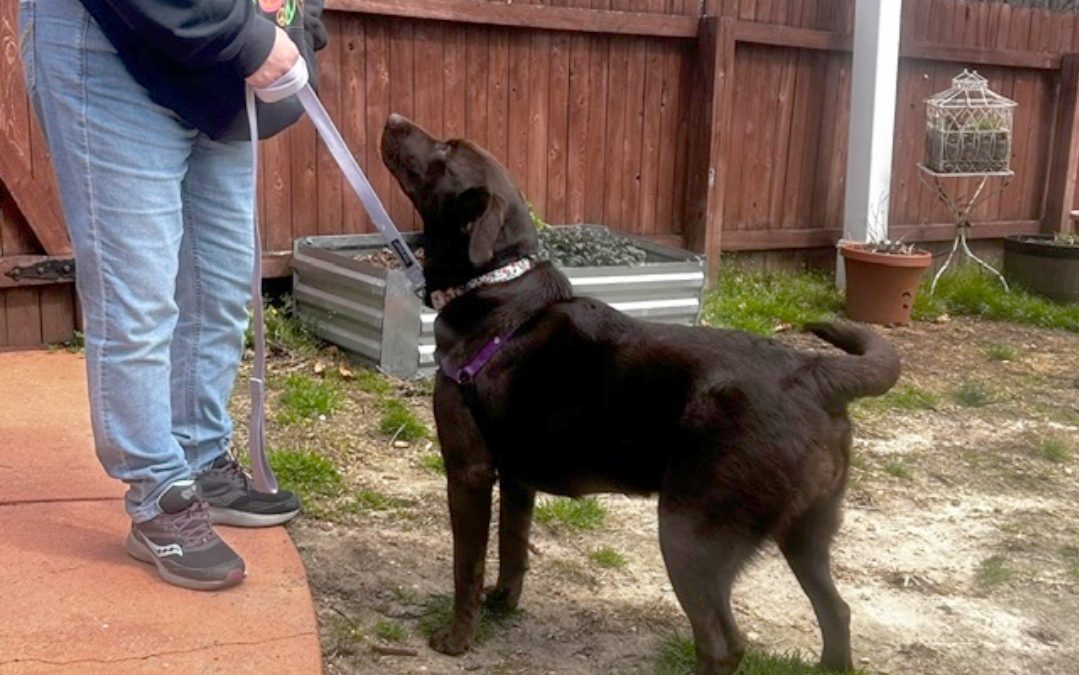
When you are training a reactive dog to not be reactive anymore, progress may seem slow at times. However, following a step-by-step process is crucial to turning your dog around. A valuable skill to teach them is a “leave it” command that relates to them exhibiting self-control.
I use the “leave it” command for everything that I don’t want my dogs to do or that I want them to stop doing. One of those things is to ignore another dog if, for some reason, they decide they don’t like the looks of it. Teaching your dog to “leave it” will involve your dog being under their threshold of excitement and being able to take food.
What is great about this exercise is that you can pull up a chair or find yourself a park bench where you can sit and be relaxed, instead of being stressed about your dog going ballistic and pulling on the leash. Bring a treat that is so incredibly tasty that your dog will find it incredibly rewarding, such as chicken or steak bits. The next step is to just sit down and relax, then start rewarding your dog for any automatic check-ins that they offer with both praise and a little taste of the treat. There is no real expectation of “obedience.” That is, if your dog doesn’t sit or lie down, that is OK. Set the bar low, and just focus on your dog offering check-ins or answering to their name.
When another dog enters your dog’s view, let them see the dog, and if they do not react, praise them with a nice and happy “good leave it!” while giving them a jackpot of treats. Timing is important, so don’t say “leave it” immediately, particularly if your dog is reacting to the other dog. If your dog is reacting, try last week’s assignment of trying to feed them in the presence of the other dog until the dog is out of view. If you get nowhere, try giving yourself some distance and moving farther away, so you will still see the dogs but have some space.
If your dog reacts and then you start saying “leave it” nonstop despite the fact that your dog is, in fact, not leaving it, you are giving the command the opposite meaning. The message of “leave it” then becomes “you can leave it whenever you would like.” What we are after is to mark the exact second that they do not react to another dog, no matter what the distance is, and reward it, thus teaching them what “leave it” means. This, like all other exercises, may take time if your dog is highly reactive. Keeping yourself and the dog stationary while doing so reduces your stress and gives you more control over how close a dog will get to you. After a few sessions of this, try shifting from just saying your dog’s name and start asking them to “leave it” when they see a dog. If you are successful, reward them generously.
You can transition from being stationary to walking when your dog begins just ignoring others from a distance. Movement always adds stimulation to a dog, so when you are finally walking your reactive dog, be sure to ask for “leave it.” Reward them when they are successful, and do so as often as possible, so they do not regress.
If you have any questions, please feel free to email me at heidi@fouronthefloordogtraining.net.
Heidi Clayton started Four On the Floor Dog Training to provide positive, reward-based dog training in South Jersey. She breeds, trains and shows bull terriers under the SoraBully’s Bull Terriers kennel name. Email questions to heidi@fouronthefloordogtraining.net or learn more at https://fouronthefloordogtraining.net