Hard clams are a staple on many South Jersey menus, and plenty of residents enjoy digging for them in local bays. But fewer people know how many of those shellfish are grown through aquaculture before ever reaching a dinner plate.
Hard clams naturally inhabit bays and estuaries along the Atlantic coast, with New Jersey among the species’ most productive habitats, according to the New Jersey Department of Environmental Protection (NJDEP). While recreational clamming remains a popular pastime, wild harvests have declined because of poor water quality, habitat loss and overharvesting.
As wild clam populations declined, aquaculture became an increasingly important way to meet demand.
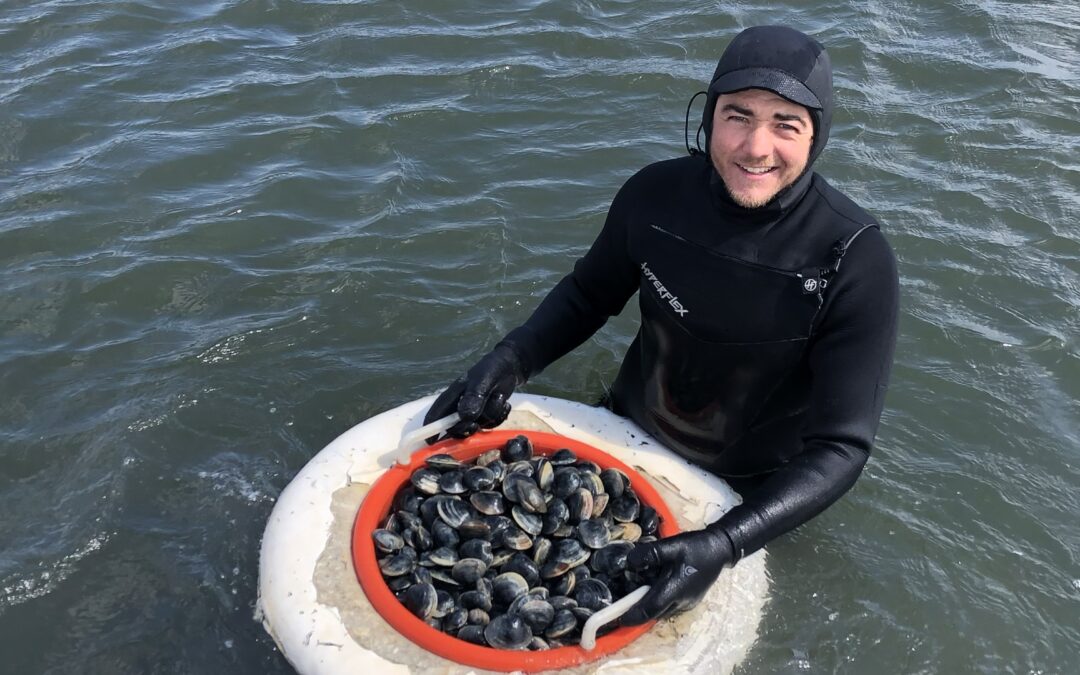
Clam Daddy’s, located in Brigantine, is a family-owned and -operated clam farm that has supplied local restaurants and Brigantine’s farmers market with hard clams for 50 out of the 52 weeks of the year since 1984.
Bill Mayer started the business out of necessity. After beginning his career as a wild clammer, he turned to aquaculture when wild clam populations declined and he could no longer meet customer demand.
Clam Daddy’s raises hard clams through aquaculture, a practice the National Oceanic and Atmospheric Administration (NOAA) describes as farming aquatic organisms for food production, habitat restoration and conservation. In New Jersey, hard clam aquaculture became established during the 1970s and remains the state’s largest aquaculture industry, according to NJDEP.
Because few people were farming clams at the time, Mayer largely learned through trial and error, according to his son, Billy Mayer Jr.
How clam farming works
In the wild, hard clams spawn each spring as warming bay waters trigger the release of eggs and sperm. After fertilization, larvae drift in the water for several weeks before settling into the sand or mud, where they grow to maturity, according to NJDEP.
Hard clam aquaculture replicates and accelerates that natural process in a controlled environment.
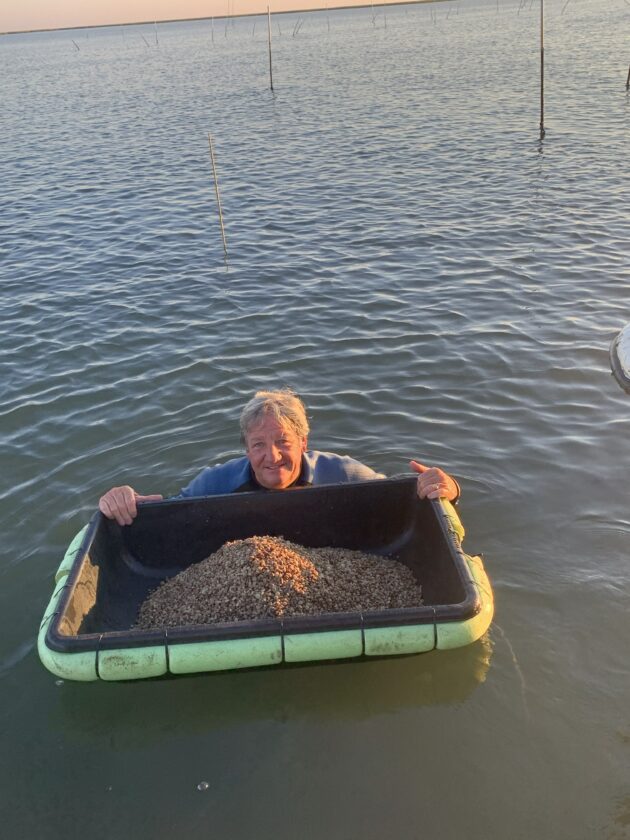
For Clam Daddy’s, the process begins on land, where clams are spawned in a laboratory. Once the young clams reach the appropriate stage, they are transferred to an outdoor nursery, where tanks are supplied with water pumped directly from the bay. As the clams filter the bay water for food, they naturally help improve water quality while continuing to grow.
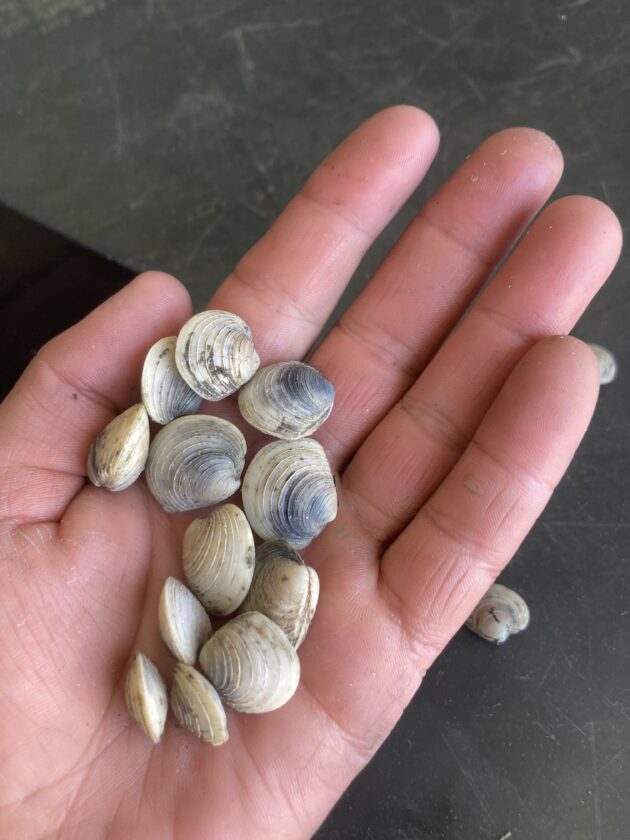
Once the young clams reach about 8 to 12 millimeters — roughly the size of a pencil eraser — they are planted in underwater plots covered with protective mesh to shield them from predators such as stingrays, crabs and birds.
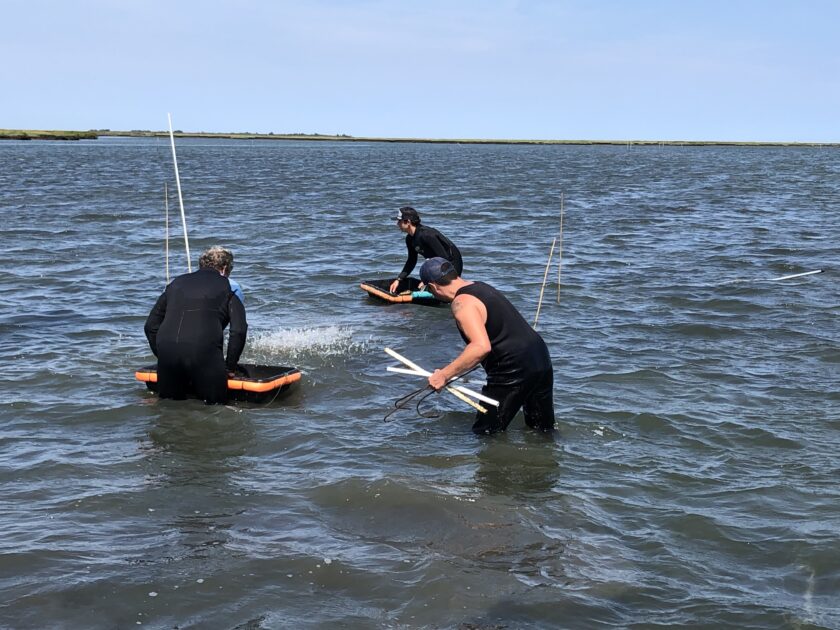
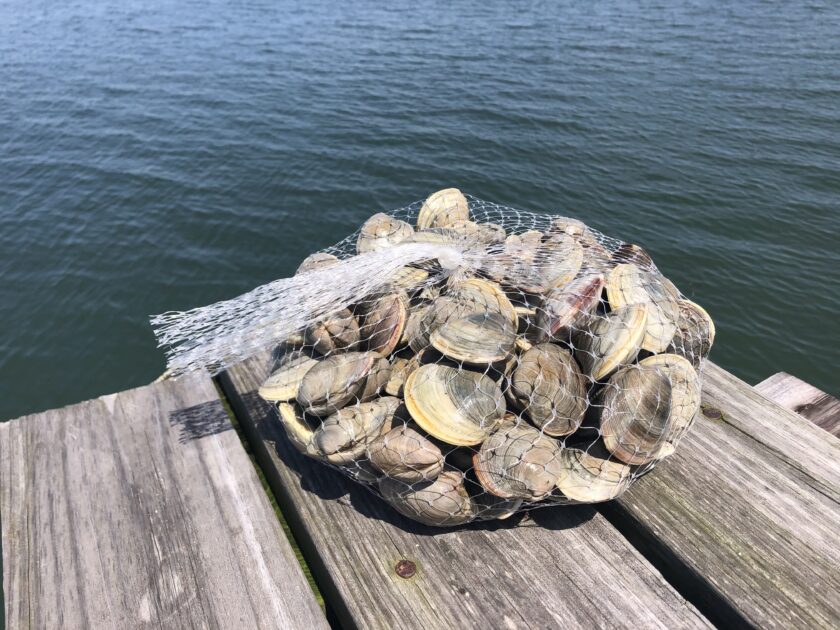
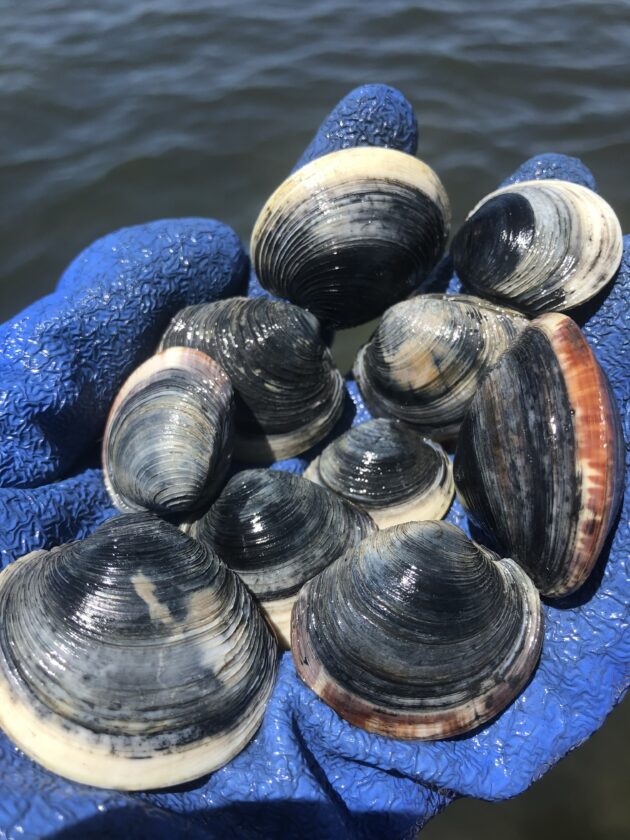
After three to four years, when the clams reach the legal market size of 1.5 inches, they’re harvested during low tide using a 24-inch-wide bull rake fitted with metal teeth and a collection basket. Workers then gather any remaining clams by hand, a process known as treading.
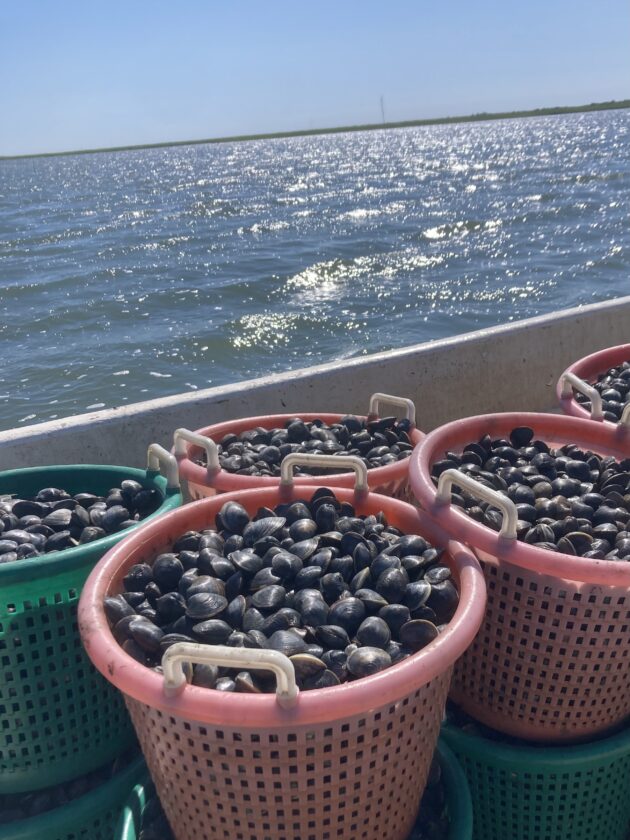
The harvested clams are brought ashore, where they’re cleaned, sorted, bagged and prepared for market.
Despite the years of work required to raise a crop of clams, Billy Mayer Jr. said he wouldn’t trade the job for anything.
“It’s a passion of mine. I love being out in the water. We have a beautiful office, I like being on the bay watching the sunrise,” he said. “Every single day, you’re doing the same things, but it’s different because you’re dealing with Mother Nature.”
As wild shellfish populations continue to face environmental challenges, aquaculture helps provide a reliable supply of hard clams while easing pressure on natural beds.
For those interested in harvesting wild clams, Mayer recommends obtaining a New Jersey shellfish license and checking the NJDEP’s certified shellfish maps before heading out, since some waters remain closed because of pollution.
Julia graduated from Rider University in 2024 with a BA in multiplatform journalism and minor in social media strategies. In addition to reporting on local news for Shore Local, she is a social media strategist for small businesses. Connect with her: shorelocaljulia@gmail.com or @juliatrain on Instagram.