
While summer provides the full sun and warmth that flowers need to be at their peak, heat waves are too much of a good thing. An extended period of extreme heat can damage plants and wreak havoc on your garden. Fortunately, you can take steps to protect your plants to help minimize the stresses of heat and drought.
Of course, the most obvious first course of action during a drought or heat wave would be to water your plants. But proper watering techniques make a difference in whether your plants survive or succumb to the heat. Water your plants early in the morning so that the plants have time to absorb the water before afternoon heat causes it to quickly evaporate. When you water your plants, water them deeply to make sure you are getting down to the roots. Frequent shallow waterings will be less effective than deep, staggered waterings. Stick your finger into the dirt and make sure the water has absorbed into the soil. Often, I have thought I did a good job, only to check the soil and find it bone dry under the surface. When possible, water close to the ground instead of splashing the leaves. This will help minimize water runoff and powdery mildew that can occur in humid conditions. Pay special attention to potted plants that will dry out more quickly.
Use mulch around your plants. Your main goal is to protect the roots of the plant. Mulch will provide an extra layer of protection for the roots and will also help cut down on weeds. Speaking of weeds, you should also make sure you are weeding around your plants, because weeds will be competing for water and other resources underground.
When your garden is experiencing a time of drought or a heat wave, do not prune your plants. Under normal conditions, pruning can promote growth, but it can also add stress to your plants. You want your plants to be focused on their roots, not exerting energy towards regrowing. That being said, if you find a damaged or dead section of your plant, trim it away. Disease and damage can also stress a plant, since it will spend energy trying to heal itself. Also avoid fertilizing during a heatwave. While it seems like fertilizing would help make your plant healthier, you could actually place the plant under stress or burn the roots.
Avoid the urge to plant new flowers or transplant flowers in your garden during a heat wave. Even heat-tolerant plants will be vulnerable until they have had time to establish their roots. If you have recently moved a plant or added a new one to your garden, give it special attention and extra water. If possible, provide a little shade with a shade cloth or even a temporary umbrella. Just be sure there is plenty of airflow and that you aren’t suffocating your plant. Move potted plants into a shady area in your garden or under a bench or chair until the heat wave passes.
Don’t panic if your flowers and vegetables stop producing during a heat wave. Your plants will go into a self-imposed dormancy to conserve energy. Even though tomatoes love the heat, producing fruit takes a lot of energy. During extreme temperatures, your tomatoes will take a little break. Flowers will also stop blooming during stressful times. If you have kept the roots healthy and watered, your flowers and vegetables will begin anew once temperatures cool down. But at this point, any cool-season herbs or vegetables that were hanging on will most likely bolt and go to seed. This is part of their normal life cycle. Thank them for their service, enjoy the flowers and collect the seeds. When my kale goes to seed, it produces pretty little yellow flowers that add a pop of color to the garden. They are also edible and, to me, taste like fresh, delicious broccoli. The seeds of cilantro (coriander) can be harvested to plant a whole new crop. When summer starts to wind down, you can plant another round of cool-season crops that can be harvested in the fall.
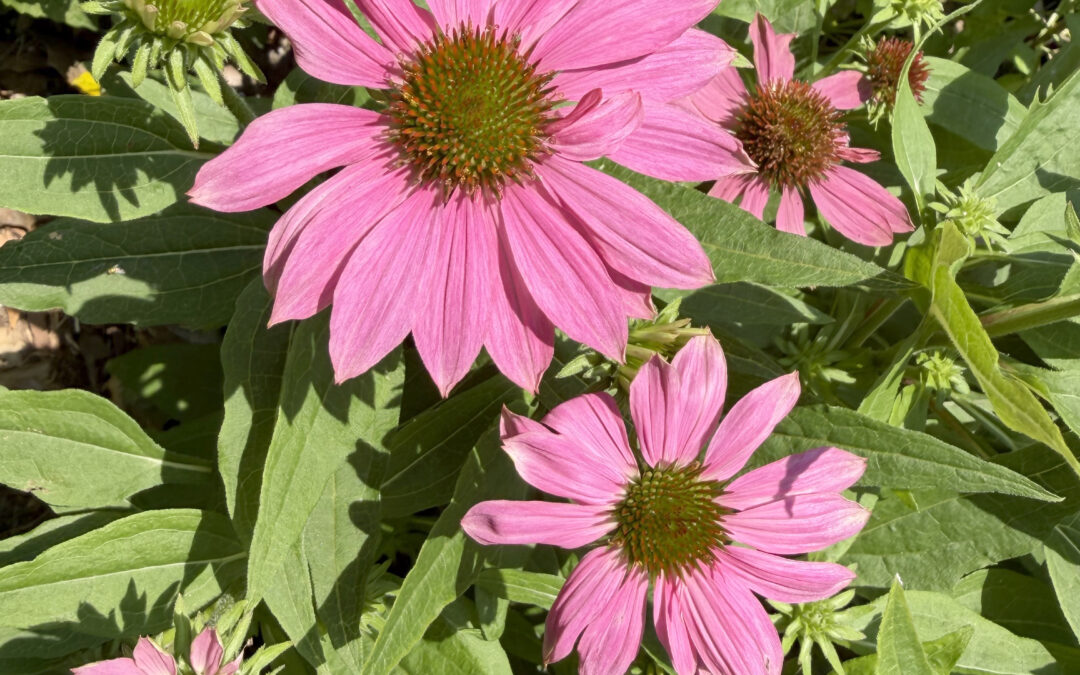
We go through these heat waves every year in South Jersey. You may consider planting heat-tolerant plants in your garden, such as purple coneflowers, lavender, lantana, anise hyssop, zinnias, blanket flowers, sedum, yarrow, black-eyed Susans, and catmint. Once the heat wave passes, you can trim away any casualties and watch the garden wake up from its summer dormancy.
What are your favorite strategies for coping with a drought or heat wave? We would love to hear from our readers. Send your questions and comments to: shorelocalgardener@gmail.com.
Tammy Thornton lives with her husband, children, and crazy pets while enjoying a life of gardening, cooking, and going to the beach.