
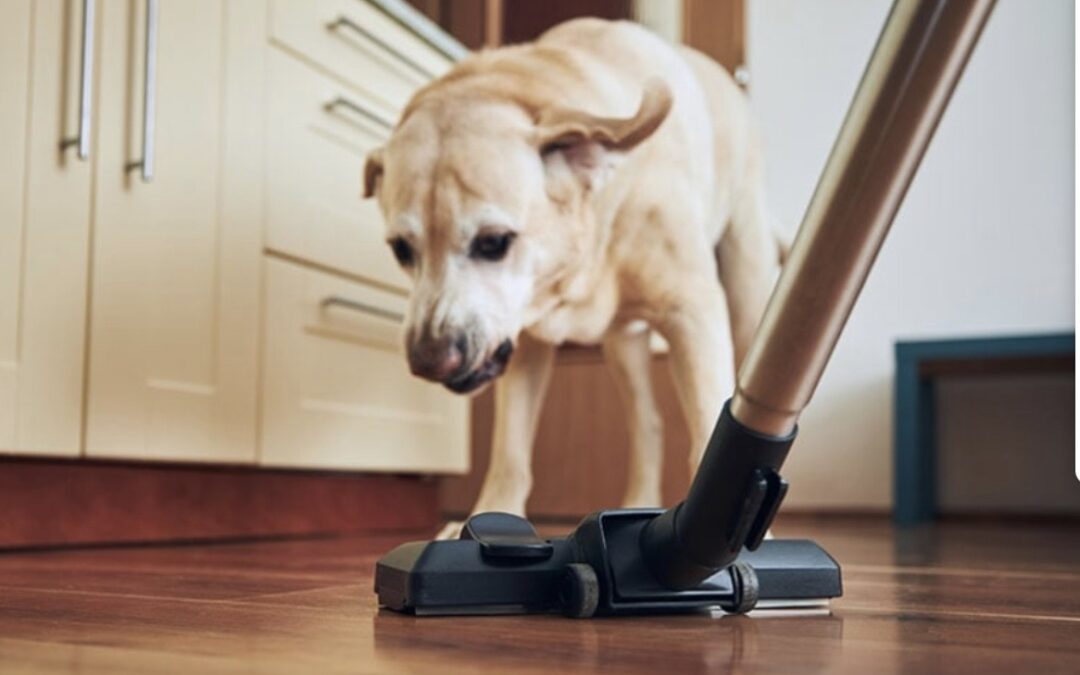
During the critical socialization period, which occurs during the first 14 weeks of a puppy’s life, every puppy goes through a fear period. This fear period occurs in most cases between eight and 11 weeks. A brave, happy puppy will suddenly, without warning or having had a bad experience, be afraid of things or situations that were once novel. If you are a puppy owner, try not to worry. It doesn’t mean your puppy will always be scared or shy. It just means that your puppy is becoming more aware of the world around them.
There is nothing you can do to prevent a puppy from going through a fear period, but you can do things with your puppy that help them gain confidence and get through it. First and foremost, please do not force your puppy to interact with whatever it is that has scared them, even if it is people and you are worried that your puppy won’t like people. Forcing them to meet a person or another dog won’t change how they feel about the situation, nor will arming the person with treats to feed them. Now the puppy has to choose between a treat and the person they are worried about. They may snatch the treat, but it won’t make them feel any different about the situation.
What I do is retreat with my puppy to a safe distance away from what has scared them. From that safe distance, I will reward them with treats from my hands if they at all look to me for reassurance or if they look at what has worried them at all and then back to me after. This cements that checking in with me and not having a meltdown is the right thing to do. Next, I lower the bar of what I expected from them originally and will instead dispense a lot of treats for being calm. If they happen to try on their own to reengage with what scared them, I make a huge deal of it!
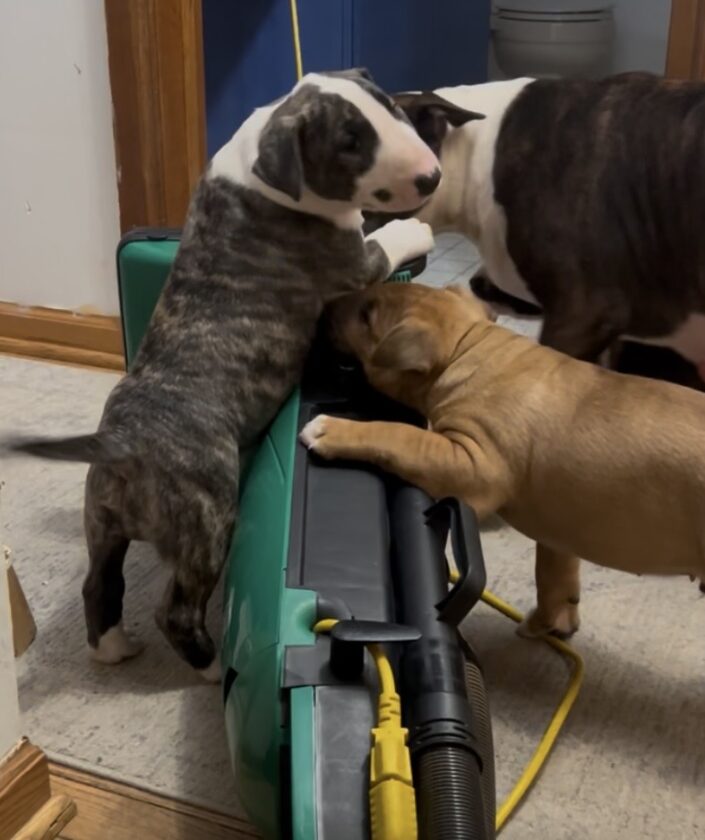
An example of lowering the bar on expectations is when a puppy suddenly feels that the vacuum cleaner means certain death. I had been leaving the vacuum cleaner on full display for a few weeks so that the last litter of puppies could become accustomed to the noise. At about week 9, Bento Box suddenly turned and fled the room, terrified, when I turned it on. I immediately turned it off and stopped moving it altogether. I found him shaking under the bed and used treats to calm him down. I didn’t force him to come out. Instead, I stuck with him until he was calm. My rule for when a puppy is calm is when they take the food I am offering them. Fear can sometimes trump the desire for treats, so I won’t leave a puppy until then. Next, when he came back into the living room and crawled up to the vacuum, I gave him more treats. Eventually, I was able to push the vacuum cleaner a few feet with it still off and ended the interaction right there on a positive note.
The next day, I brought the vacuum out again and rewarded him for coming near it. Then I closed the door to the room it was in and had it turned on, so that he would hear it and not see it. Again, I gave lots of treats for not melting down. Next, I slowly opened the door to the room where the vacuum was. By then, he was through whatever it was that scared him. It became a game to him to chase the vacuum around the house because he was getting treats for being a brave boy.
You can apply the same treat-giving protocol to keep a puppy calm through any fear periods or situations they find scary. This includes when they meet people and other dogs. If you have any questions, please feel free to email me at heidi@fouronthefloordogtraining.net.
Heidi Clayton started Four On the Floor Dog Training to provide positive, reward-based dog training in South Jersey. She breeds, trains and shows bull terriers under the SoraBully’s Bull Terriers kennel name. Email questions to heidi@fouronthefloordogtraining.net or learn more at https://fouronthefloordogtraining.net