
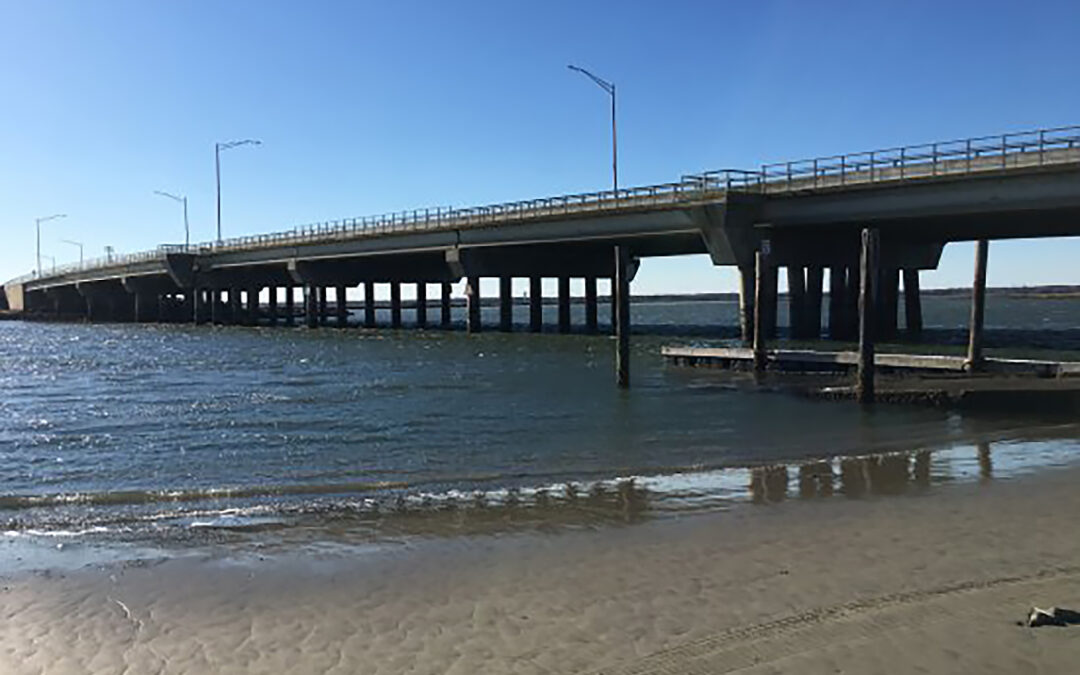
Two of Cape May County’s most heavily traveled bridges are on track for eventual replacement, but the timeline and price tag underscore just how complex the future of shore infrastructure has become.
According to a newly updated concept study, replacing the rapidly-aging Townsend’s Inlet Bridge and the Corson’s Inlet Bridge could cost about $200 million each, pushing the total investment to roughly $400 million.
The figure reflects more than construction alone. Engineering challenges, environmental permitting and the logistics of maintaining traffic along a vital coastal corridor all contribute to the rising cost.
Long before modern traffic patterns defined the Jersey Shore, these crossings were lifelines connecting barrier island communities that were otherwise accessible only by boat.
The Townsend’s Inlet Bridge, originally constructed in 1940, linked Avalon and Sea Isle City at a time when shore development was accelerating and reliable road access was becoming essential. Over the decades, the bridge has undergone multiple rehabilitations, including significant reconstruction work in recent years aimed at extending its lifespan.
A few miles north, the Corson’s Inlet Bridge was built in the late 1940s to connect Strathmere and Ocean City. Like its southern counterpart, it became a critical link along Ocean Drive, serving both year-round residents and the seasonal influx of visitors heading to the beaches.
Both bridges were designed for a different era, when traffic volumes were lower, vehicles were lighter and long-term coastal resilience was less of a concern. Today, they carry far more weight, both literally and figuratively, as essential evacuation routes and economic connectors.
The two bridges remain key components of the scenic Ocean Drive corridor, a route relied upon by commuters, emergency services and summer tourism traffic. But after more than 75 years of service, their age is increasingly evident.
Repeated repairs, weight restrictions and periodic closures have highlighted ongoing structural concerns. The Townsend’s Inlet Bridge, in particular, has experienced extended shutdowns in recent years for major rehabilitation projects, underscoring the limits of continued patchwork fixes.
Despite the urgency, new bridges are still years away. Current estimates suggest the full process — from design and permitting to construction — could take seven to 10 years.
Much of that timeline is tied to preliminary work, as environmental reviews, engineering design and regulatory approvals are expected to take several years before construction can even begin. Once construction is underway, the challenge of building new spans over active waterways while maintaining traffic flow will add further time and complexity to the project.
The projected cost of roughly $200 million per bridge represents a significant increase from earlier estimates. This rise is being driven in part by inflation and the continued increase in material and labor costs, which have significantly impacted large-scale infrastructure projects.
At the same time, stricter environmental regulations governing construction near protected coastal ecosystems have added additional layers of review and design requirements.
Modern engineering standards are also playing a role, as new bridges must be built higher, stronger and more resilient to meet current safety expectations and account for future sea-level rise. In addition, construction plans must ensure that traffic can continue moving during the building process, which adds both complexity and cost.
Potential design changes, including the possibility of constructing new alignments rather than rebuilding on the existing footprints, could further increase the overall price tag. Securing funding remains one of the biggest unknowns.
Cape May County officials have indicated that they will need substantial financial support from state and federal sources, including competitive infrastructure grants. Until those funding streams are identified and secured, the project will remain in the planning stages.
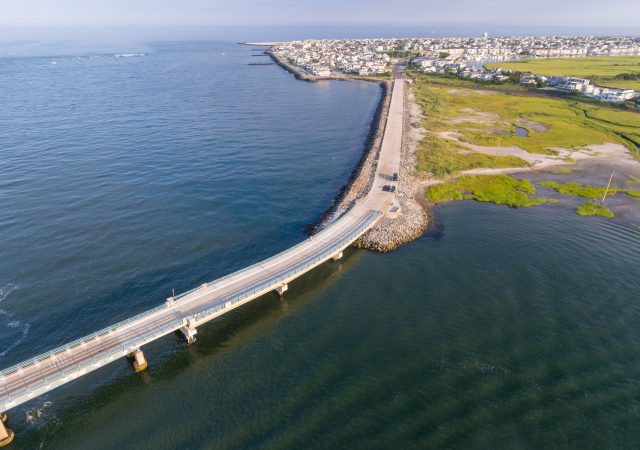
In the meantime, county officials continue working to keep both bridges operational and safe for daily use.
Ongoing improvements, including upgrades to fender systems designed to protect bridge supports from boat impacts, are helping extend the structures’ usable life. However, these efforts are widely understood to be temporary solutions for bridges that were never intended to remain in service for this long.
The eventual replacement of the Townsend’s and Corson’s Inlet bridges is about more than infrastructure; it represents a long-term investment in the connectivity that defines life along the Jersey Shore.
These bridges serve as vital evacuation routes during coastal storms, support local businesses and tourism, and connect communities that rely on consistent and reliable access throughout the year.
For now, motorists crossing these spans are traveling across pieces of history — bridges that have carried generations of residents and visitors — even as plans begin to take shape for the next chapter.
Sarah Fertsch of Egg Harbor Township holds a Bachelors of Arts in Public Relations. She is a locally renowned poet, storyteller, and dog lover.