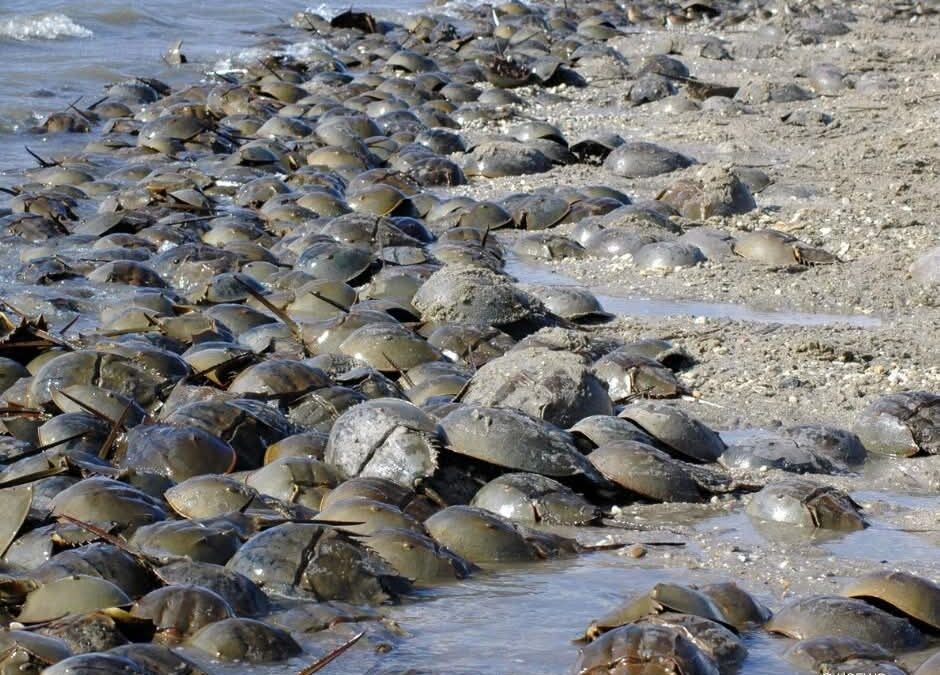
Each spring along the Jersey Shore, an ancient ritual unfolds that predates even the dinosaurs. Under the glow of full and new moons, and timed precisely with high tides, thousands of horseshoe crabs crawl ashore to spawn—transforming quiet beaches into quite a scene!
From late April through early June, peak mating season draws these creatures out of deeper ocean waters and into the shallows of places like Delaware Bay and Cape May.
Males arrive first, waiting along the shoreline for females, who can grow up to nearly 19 inches long—about one-third larger than the opposite sex. When a female reaches the sand, she releases pheromones that attract multiple males, often resulting in clusters of crabs gathering along the tide line in a synchronized spawning event.
Despite their name, horseshoe crabs are not actually crabs. This species is more closely related to spiders and scorpions and have remained largely unchanged for more than 300 million years, earning them the nickname “living fossils.”
Their distinctive, helmet-shaped shell protects a complex body that includes nine eyes and a long, pointed tail called a telson. The telson is used not for defense, but to help the animal flip itself upright if overturned.
The spawning process itself is both prolific and precarious. A single female can lay several clusters of about 4,000 eggs at a time and may deposit up to 100,000 eggs over the course of a season. These tiny, greenish eggs are buried just beneath the sand, where they incubate for a few weeks before hatching.
But survival is far from guaranteed. Most eggs are eaten before they ever become juvenile crabs, and that’s exactly why horseshoe crabs are so vital to the ecosystem.
Their eggs are a cornerstone of the coastal food web, particularly for migratory shorebirds like the Red Knot. Each spring, these birds travel thousands of miles—from as far as South America to the Arctic—and time their journey to coincide with horseshoe crab spawning. The eggs provide a critical, high-energy food source that allows the birds to refuel and complete their migration. Without this stopover feast, many species would struggle to survive.
In fact, scientists consider horseshoe crabs a “keystone species” in the Delaware Bay ecosystem, meaning their presence supports countless other forms of life, from fish to sea turtles to birds.
Horseshoe crabs also play a unique role in human health. Their blue blood contains a copper-based compound used to detect bacterial contamination in medical equipment and vaccines, helping ensure the safety of countless medical procedures.
For beachgoers, encountering a horseshoe crab during this season can be unforgettable, but it’s important to know how to interact responsibly.
First, remember that they are harmless. Horseshoe crabs do not bite or sting, and their tail is not dangerous. If you come across one that has been flipped over by waves or stranded by the tide, you can help by gently turning it right-side up, holding the sides of the shell—not the tail—and placing it back toward the water.
Second, avoid disturbing mating pairs. When crabs are attached or clustered together, they are in the process of spawning. Interrupting them can reduce egg production and disrupt the broader ecosystem that depends on it. Maintaining a respectful distance ensures that this natural cycle continues uninterrupted.
Third, tread carefully. During peak spawning nights, beaches may be filled with crabs and buried eggs just beneath the surface. Being mindful of where you walk helps protect both the crabs and the wildlife that rely on them.
Horseshoe crabs face growing threats, including habitat loss and overharvesting for bait and biomedical use. Development along shorelines can limit suitable spawning areas, while conservation groups continue to push for sustainable practices and protections.
Still, each spring, they return, just as they have for potentially millions of years.
These creatures are a reminder that our beaches are part of a much larger, interconnected ecosystem. One egg can sustain life across continents!
And with a little awareness and care, we can help ensure that this ancient ritual continues long into the future.