With spring in full force, many of us are eager to fill our worlds with colorful flowers. Even though we may be wishing that the weather would be a bit warmer, cool-season flowers will happily thrive in the conditions of early spring. If you missed planting bulbs last fall, or simply want to add to your spring-blooming flowers, you can create beautiful displays in decorative pots, giving your home and garden a fresh start for the new season. Keep in mind that spring-blooming flowers each have their own characteristics, so you’ll want to choose plants that suit your own needs and tastes.
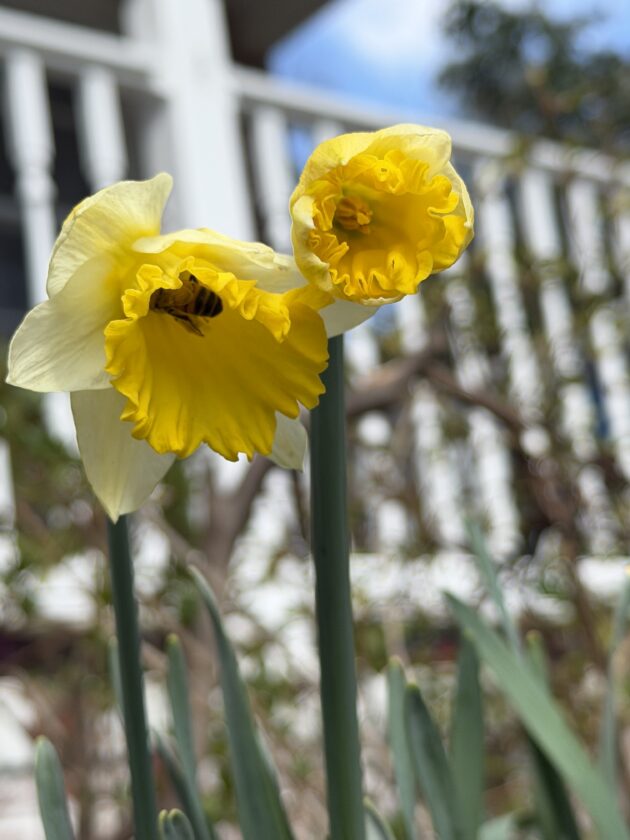
Daffodils, those harbingers of spring, will announce the new season with their buttery, yellow trumpet flowers. Some daffodils have a lovely scent, which will be more noticeable if planted in masses. But, along with tulips, daffodils will bloom and fade rather quickly compared to other potted plants that you can purchase in spring. For the most part, these are one-and-done flowers, blooming only once per season. Once they are finished flowering, cut off the flower but not the foliage. The leaves will help bring energy to the bulb for next year’s growth. If you have used them in an arrangement and they become unsightly, dig them up and plant them somewhere in your garden. You may be rewarded with new blooms next spring. Did you know that, as cut flowers, daffodils do not play well with others? If you’d like to bring some of your daffodils indoors for a mixed cut flower bouquet, keep in mind that they will release toxins into the water, which will shorten the vase life of the other flowers. To remedy this, cut your daffodils to their desired length and place them in a vase of water alone. After 12-24 hours, dump out the water, and make your mixed arrangement with fresh water. Each time you recut the daffodil stems, you will need to repeat this process.
For showy, fragrant flowers with a boring name, add stock flowers to your spring container garden. Stock flowers can be found in shades of pink, purple, or white, with both single and double flowers. While you can deadhead as the blooms fade, they are not reliable rebloomers. But the blooms can last for weeks as a potted outdoor flower and have a long vase life as a cut flower. You will want to plant them near a walkway, so that you can enjoy their lovely scent wafting through the air. They are in the brassica family (like kale and cabbage) and considered edible. But I wouldn’t go noshing on this part of your bouquet, since you do not know how the stock flowers have been grown or if they have been treated with pesticides.
Another darling flower of spring is the sweet pea, which comes in a variety of spring colors such as pink, purple, coral, white, and yellow. After purchasing pots of ruffled sweet peas for your spring container garden, you will probably be smitten and be convinced to grow them yourself from seed. But don’t confuse these beauties with edible peas in your kitchen garden. All parts of sweet peas are toxic to humans and pets. However, the flowers can last for months as long as you are prudent about deadheading the spent blooms. They also look adorable in a vase as a cut flower, but do not have a long vase life (about 4-6 days).
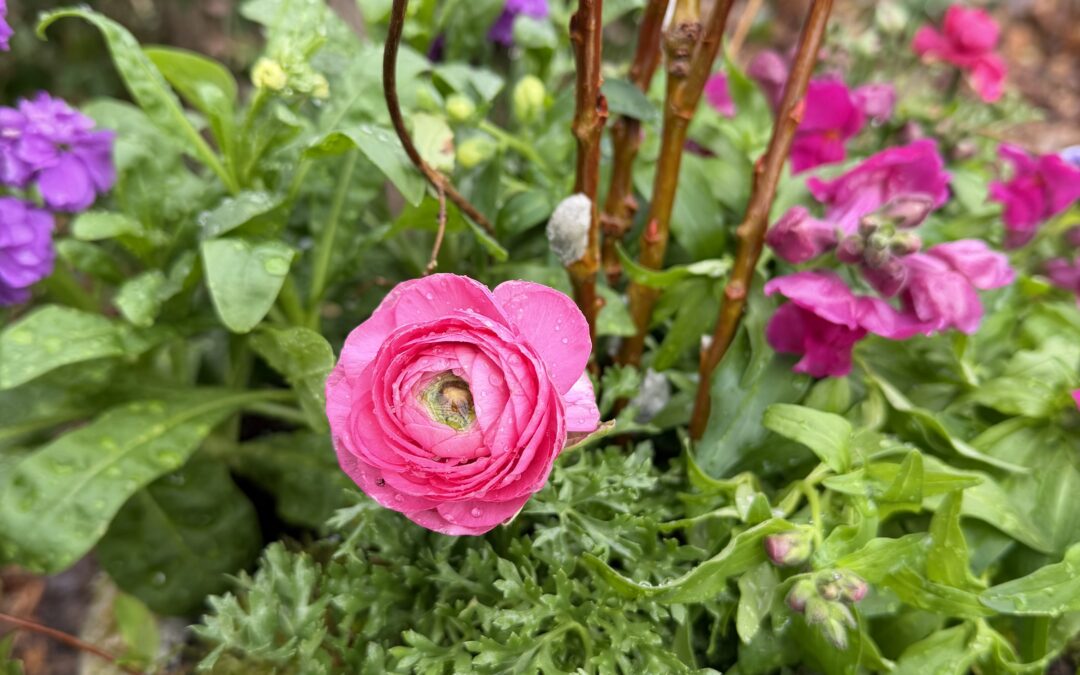
One of my favorite spring flowers that can stand up to cold weather in early spring is the ranunculus. Despite the funny name, these flowers resemble roses or camellias and come in a variety of colors. I could fill a garden with them and still not have enough. These can be planted from corms that look like shriveled spiders. But, like the ugly duckling, you won’t believe the transformation of these flowers from gangly corms to elegant flowers. Other notable flowers that should be considered for your spring container gardens are candy tuft, primroses, and pansies.
When you first bring home your potted plants, give them a good soaking before you plant your container arrangement. But then give them time to drain, and make sure the container you are going to use has drainage holes. With April showers can come soggy containers, which would be sure to cause your spring flowers to rot.
For a little height and artsy drama, add spikes of pussy willows or forsythia branches to the center of your spring containers. If you are lucky, they might root and you will be able to plant them in your garden. Years ago, I made a centerpiece with forsythia “sticks” in a vase of water and, to my surprise, they started to root. Later, I was able to plant these rooted stems, and now I have several forsythia plants that bloom every spring.
Containers of colorful spring flowers can brighten your mood even when the days are cold and dreary. We would love to see how you welcome spring to your garden. Send your pictures, comments, and questions to the shorelocalgardener@gmail.com.
Tammy Thornton lives with her husband, children, and crazy pets while enjoying a life of gardening, cooking, and going to the beach.