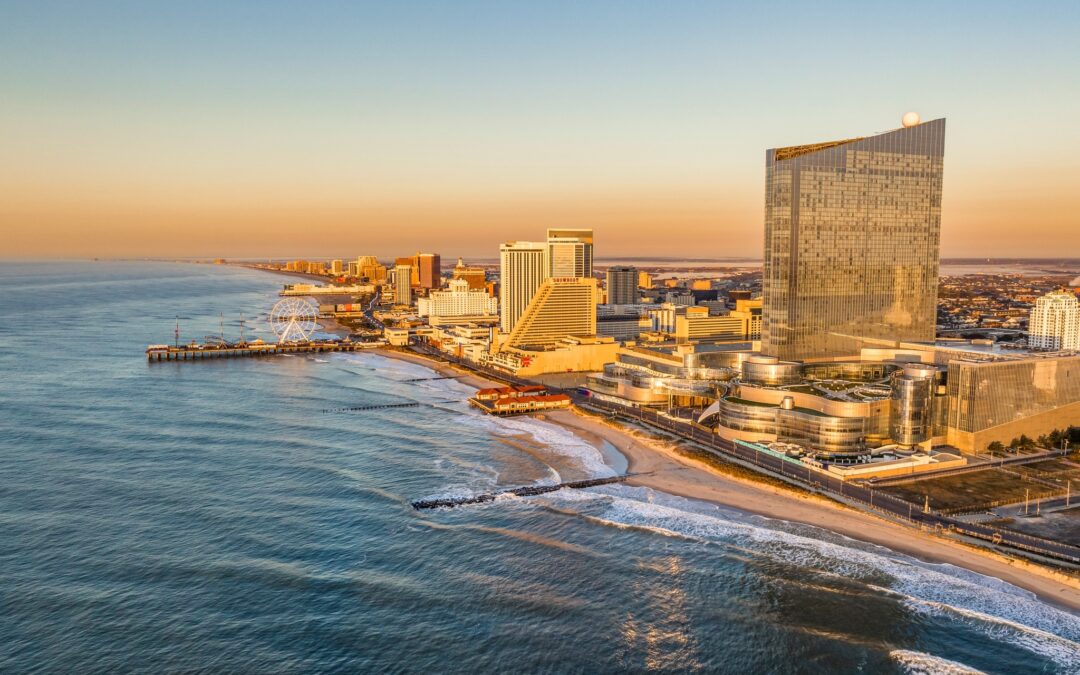
My grandfather, Gary Malamut, is one of the visionaries who brought casinos to Atlantic City in the 1970s. He poured his heart and soul into his vision that Atlantic City would become the Las Vegas of the East; a casino gaming monopoly on the East Coast. Depending on who you ask, casinos either saved the city from complete collapse in the 1970s or created a one-industry economy that never fully recovered once competition showed up in neighboring states. The truth is probably somewhere in the middle.
From a real estate perspective, casinos completely changed Atlantic City and Atlantic County forever. They created massive spikes in property values, fueled development, generated jobs, and brought national attention to a city that had largely fallen apart after its glory days faded. But casinos also distorted the housing market, created instability, and arguably prevented the city from developing a more balanced economy.
The case for Atlantic City being better off WITHOUT casinos
One of the main arguments against casinos is that they created an economy almost entirely dependent on gambling revenue. For decades, Atlantic City didn’t really need to diversify because the casinos were practically printing money. That worked well until Pennsylvania introduced casinos, and Atlantic City lost its monopoly on East Coast gambling. Suddenly people from Philadelphia no longer had to drive an hour down the Expressway to lose money at blackjack. Even worse, there was a ‘double bubble’ in our area as there was a national housing market bubble followed by a casino bubble with multiple Atlantic City casinos closing. This ‘double bubble’ crushed portions of the local housing market, with thousands of jobs disappearing and Atlantic County becoming the #1 foreclosure market in the entire country.
Even today, Atlantic City real estate can feel unusually volatile compared to surrounding shore towns like Brigantine, Ventnor, or Margate where property values are more tied to traditional shore demand than the success of the gaming industry. One could argue that without casinos, Atlantic City may have evolved more like a traditional neighboring beach town with steadier residential growth, smaller-scale tourism, and more stable long-term property appreciation. Without casinos, it’s very possible that safety would be far less of a concern for families wanting to live in town, thus leading to more stability and appreciation in home values.
The case for Atlantic City being better off WITH casinos
On the other hand, there’s a very real possibility that without casinos, Atlantic City would have declined even faster. By the 1970s, the city was struggling badly. Tourism had faded, many hotels were deteriorating, and middle-class vacationers had largely moved on to other destinations with cheaper air travel options. Casinos didn’t create Atlantic City’s problems; they were brought in because the problems already existed.
Atlantic City became one of the most popular gambling destinations in America almost overnight. Billions of dollars poured into the city, and entire areas surrounding the casinos experienced waves of appreciation. Development surged along the marina and beachfront, as demand from second-home buyers, investors, and even retirees sought out waterfront living at prices cheaper than northern North Jersey or New York.
Casinos also created year-round economic activity, something most shore towns struggle with. The old joke ‘Turn the lights off to the city after you go over the bridge’ was no longer applicable. Other beach towns like Wildwood or Cape May are known to be much quieter in the winter, but Atlantic City maintained a more consistent employment base because casinos operated 24/7. That year-round activity supported apartment rentals, multifamily investments, restaurants, retail, and hospitality-related real estate.
It’s worth remembering that many surrounding towns in Atlantic County benefited tremendously from casino workers and casino-related business growth. Housing demand in communities like Egg Harbor Township, Galloway, and Linwood exploded because thousands of casino employees needed places to live. Personally, I recall being a child in my parents’ car driving down the Black Horse Pike and the only attraction between the Shore and Hamilton Mall was Volcanic Eruptions. Thankfully my kids don’t have to ask me what that is, but there’s been so much development offshore in the last 30 years. In many ways, casinos became the economic engine for the entire region, not just Atlantic City itself.
Has Trenton supported Atlantic City to its fullest potential? That’s an article for another day. But the fact is that between 1989-2011, the CRDA gave over $200 million to projects that had nothing to do with Atlantic City. Unfortunately, the politics of Trenton has muted Atlantic City’s potential over the last 50 years and is rearing its ugly head once again with the push for northern New Jersey casinos.
What’s the real answer?
The honest answer is that casinos were probably both the best and worst thing to happen to Atlantic City. They rescued the city economically for decades, created enormous wealth opportunities, and transformed the area into a nationally recognized destination. Without casinos, Atlantic City may have experienced a much steeper decline much earlier. But casinos also created dependency. Instead of building a diversified economy, the city became tied almost entirely to one industry. Real estate markets thrive on stability, diverse employment, and long-term confidence, and Atlantic City has struggled with all three.
Today, Atlantic City still has something many places would love to have: beaches, proximity to major cities, entertainment infrastructure, and relatively affordable real estate compared to much of the Northeast. The question now is whether the city can evolve beyond the casinos. Ironically, the future of Atlantic City may depend less on gambling tables and more on whether families want to live there year-round.
I believe if my grandfather were alive today, he would say that casinos were the best thing to ever happen to Atlantic County real estate, but that Atlantic City and its real estate has never developed to its full potential due to the politics of Trenton. A tale as old as time..
Jim Malamut learned the intricacies of the mortgage business under the mentorship of his father, Bill Malamut. Graduating from Rutgers University Business School, Jim quickly established himself, leading their team to become the top lender in Atlantic County.