
The Casino File
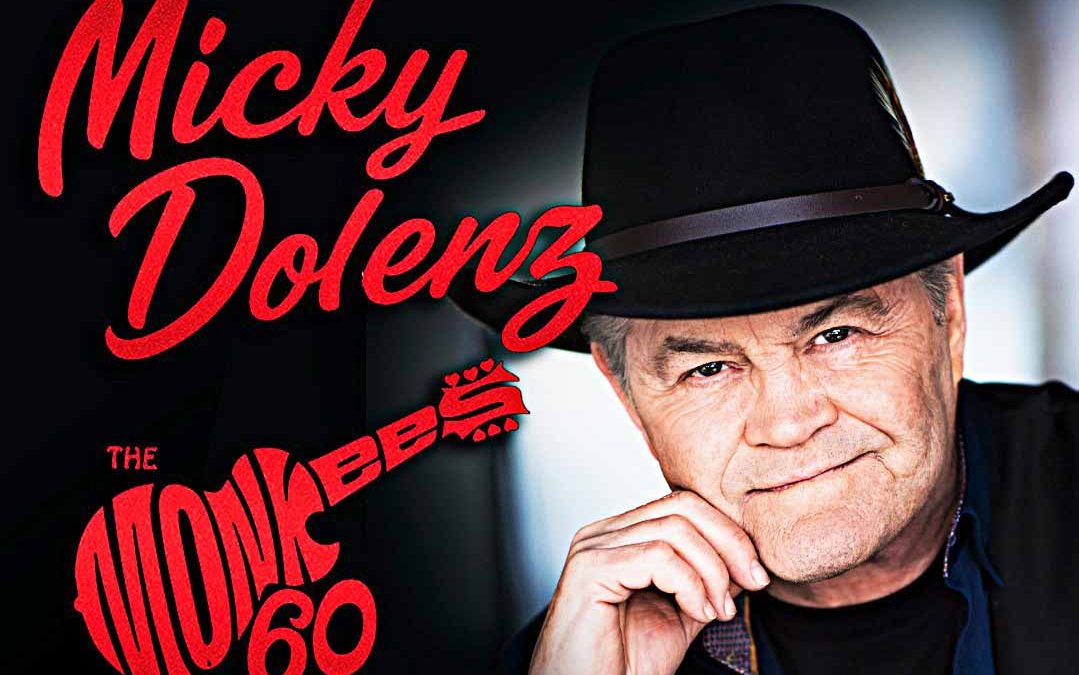
Micky Dolenz is currently touring in celebration of the 60th anniversary of the debut of “The Monkees,” the groundbreaking sitcom that made him and his three cast/bandmates pop-culture titans. But he could also be celebrating the 60th anniversary of his not becoming an architect.
To put it another way, when Dolenz was young, he wanted to be Frank Lloyd Wright, not Paul McCartney or Mick Jagger. As he explained during a recent phone chat occasioned by his gig this Saturday at Borgata Hotel, Casino & Spa, a career in show business was only supposed to happen if he didn’t succeed as an architect, not the other way around as is usually the case with “backup” careers for those aspiring to make it in the entertainment industry.
A show biz lifer
According to the 81-year-old former member of The Monkees, he was quite familiar with the uncertainty of a career in entertainment, having witnessed it first-hand as a child.
“I’ve been in the business my whole life,” noted Dolenz, who played the title character in the 1950s TV series, “Circus Boy.” “And both my parents were in show business. So, I saw my [actor] dad come back home not having passed the audition. And my mom was a singer and dancer and an actress — they met doing a play. So, I was following in their footsteps. But at a certain point after high school, even though I had a television series, I guess I must have thought, well, I better get serious here and get a real life. Because from watching it in my family, show biz was risky.
“And my plan — and people laugh when I tell them, but it’s true — was I was gonna try to make it as an architect. If I couldn’t make it as an architect, I could always fall back on show biz.
“The ‘backup plan’ was show biz.”
A life-changing tryout
It’s hardly a spoiler to report that Dolenz soon enough went to “plan B.” And while the likes of rock-legend-to-be Stephen Stills, turn-of-the-’70s chart-topper Harry Nilsson, singer-songwriter Paul Williams and Three Dog Night vocalist Danny Hutton famously (and unsuccessfully) responded to ads in the Hollywood trade papers for a “cattle-call” (open) audition for what became “The Monkees,” Dolenz, as a known quantity in the industry, was spared that kind of generally unpleasant experience.
“I didn’t see the ad,” he said. “I had an agent because of ‘Circus Boy,’ and because I’d been doing guest shots on series like ‘Peyton Place,’ ‘Mr. Novak,’ and other shows of that time. So, I had a private audition.”
That process, he continued, was far from the typical tryout.
“I remember that quite well. I went back for a callback and then another callback and then auditions for singing and playing and screen tests and interviews and improv. It was extensive. Much more than a normal audition.”
After a search that took up most of the autumn of 1965, the series’ producers finally decided on Peter Tork, Michael Nesmith and Davy Jones as the other members of the fictional band. According to Dolenz, his three bandmates were total strangers when they were informed they’d won the roles.
“I remember the day we all met,” he said. “It was at a wardrobe fitting for the pilot, because that’s the first thing that happens [on a TV series]. I had vaguely remembered Davy because he and I had done a couple of scenes together, and I think maybe also because he had been in the business; he’d been on TV and on Broadway. So, I think maybe we had a lot in common. I remembered him, but I did not know Mike or Peter at all.
“It was a producer in front of the wardrobe department saying, ‘Oh, hey, you guys are the Monkees. Mickey, this is Mike. Mike, this is Peter. Peter…’ And so that was it. And then we did the pilot and got to know each other a bit.”
Dolenz added that as far as he can recall, the four young men were always collegial primarily because, he reasoned, “I think that they cast the show very well, so there weren’t any conflicting characters. Nobody was stepping on anybody else’s toes. They were very distinct characters.”
Who’s laughing now?
Thanks to a carefully crafted marketing campaign that included the release of The Monkees’ debut single, “Last Train to Clarksville,” a little less than a month before the TV show’s Sept. 12, 1966 premiere, by the end of that year, The Monkees were the biggest pop-music phenomenon since the days of Beatlemania. And by the time the group embarked on its first concert tour at the end of ’66, the level of frenzy (mostly on the part of the pre-teen and teen females who comprised the bulk of the group’s fan base) easily matched that which had defined the Fab Four’s first two U.S. road trips.
Despite such intense, if fleeting, success, (“The Monkees” was cancelled by NBC in March, 1968) and a string of hit singles matched by only a handful of artists to this day, The Monkees mostly suffered the slings and arrows of critics who gleefully and mercilessly derided the “Pre-Fab Four”.
But six decades later, it’s The Monkees who remain a celebrated part of pop music history, while those who eviscerated Dolenz and his teammates in print and over the airwaves are long-forgotten. So, does this mean Micky Dolenz has gotten the last laugh?
“You’d have to ask other people that, I suppose,” he offered. “But I knew what it was all along.
“Frankly, when you’re successful in every way, and you just see the genuine love and appreciation that the fans have, and you also are singing incredible music, well, when I heard that kind of [negative] stuff, I just didn’t give a s—!”
Chuck Darrow has spent more than 40 years writing about Atlantic City casinos.