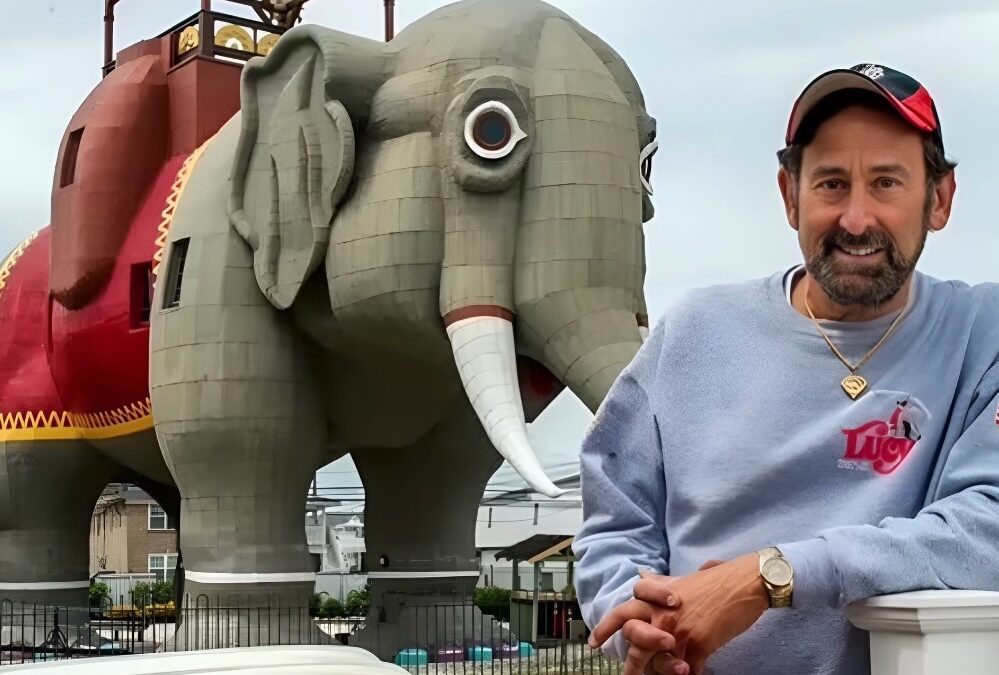
A conversation with Richard Helfant, executive director/CEO at Lucy the Elephant
Coastal Conversations
Standing proudly along the shoreline in Margate, Lucy the Elephant has long been a symbol of history, curiosity and coastal charm. Built in 1882, it stands as a testament to preservation and resilience. Behind this beloved landmark is Richard Helfant, whose dedication has helped ensure that Lucy continues to inspire generations of visitors and locals alike.
As executive director of the Save Lucy Committee, Helfant leads efforts to maintain, restore and reimagine this National Historic Landmark. Under his leadership, Lucy continues to welcome generations of visitors through tours, educational programs and special events. With a lifelong connection to Lucy and a passion for preserving her legacy, Helfant has played a vital role in keeping this iconic piece of South Jersey history standing strong while guiding her future for years to come.
Here are some excerpts from our Coastal Conversation:
AS: Why is Lucy such an important symbol for Margate and the Jersey Shore?
RH: She’s a National Historic Landmark, the oldest roadside attraction in the United States, and part of our heritage. Lucy represents generations of memories, with families returning year after year, making her vital to South Jersey, our history, our culture and tourism.
AS: What first drew you to working with Lucy the Elephant?
RH: I grew up in Margate. My mother would bring me to Lucy. When I was in seventh grade, my teacher solicited students to help raise funds to save Lucy from the wrecking ball. I joined the board and became executive director in 1999. Here we are, 28 years later!
AS: What goes into maintaining and preserving a 145-year-old landmark?
RH: A lot goes into it. Built in 1881 and exposed to constant salt air, Lucy is sandblasted every minute of every day. Maintenance includes daily vacuuming of soft wood floors, monthly system checks and repainting every 10 to 15 years, a process that can cost about $36,000.
AS: What surprises visitors most when they tour Lucy?
RH: Kids are amazed by her size and even ask if they can pet her. But overall, people are most surprised that she has survived as long as she has, despite hurricanes, floods and harsh coastal conditions.
AS: How does Lucy contribute to education and tourism locally?
RH: Lucy is a major component of the tourism industry, and according to Visit Atlantic City, she’s the No. 1 nongaming attraction that people inquire about. Historically, she was also the catalyst for development in the region, even helping spur expansion of the railroad.
AS: What events/educational activities are available at Lucy?
RH: Guided tours include an eight-minute history video and lessons on zoomorphic architecture. Outreach also extends to schools and community groups, though many visitors come for the fun, the uniqueness and the overall quirkiness of Lucy.
AS: Where does money come from?
RH: Most of our money comes from private donations and from sales in the gift shop and tours. Lucy operates largely as a self-funded nonprofit.
AS: What restoration projects have been done or are planned for the future?
RH: A $2.4 million exterior restoration was recently completed. We replaced all of her exterior tin skin and replaced it with a metal alloy used on battleships to protect her from the harsh environment. Next steps include a new visitor center with ADA access and virtual tours, plus interior upgrades like plaster repair and system replacements.
AS: How important is community support to Lucy’s continued success?
RH: It’s absolutely critical. As a nonprofit organization, Lucy relies on private donations, tours and gift shop sales to operate. Continued support ensures that necessary maintenance and preservation efforts can continue. That’s what allows us to keep her standing and thriving for future generations.
AS: How do you keep younger generations excited about Lucy’s history?
RH: We make it fun and interactive. Children are naturally drawn to Lucy’s size and personality, which creates an opportunity to share her story. Through tours, school programs and community outreach, we connect the fun and the history, helping younger audiences appreciate both her uniqueness and her importance.
AS: What is your vision for Lucy in the future?
RH: To preserve her for generations to come. That means continuing restoration efforts while also making Lucy more accessible and engaging. We want everyone to be able to experience her.
A sincere thank you to Richard Helfant for sharing his passion and insight on preserving Lucy the Elephant. His dedication ensures this beloved icon will continue to inspire generations to come. We appreciate his time and the important work he continues to do for our community.
Coastal Conversations highlights people in our community who are making a meaningful impact. If you know someone who would be a great fit for a future column, please contact me at ShoreCoastalConversations@gmail.com.
From the shore to your door, let’s keep the conversation going.