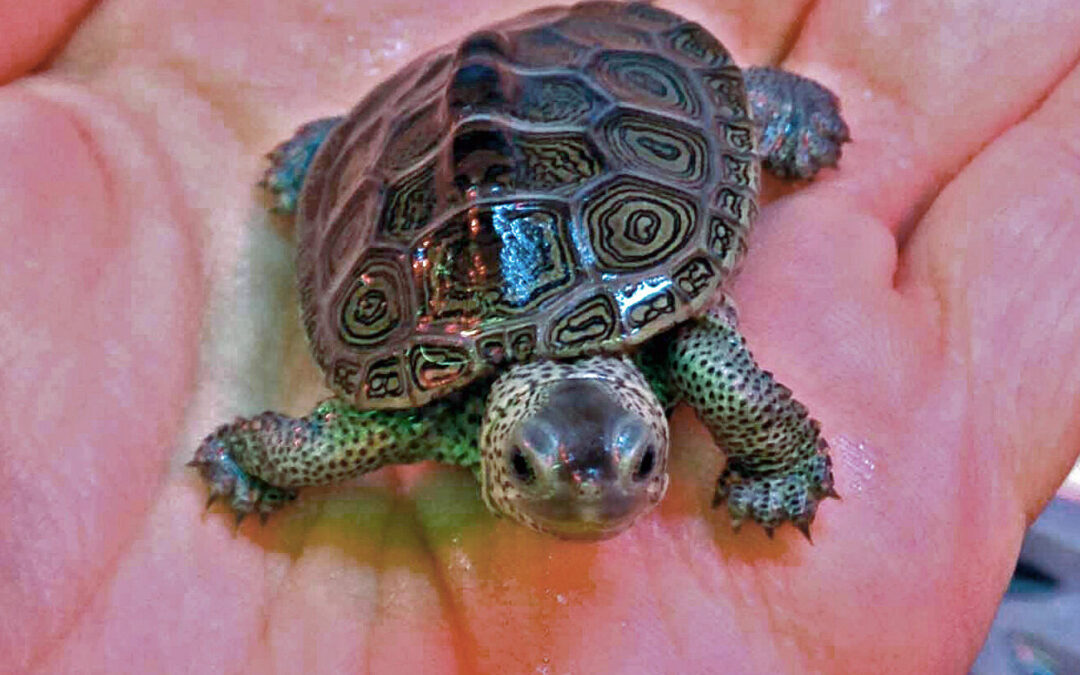
Diamondback terrapin hatchlings are emerging from beneath the sand and soil, making their way toward nearby marshes, tidal creeks and back bays.
Barely larger than a quarter, these tiny turtles face steep odds from the moment they surface. Roads, storm drains, curbs, predators and traffic all threaten their survival during this annual migration. Local wildlife advocates are urging residents and visitors to stay alert and lend a hand when safe to do so.
Diamondback terrapins are a uniquely coastal species and the only turtle in North America adapted to live in brackish water, where saltwater and freshwater mix. They thrive in marshes, estuaries and tidal wetlands, making South Jersey’s barrier islands an especially important habitat. In New Jersey, the species is listed as one of special concern because of population declines and habitat loss.
For decades, terrapins have faced mounting threats. Development has reduced nesting areas, roads have increased vehicle strikes, and abandoned crab pots can trap and drown them underwater. Eggs and hatchlings are also vulnerable to predators such as raccoons, foxes, gulls and crows.
The danger becomes even greater in early summer, when adult female terrapins leave marshes to search for sandy nesting sites. Many must cross causeways and coastal roads to lay eggs. Conservationists say thousands of female terrapins are struck on New Jersey roads each nesting season, especially in our marsh-heavy shore communities. Since females may reproduce for decades, each loss can have a lasting effect on local populations.
The Wetlands Institute in Stone Harbor has spent years trying to reverse that trend through turtle patrols, roadside fencing, rescue operations and egg recovery programs. Biologists and volunteers often collect viable eggs from road-killed females, incubate them, and later release hatchlings back into the wild.
How to help a terrapin hatchling
If you spot a hatchling safely in the marsh, experts say it is best to leave it alone. But if a terrapin is in immediate danger on a road, driveway or yard, there are simple ways to help:
- Carefully move it out of traffic and in the direction it was already traveling
- Place it in a shallow container with a small amount of room-temperature water if it appears stressed or dehydrated
- Release it near marsh grasses or sheltered vegetation, not directly in open water
- Never keep a terrapin as a pet or remove it from the wild
Drivers asked to stay alert
Later this spring and into summer, larger female terrapins will begin crossing roads to reach nesting areas. Conservation groups ask motorists on coastal roads to slow down, especially near marshlands, bridges and causeways. A few extra seconds behind the wheel can save a native species that has called these shores home for generations.
A small turtle with a big role
Terrapins are considered an indicator species, meaning their health reflects the health of the estuary ecosystem. Protecting them also helps preserve the marshes, bays and waterways that define life at the Shore.
For barrier island communities, spring’s tiniest travelers are more than a wildlife curiosity. They are a reminder that nature is alive and moving all around us, often just beneath our feet.
Sarah Fertsch of Egg Harbor Township holds a Bachelors of Arts in Public Relations. She is a locally renowned poet, storyteller, and dog lover.