
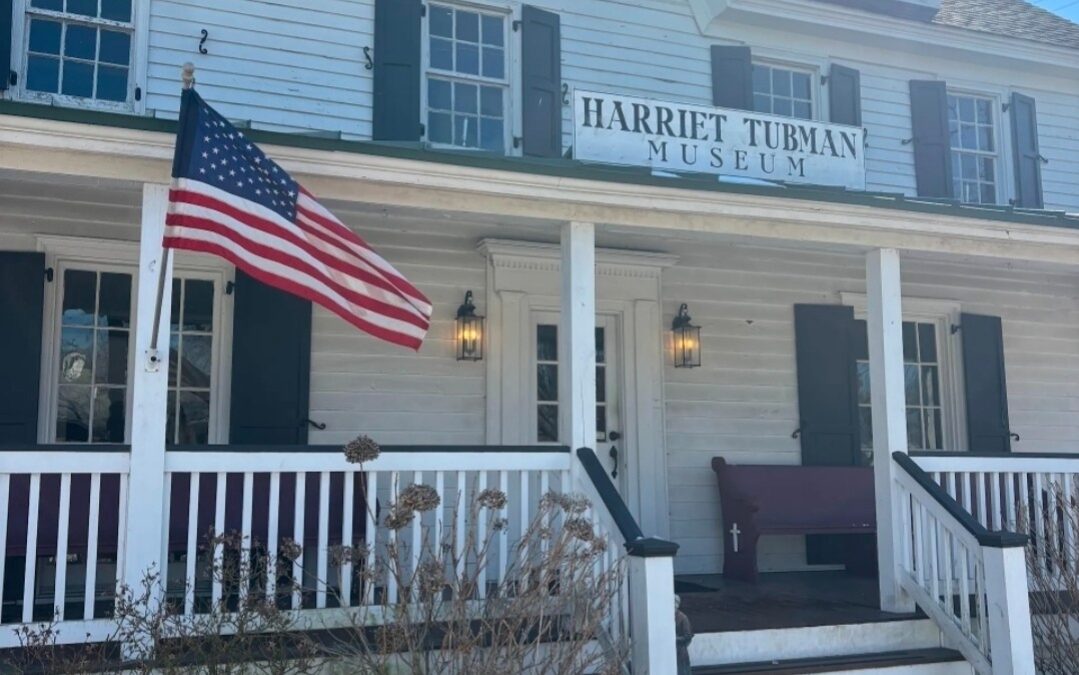
The southernmost point of New Jersey is known for the charming Victorian shore town Cape May. Most visitors go down to enjoy the gingerbread architecture, the Cape May diamonds on the beach, trolley tours, or horse-drawn carriages that go up and down the streets, informing their passengers on the history of Cape May. During the same Victorian period that gave the town its distinctive architecture, the town also had a historical impact on ending slavery and helping those enslaved to reach freedom. In the mid-1800s, notable anti-slavery activists stayed in Cape May. These activists were also often conductors or supporters of the Underground Railroad, as it operated in Mid-Atlantic states in the lead-up to the Civil War.
Just a few blocks from the lively Washington Street Mall, known for its shops, restaurants, and overall heavy foot traffic of tourists, stands the Harriet Tubman Museum. Located at the corner of Lafayette and Franklin Street, with its own deep historical roots, as the surrounding neighborhood was home to activists, along with buildings that support the end of unfair divide, this museum explores a chapter of uneasy history with the town’s remarkable role in the broader struggle for freedom in America.
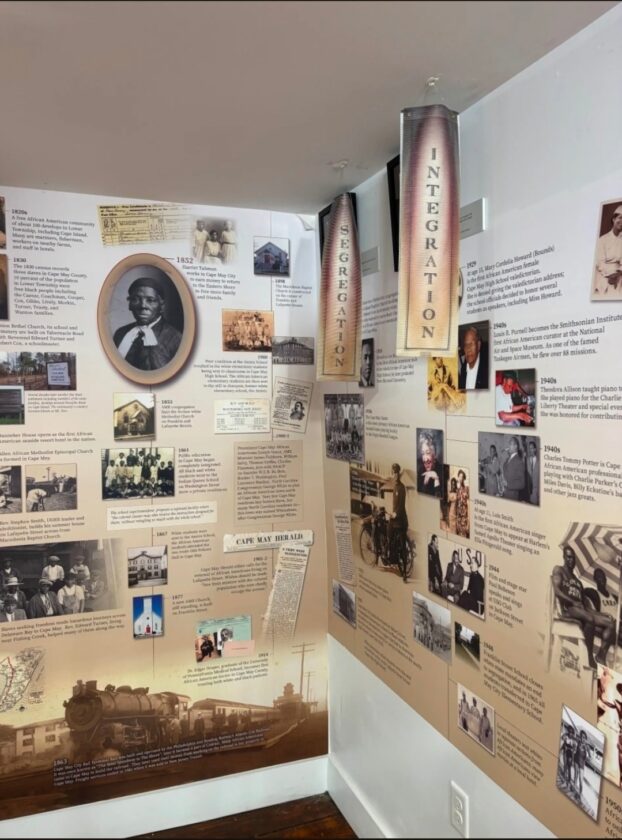
The Harriet Tubman Museum reflects those who went against the social norm in an unequal time in history. Inside, exhibits detail the harsh realities of slavery and segregation, also highlight the local citizens’ courage required to resist slavery, and examine the ongoing consequences of racial injustice that extended into segregation and beyond. The museum challenges visitors to reflect on the legacies of slavery and discrimination that continue to shape modern society by drawing a line from the past to the present.
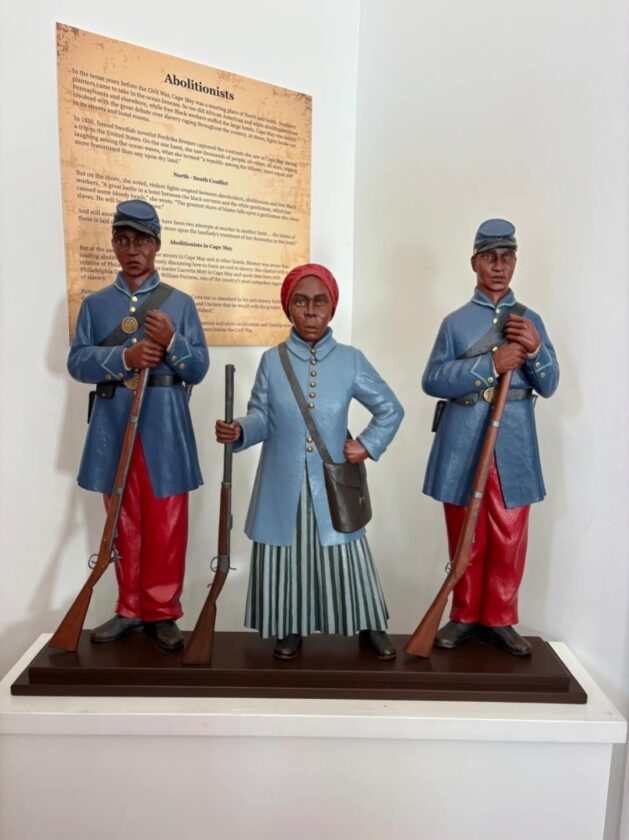
One of the most significant figures associated with Cape May is Harriet Tubman. Tubman honorably earned the nickname “Moses of her people” after serving as a guide on the Underground Railroad, leading approximately 70 of enslaved individuals to freedom, risking her own freedom many times to leading them north to free states and Canada. By the 1850s, New Jersey was a free state, though slaveowners often vacationed at the shore, and the Fugitive Slave Act of 1850 demanded that any runaway slaves found within New Jersey be swiftly returned to the South. Maryland, a nearby state in the Northeastern United States, was not a free state at the time. Tubman herself escaped slavery in Maryland and initially sought refuge in Philadelphia. To avoid being captured, she moved frequently and operated in multiple locations. In the early 1850s, Cape May was one of the many places where she resided.
Along Lafayette Street, Tubman’s temporary home, were other anti-slavery activists. Stephen Smith, who had a summer home on the street, was a founder of the Pennsylvania Anti-Slavery Society. Smith was born a slave, but ran a successful business after securing his own freedom. Not only that, but Smith and a friend helped runaway slaves escape to freedom by building a secret compartment in their business’s railway cars to hide them. In Cape May, he used his power and voice for anti-slavery efforts. Nearby stood The Banneker House, developed by a friend of Smith, James Harding. The Banneker House was not only a high-end hotel, but it was also one of the only summer resorts in the country for free Black people. It provided a welcoming place to stay for Black visitors. Also located on the street was the Baptist Church, where Joseph Leach served as a preacher. Leach was more than a spiritual leader; he was also a political advocate and newspaper editor who spoke forcefully against slavery. In his sermons and published writings, he called for justice and equality, using both the pulpit and press to advance the cause of abolition.
While Cape May’s beautiful streets may first capture attention with their charm and historical features, the town’s true depth lies in layers of history, where Victorian elegance exists alongside powerful stories of resistance and freedom. The same streets that today visitors and vacationers walk around freely, once hosted acts of bravery, strategic meetings, and determined individuals dedicated to ending one of America’s greatest injustices and fighting for equality of all. By visiting the Harriet Tubman Museum, visitors can get a glimpse into all the brave men and women who once resided in Cape May, fighting and leading those to freedom.