
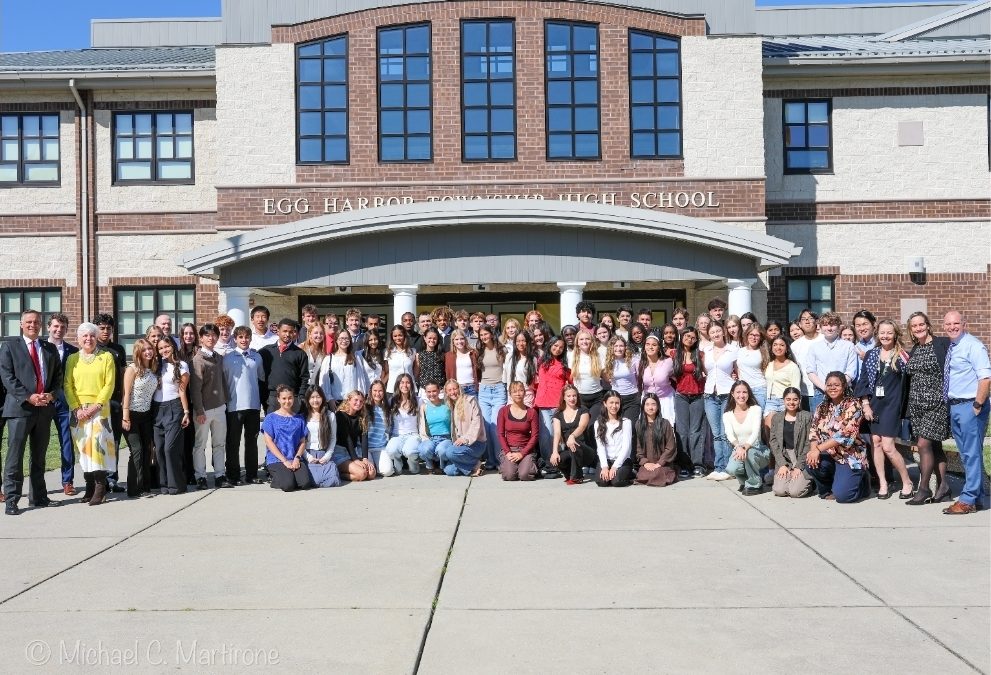
Nearly 90 students from Egg Harbor Township, Oakcrest and Cedar Creek high schools gathered Oct. 8 for the 2026 Civics Summit, an event designed to transform students from observers of government into active participants in the democratic process.
“For too long, civics hasn’t been prioritized in New Jersey,” said Michael Martirone, an AP Government teacher at Egg Harbor Township High School. “Earning a Civics Seal on their diplomas will challenge and inspire students to roll up their sleeves, get involved and take action on the issues they care about.”
The summit began with guest speakers Tina Zappile of the Hughes Center for Public Policy and Patricia Schmiedel of Energizing Young Voters. U.S. Sen. Andy Kim also appeared by video through Zoom.
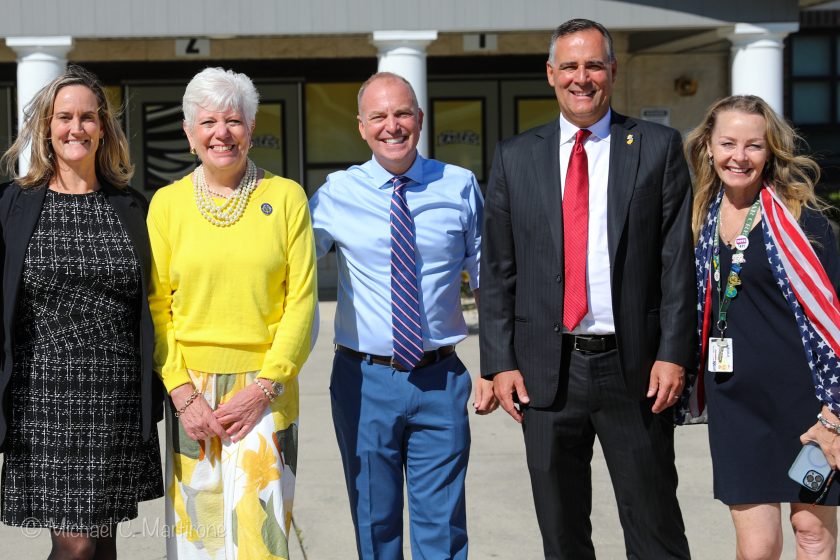
Students worked alongside Assemblywoman Maureen Rowan and state Sen. Vince Polistina to suggest amendments to Assembly Bill 4901 and Senate Bill 4786. The bills call for the state Department of Education to establish a Seal of Civic Readiness recognizing high school graduates who demonstrate proficiency in civic knowledge, complete voluntary community service and submit a citizenship capstone project or portfolio.
Approximately 20 states across the country have adopted or developed civic readiness seals or similar diploma distinctions. New Jersey lawmakers have introduced legislation that would establish a similar recognition for students who demonstrate civic knowledge and engagement.
For Egg Harbor Township, the proposed legislation presents an opportunity to bring an idea already practiced at the local high school into a broader discussion about civic education throughout New Jersey.
Students compared programs in other states with the New Jersey proposal. Working with their peers and elected officials, they explored what it means to be an informed and engaged citizen. They considered whether students should be required to complete a civic action project, how schools should measure meaningful civic engagement and what opportunities should be available to students from different communities and backgrounds.
They also examined how civic education can encourage young people to remain engaged long after graduation.

“We’re so polarized, and that’s what civics education is all about: bringing people together,” Rowan said.
“Although Assemblywoman Rowan and I might disagree on certain topics, we always do it respectfully, and we do it trying to understand one another and to listen to each other, which is so important,” Polistina said.
Martirone praised the students’ efforts and said democracy depends on each generation’s participation.
“I’m proud of the students,” he said. “In addition to the work that they did, I hope that the kids can see for themselves that democracy is not simply something passed from one generation to the next. It requires each generation to understand its institutions, participate in its processes and take responsibility for its future.”