With roughly 11 million active participants globally, the skateboarding community is continuously growing. Though the community has historically been male-dominated, female participation has surged by 40% over the last decade, and the industry overall is valued at over $3.5 billion, driven heavily by teenage participants. These statistics prove that the skateboarding community is bigger than people might initially think.
One such organization that sees the value in the skateboarding industry and pushes to keep it accessible for youth today is Skate AC, a 501(c)(3) nonprofit run by local Jason Klotz.
Having grown up skateboarding, Klotz said there was always a lack of parks to ride in around the area. But it wasn’t until he was in his mid-20s that he realized it was up to him to provide this for the next generation and give them something he didn’t have growing up. He built a park in Atlantic City, illegally, that was used by many skateboarders over the years until it was eventually torn down.
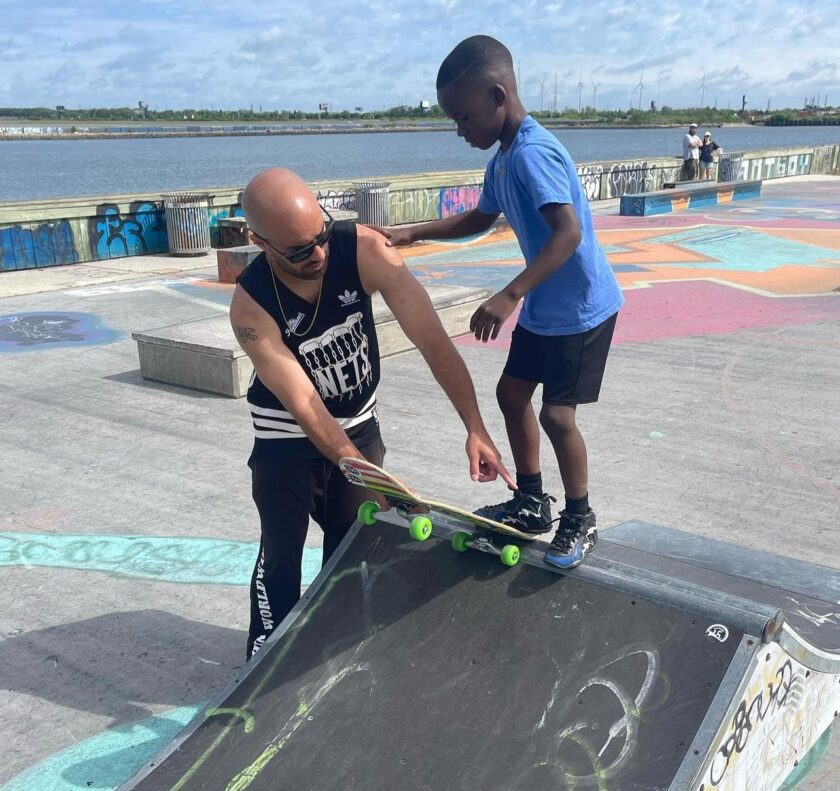
Though it wasn’t long-standing and didn’t go through the correct city requirements, it became the start of what is now his national nonprofit, with a mission to create safe, positive spaces for youth in communities.
Skate AC works to empower the skateboarding community. They create skate parks in towns that need them, giving skaters a place to grow, connect, and thrive. Klotz shared that their projects are not just about building skateparks, but about the long-term impact these spaces will have on the youth.
Klotz, along with his board, works with cities by essentially offering to donate the parks to the places where they aim to build. Negotiations are made between city councils and the Skate AC team to determine where they can build and how to make it work best for everyone. Currently, Skate AC has built two skate parks in Atlantic City and is in talks with both Egg Harbor City and Pleasantville.
Recently, the organization gained national attention after the success of the Atlantic City parks. Rohan Marley even reached out to offer his support and help expand the organization further. With his reach and recognition, Skate AC is hoping to help other cities and build parks wherever possible. They are also currently in talks with Hollywood, Florida, about creating a park there.
The first project Marley and Klotz would work on together is the skate park they hope to build in Egg Harbor City. Klotz shared that negotiations are currently underway between his organization and city council members, but emphasized how much the community is behind it.
He shared that in August of this year, there was a DIY skate park in Egg Harbor City that had been built illegally. After 10 years, it was torn down, creating a lot of heartbreak within the community.
“I grew up skating in that park, and I know that skateboarding in EHC has always been a big part of the community,” Klotz said. “So, when I heard about it getting torn down, I knew I needed to get involved and help legitimize the skateboarding scene and culture in the city. I wanted to use my nonprofit to advocate for and implement a legal park in EHC, and that’s what we’re currently working to do.”
While Skate AC and the city council are still in the negotiation phase, the city has agreed on a parcel of land they could use. With both parties actively working to make it happen, the community has already shown how much it means to them.
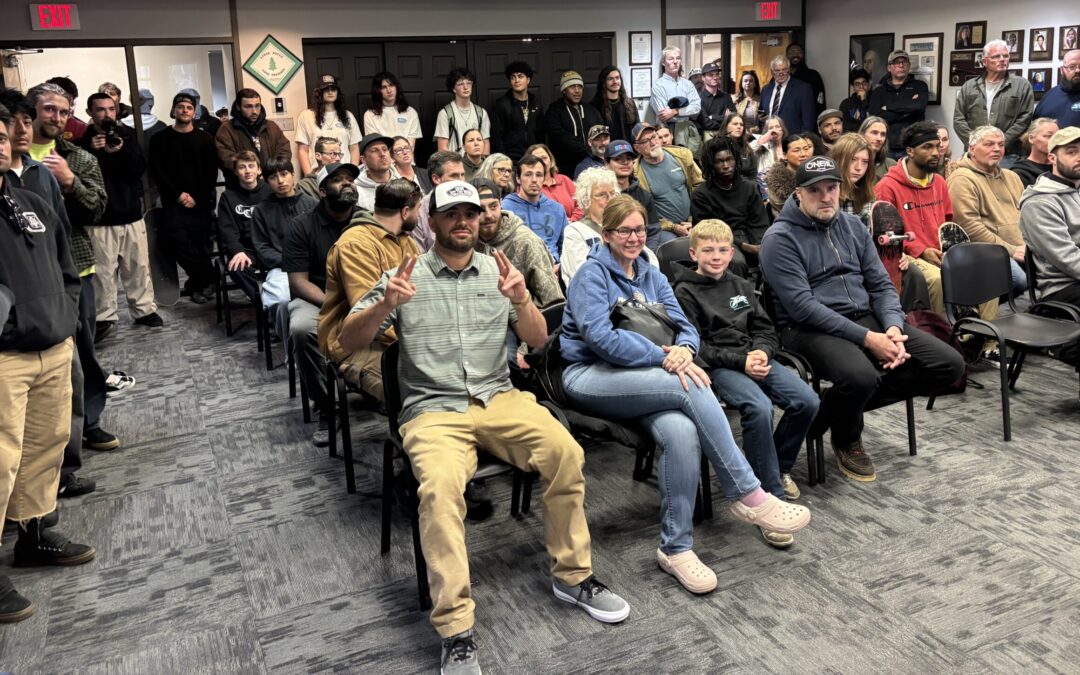
Over 80 skateboarders attended city council meetings to share their stories. The council was moved by the turnout, and while there are still details to finalize, Klotz is confident the city and his team will work together to bring the park to life.
With the success of the nonprofit’s existing skate parks, they are hopeful to expand not just in Egg Harbor City, but into surrounding towns and even into other states and cities.
Klotz said bringing these parks to towns isn’t just about skateboarding, it’s about creating community hubs for the youth.
“The pushback is always, ‘Our kids have plenty to do. We have soccer fields and football fields,’” Klotz said. “But those sports require teammates, refs, practice times, rules, structure, and organization, whereas our parks are made for freedom. They’re made for kids to meet and build a community. It gives them a place to exercise without competing with each other. Skateboarding, roller skating, and biking all create a flow state, it’s like meditation. The communities that come from these are more connection-based, not competition-based. We’re trying to create real-life social networks for these kids through the parks.”
Beyond recreation, Klotz emphasized the deeper impact these spaces can have. He shared that skate parks often become safe, consistent environments where kids can spend time productively, build friendships, and feel a sense of belonging within a community.
Klotz also acknowledged the negative stigma skateboarding has sometimes carried. Growing up, he said he often had boards taken away, was issued tickets, or was labeled a trespasser or a nuisance. His goal is to make sure today’s youth don’t experience that same rejection for something they’re passionate about.
“It’s my life mission to give children and young adults what we didn’t have growing up,” Klotz said. “After facing a lot of negative reactions over skateboarding, this is my way to make youth now feel accepted, not neglected. I want them to feel seen, heard, and safe.
“This new generation is dealing with higher levels of addiction and depression than ever before, and these skate parks can help fight that. We’re giving them a place to go, a community to be part of, and an outlet that gets them out of their heads and into the world, into nature, into the sun, and moving their bodies. My biggest goal is to give these communities and kids a natural outlet to face everything they’re up against.”